Procession of Gondolas in the Bacino di San Marco, Venice by Joli, Antonio
View the artwork: Procession of Gondolas in the Bacino di San Marco, Venice →
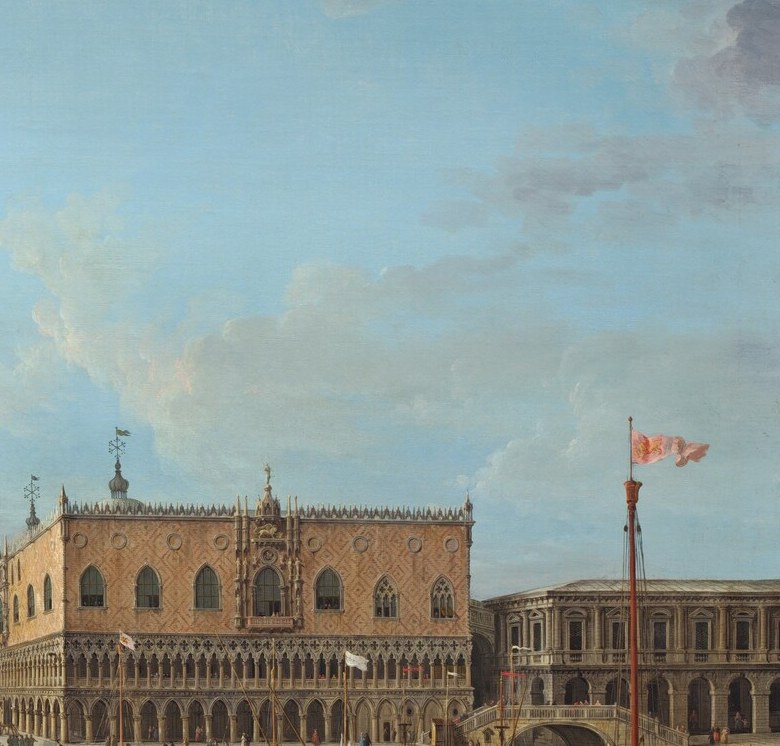
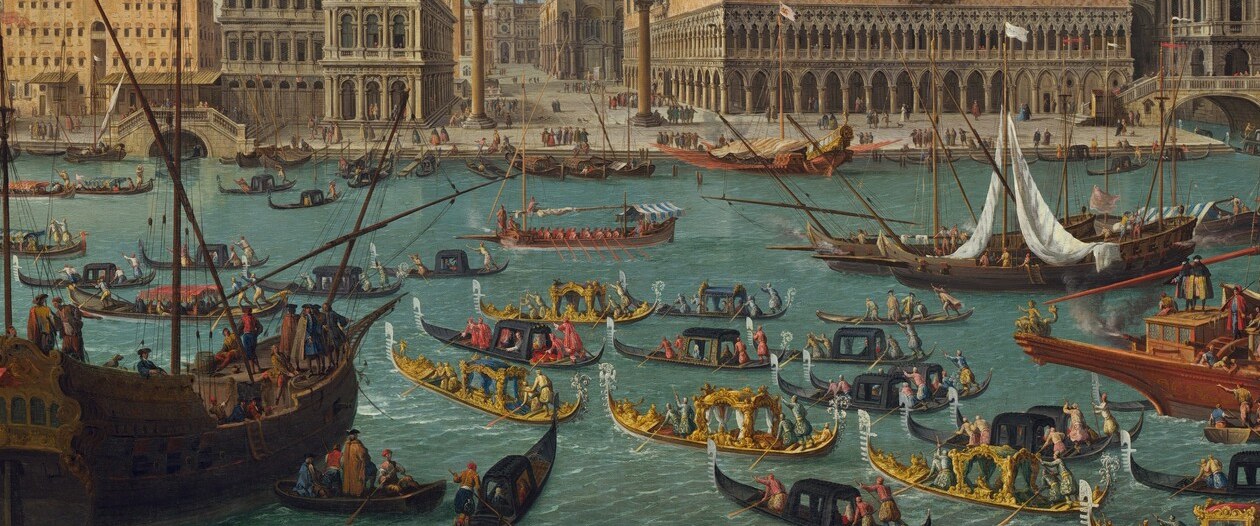
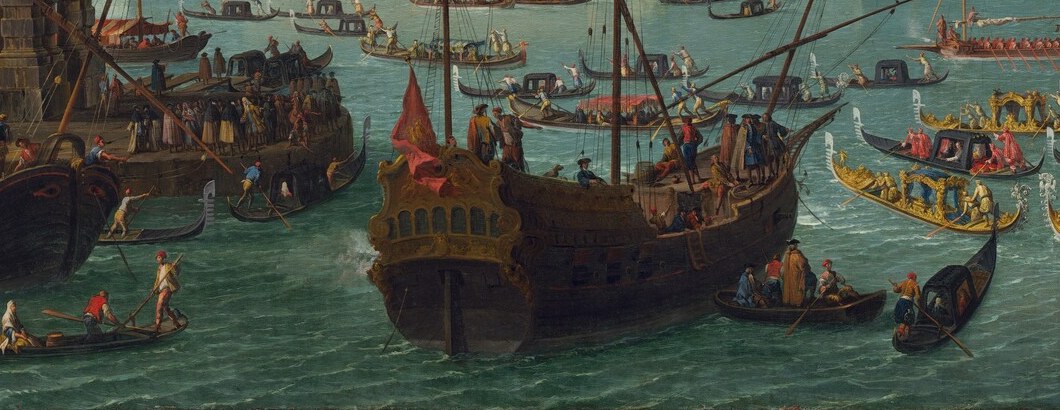
Antonio Joli's "Procession of Gondolas in the Bacino di San Marco, Venice" is a 1742 oil on canvas that records a civic water pageant, but it was painted by a man who spent his career dressing stages for opera houses in Venice, London, and Madrid. Joli was a theatrical scenographer before he was a vedutista, and he gives the Serenissima's parade the same dramatic light and choreography he used in the theatre.
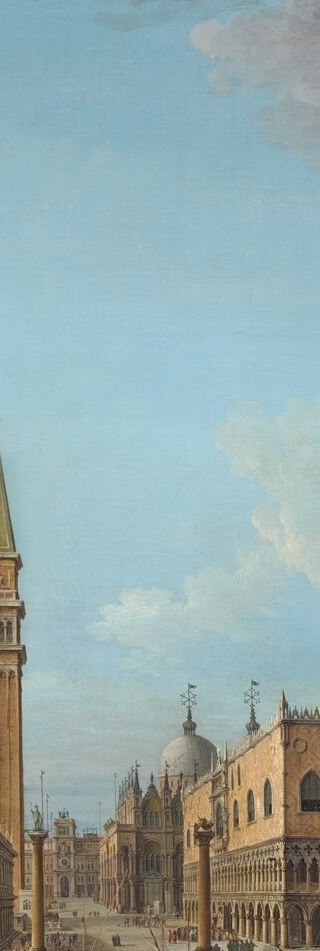
Look at the formation of gondolas crossing the basin. The figures in the nearest boats wear red and dark costumes that signalled rank and guild membership, this is a legible social document as much as a cityscape. On the Piazzetta waterfront, the two granite columns mark the ceremonial gateway to the city; hidden inside this celebratory scene is the violent fact that public executions took place precisely between them.
The painting entered the National Gallery of Art in Washington in 1945 as a gift from Barbara Hutton, the Woolworth heiress whose tumultuous life made her a tabloid fixture. It forms a pair with Joli's companion canvas of a procession inside the Doge's Palace courtyard. Its earlier provenance passes through a Roman cardinal, a Cremona family, a Scottish aristocrat, and the Parisian dealer Arnold Seligmann before reaching Hutton.
There is a quiet elegy here too. The Campanile of San Marco that towers over the scene is the original, completed in 1514. In 1902 it collapsed into a heap of bricks. What Joli painted is a document of a lost silhouette, one a modern visitor will never see.
#arthistory #venice #veduta
Details
Transcript
1742. Venice stages a spectacle on water. The painter was an opera set designer first. He treats this canal like a stage. Every figure, a performer. The gondolas are ranked by costume and position. Between those columns, criminals were once executed. In 1945 the Woolworth heiress Barbara Hutton gave it to the nation. This tower fell in 1902. Joli painted the one Venice lost.