Storm in the Mountains by Frederic Edwin Church
Frederic Edwin Church painted 'Storm in the Mountains' in 1847, when he was just twenty-one years old. It hangs in the Cleveland Museum of Art and is one of his earliest surviving landscapes, a raw, compact rehearsal for the massive panoramic thunderheads that would later make him the most famous painter in America.
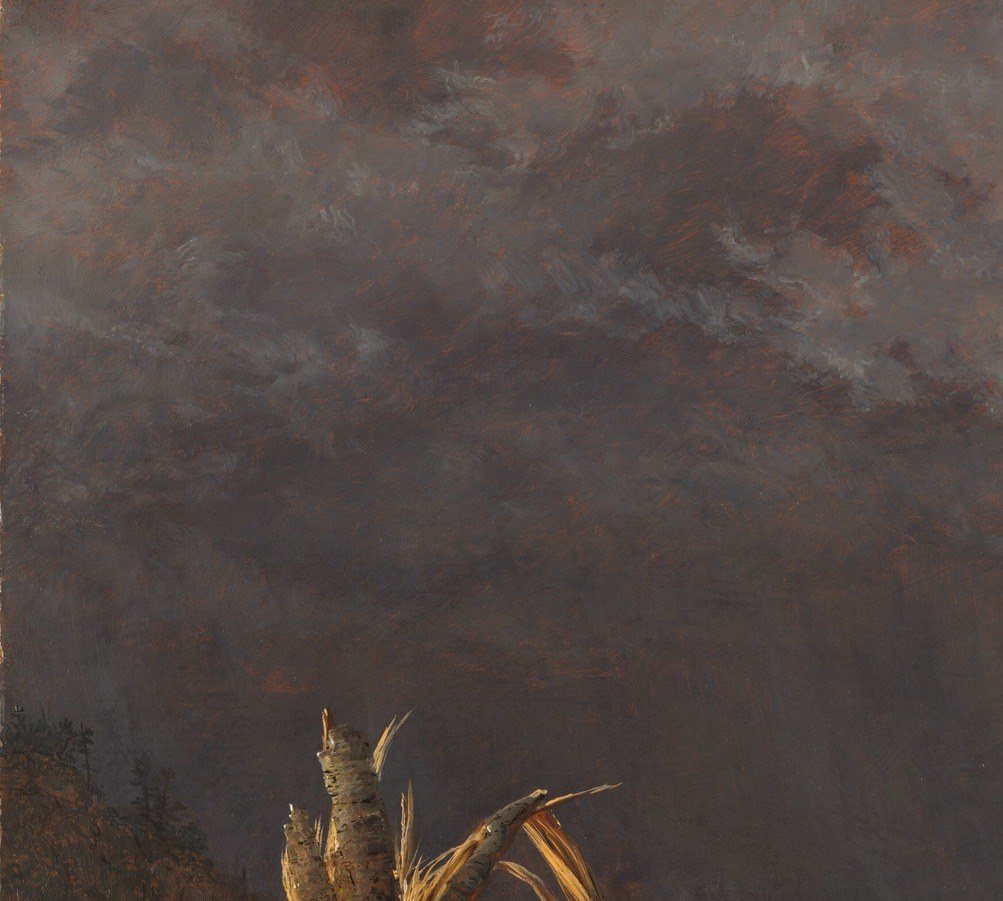
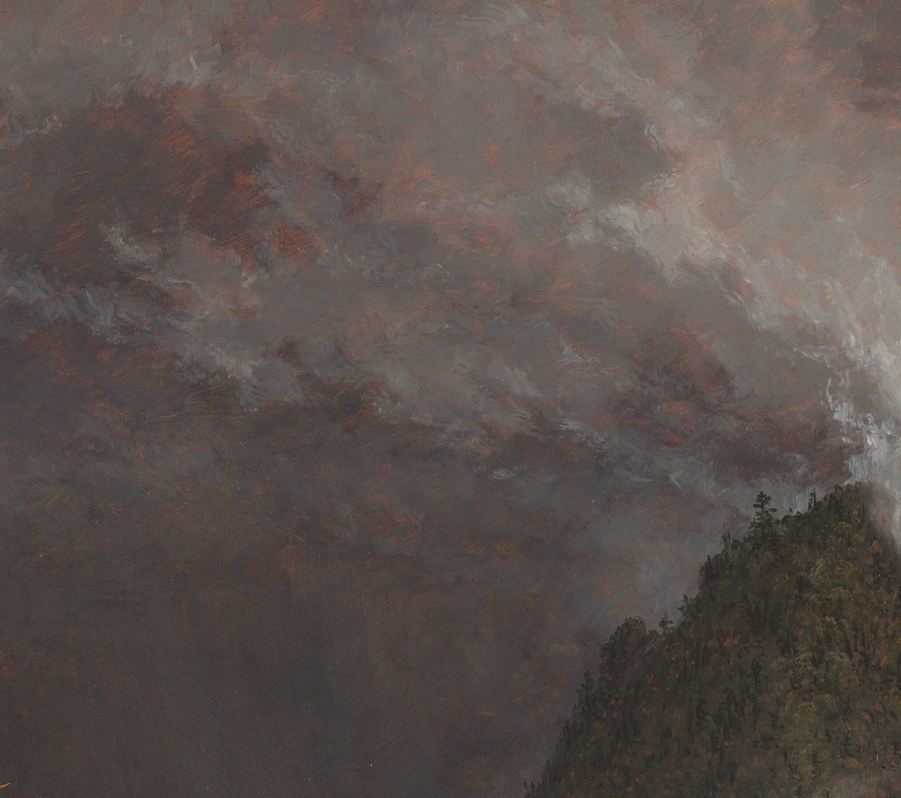
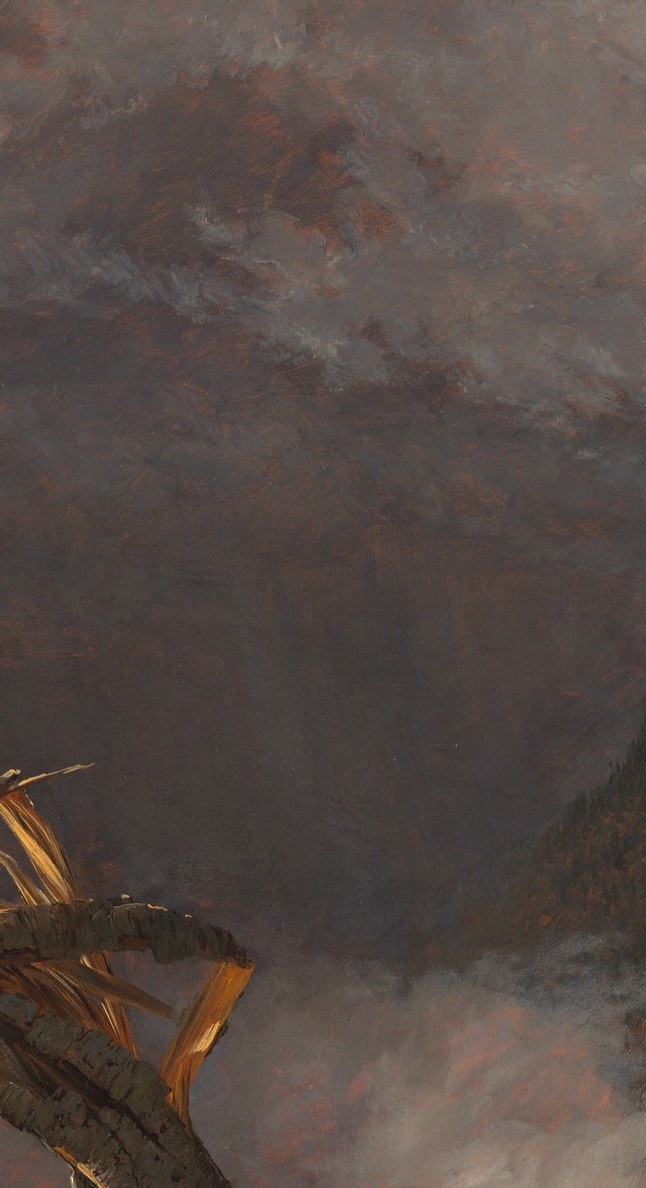
Look directly into the sky's orange heart. Church didn't tint the clouds from above with a glaze. He built the dark masses in thick paint, then dragged a dry brush loaded with warm pigment across the raised ridges, so the orange catches only the peaks of the impasto, exactly the way real light catches the edges of turbulent vapor. The dead tree's branch tips are painted the same way: each bare twig glows like a filament.
This technique owes something to J.M.W. Turner's late experiments, which Church studied through engravings, and to the Hudson River School's obsession with truthful weather. But the confidence is startling for a painter barely out of his teens. Within a decade he would be renting halls to show single enormous canvases, 'The Heart of the Andes', 'Niagara', to paying crowds who gasped at his light.
Find the tiny cascade half-hidden in the mist below the outcrop. The ambiguity is deliberate; Church often left the deep ground just unresolved enough that the eye keeps searching. In a painting this small and turbulent, that searching is the whole point.
Details


Transcript
A dead tree, alone, against a mountain storm. Painted in 1847, by an American just twenty-one years old. He built the sky with thick, layered paint, impasto. And then set a glow burning inside the clouds. The branches catch that light and turn to embers. Dry brush dragged over dry paint. No formula, just watching.