James P. Smith by Eichholtz, Jacob
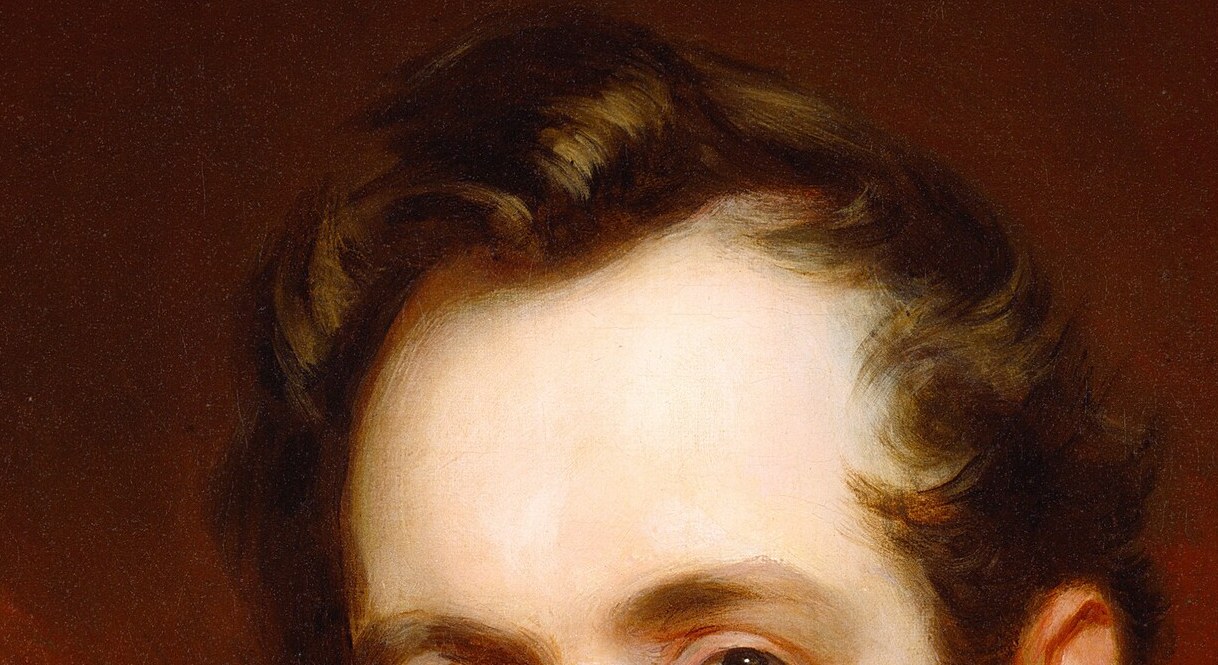
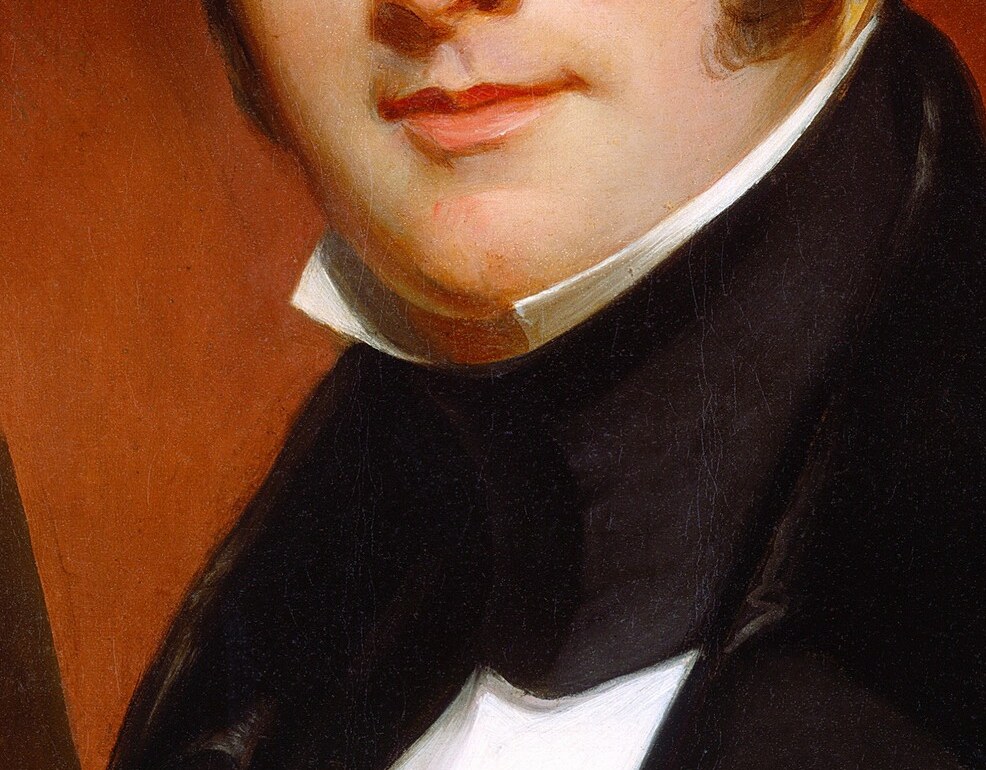
This is James P. Smith, painted around 1835 by the Lancaster, Pennsylvania, portraitist Jacob Eichholtz. At first glance it reads as a straightforward gentleman's portrait, good coat, good cravat, direct gaze. But the objects in his hands tell a more specific story.
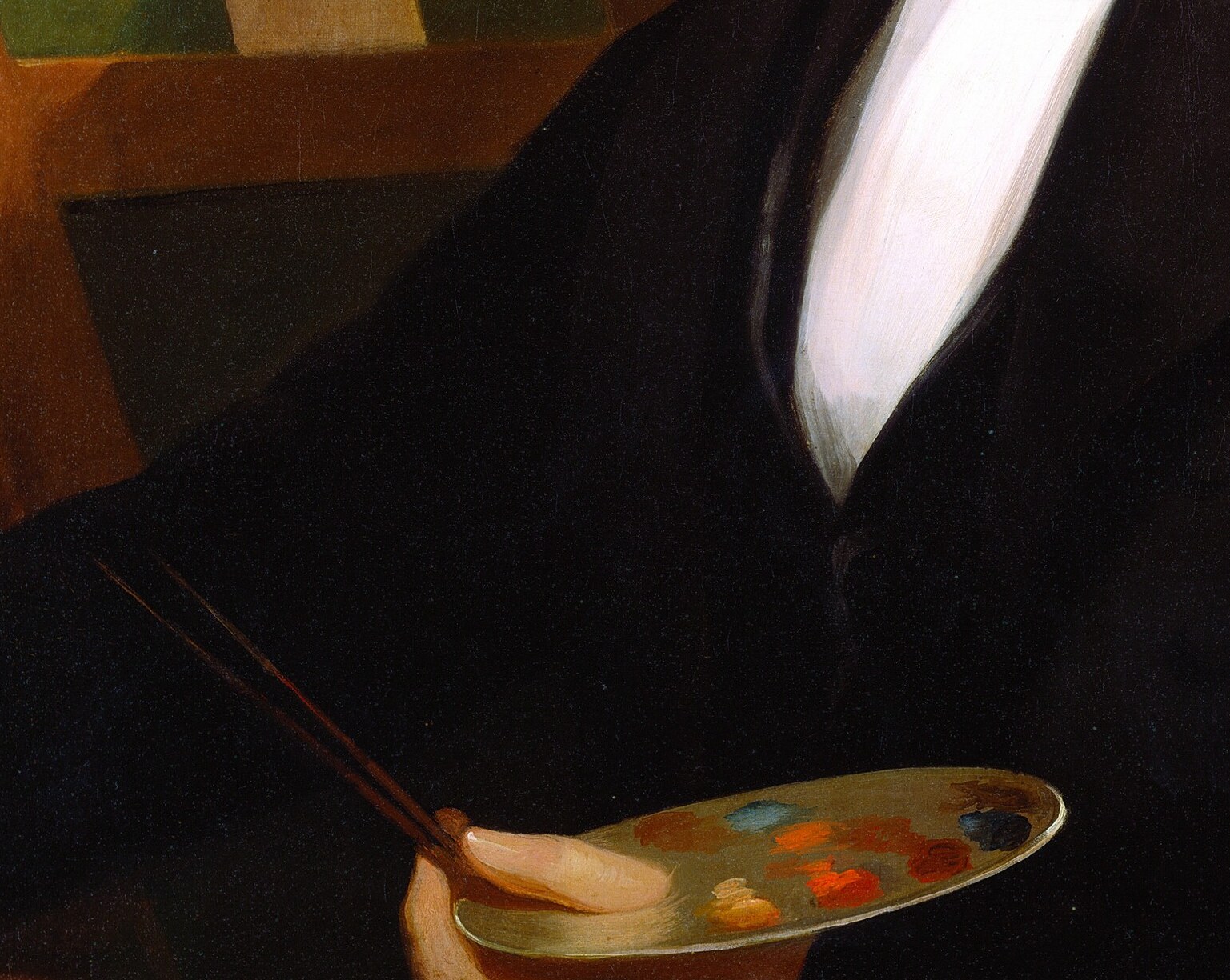
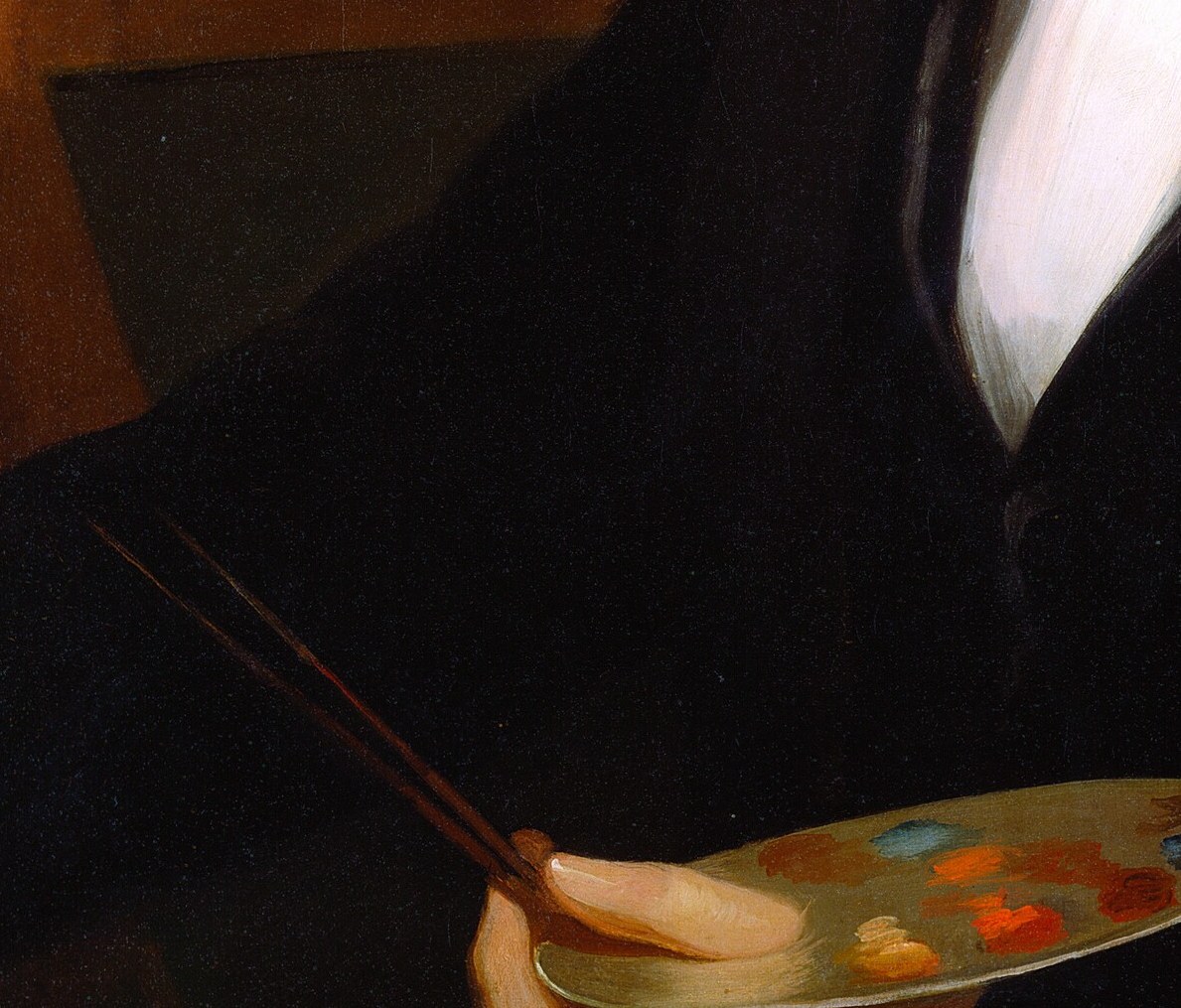
Look at his left hand gripping a wooden painter's palette with smears of mixed pigment still visible on its surface. It is not a clean studio prop. It is a tool in active use. In his right hand he displays a small finished portrait, a painting within the painting. Together these objects are a declaration: this man is an artist, or a patron so closely identified with art that he wants the tools of the trade recorded for posterity.
The painter who made this portrait was Jacob Eichholtz, a self-taught artist from Pennsylvania who trained as a coppersmith and tin-smith before turning to painting full-time. He became one of the most sought-after portraitists in early-19th-century Philadelphia and Lancaster, known for his direct, unpretentious realism. When he painted James P. Smith, he coded Smith's artistic identity into the props themselves, the palette and miniature do the biographical work that a label never could.
A portrait of a man who wanted to be remembered as an artist, painted by an artist who understood exactly which objects would carry that meaning.
Details

Transcript
He meets your eye with an almost confrontational directness. The brightest thing on the canvas is this crisp white cravat. In his left hand: a painter's palette, smeared with real pigment. His fingers grip the thumb-hole like a man who holds one every day. In his right: a small finished portrait, held like a calling card. He is declaring himself a painter. But this is a self-portrait by Jacob Eichholtz. The man in the chair is the patron. The artist painted himself through coded props instead.