Place du Carrousel, Paris by Pissarro, Camille
View the artwork: Place du Carrousel, Paris →
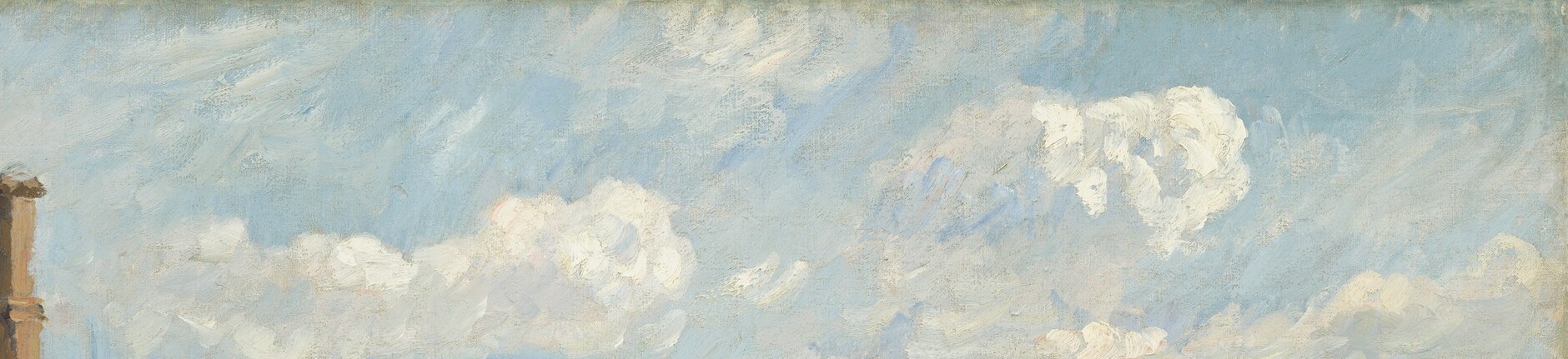
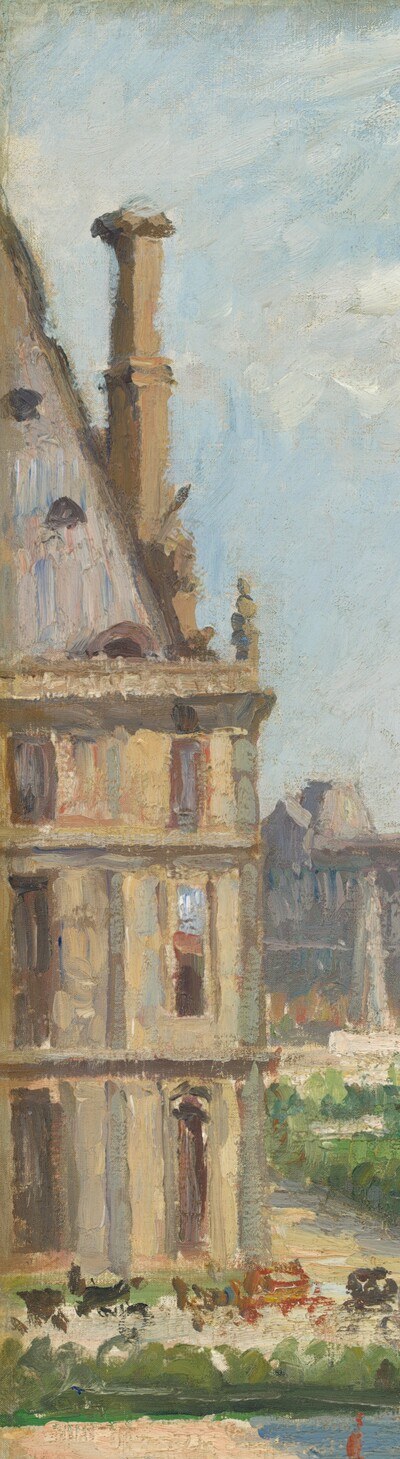
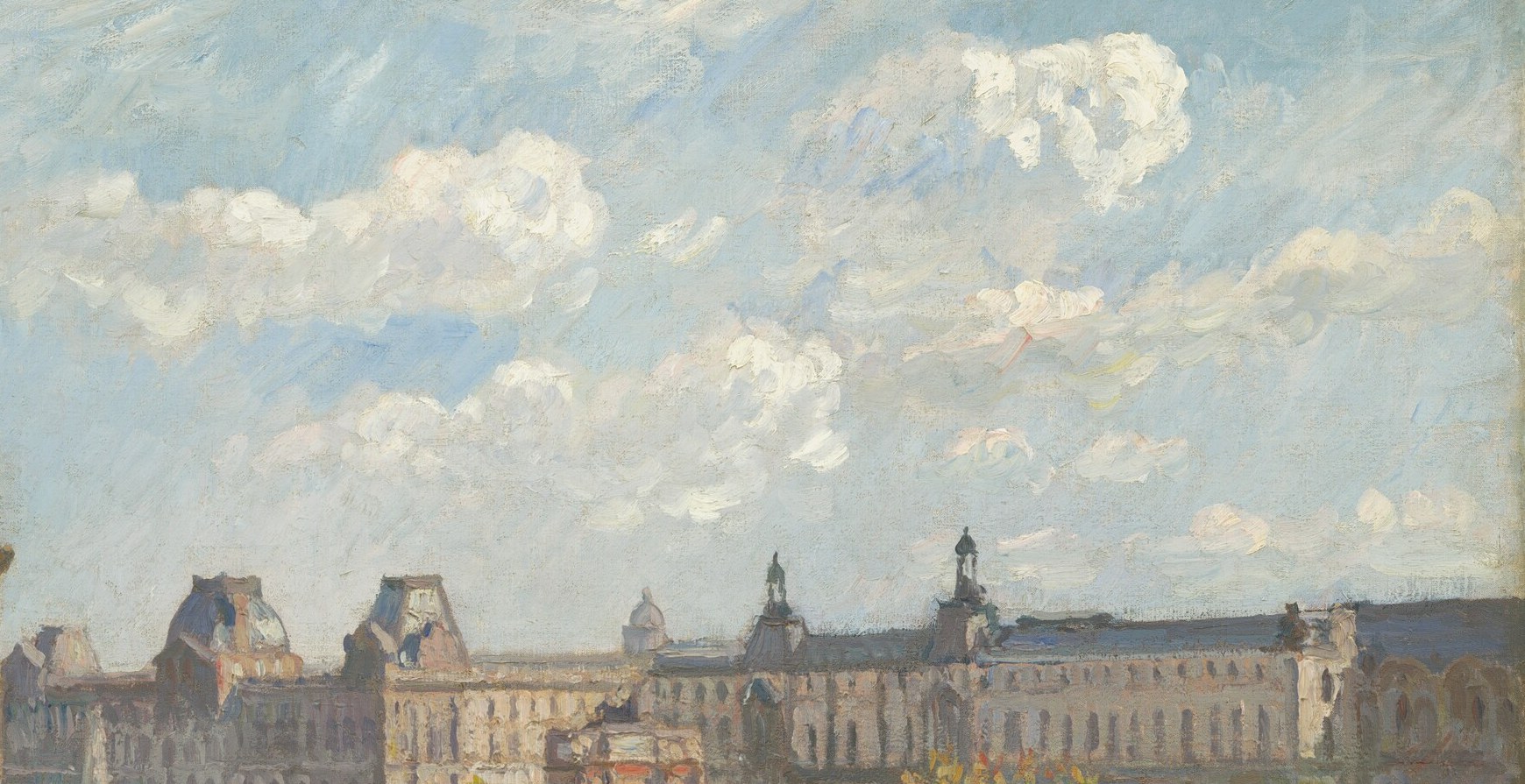
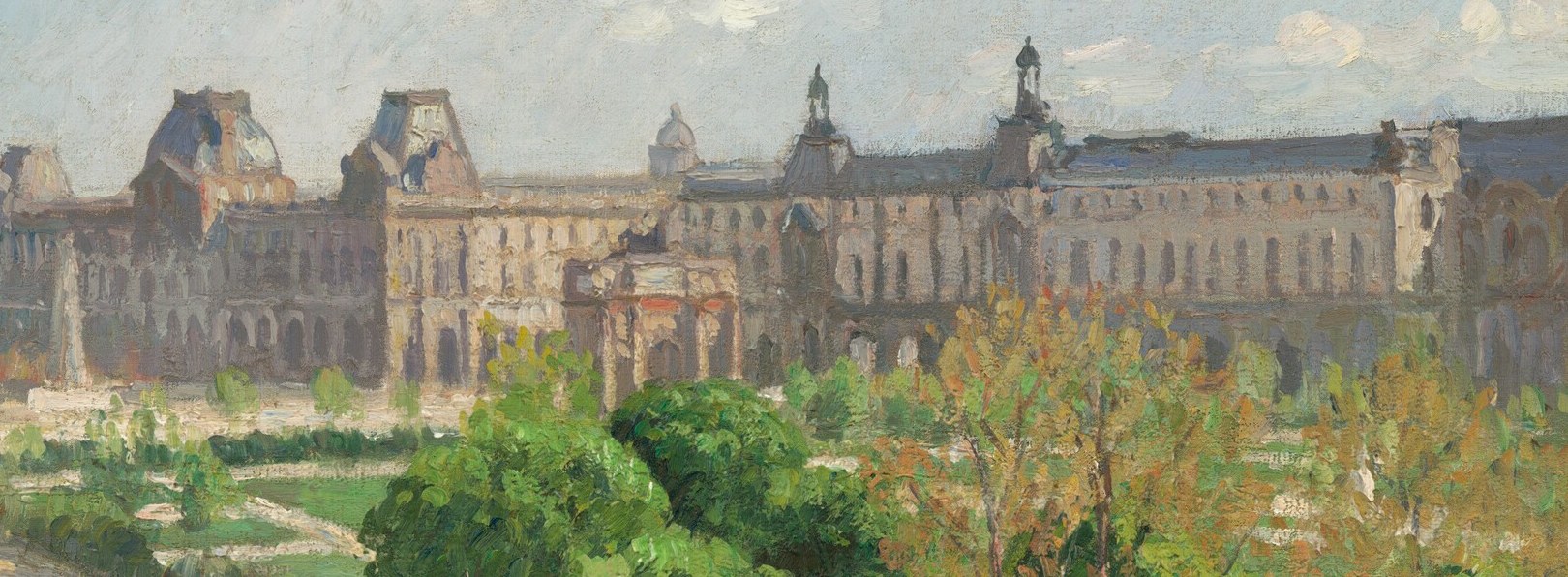
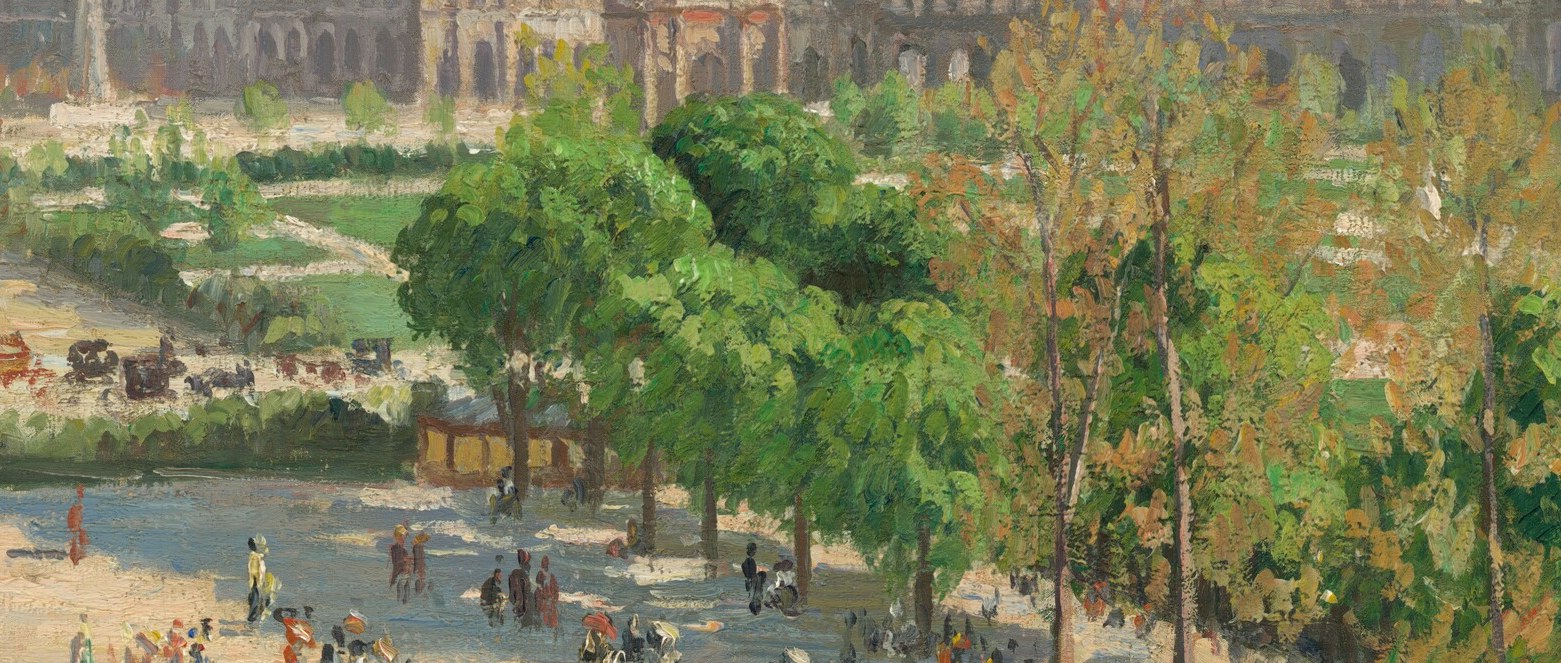
Camille Pissarro painted "Place du Carrousel, Paris" in 1900, from an elevated window overlooking the Louvre's grand western wing. Today it hangs in the National Gallery of Art in Washington, D.C. It is a quiet, precise record of a city on the threshold of a new century.
Look at the square itself. The only vehicles are horse-drawn cabs and carriages, their dark forms silhouetted against the pale winter pavement. The automobile had been invented, but here it has not yet arrived. A few scattered figures cross the open plaza, each one just a handful of flickering brushstrokes. Above the roofline, thin trails of smoke rise from the chimneys: the palace was not a museum yet. People lived and worked inside.
Pissarro was nearly seventy and struggling with a chronic eye condition that made it painful to walk through the streets. Instead, he painted from the window of a rented apartment. That elevated, detached perspective became his signature in his late city views. It also makes this painting a kind of eyewitness: a man watching the rhythms of his city from above, setting down exactly what he saw without judgment or drama.
The year 1900 was the year of the Paris Exposition, a world's fair that drew millions and announced France's faith in the future. Pissarro painted not the fairground spectacle, but the everyday moment just outside it. This is the Paris that the crowds walked through and forgot. He made sure it would last.
#arthistory #pissarro #impressionism
Details
Transcript
Paris, 1900. The city is opening its grand new century. This is the Place du Carrousel, right in the heart of the Louvre palace. Smoke rises from the chimneys. The palace was alive inside. Across the square, the only traffic is horse-drawn. The painter was almost seventy and could not walk without pain. He watched it all from his window, and he painted what he saw.