Artwork
Place du Carrousel, Paris
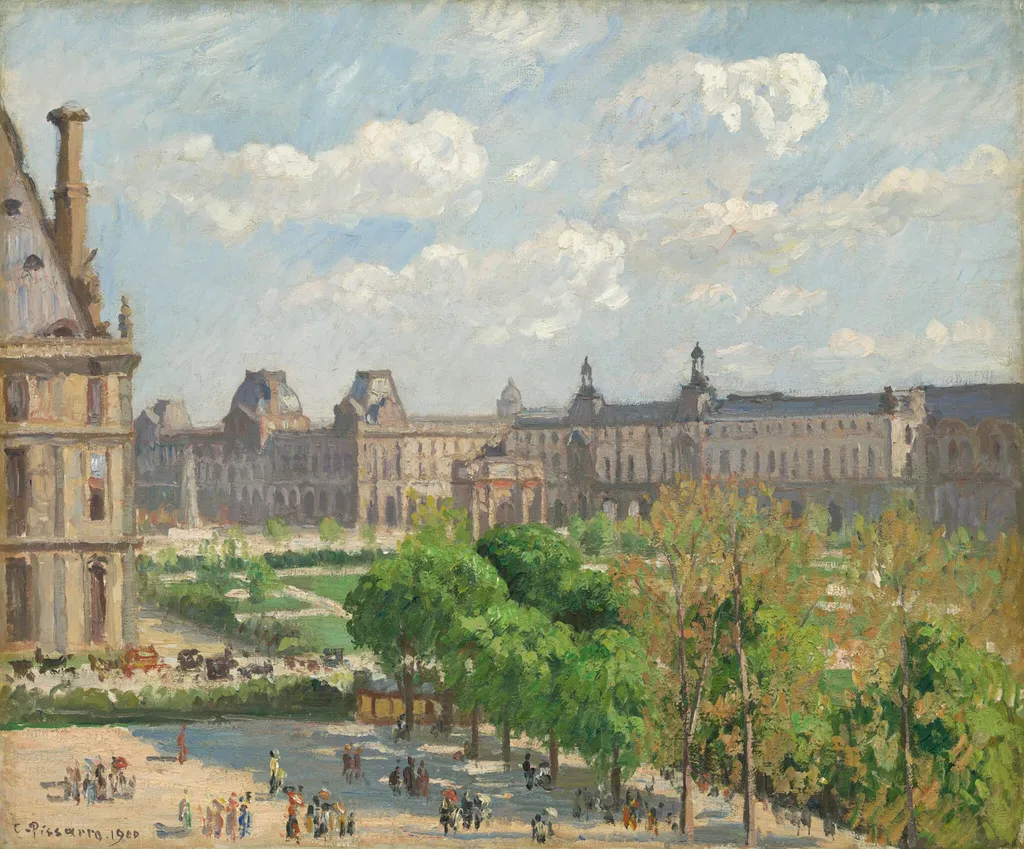
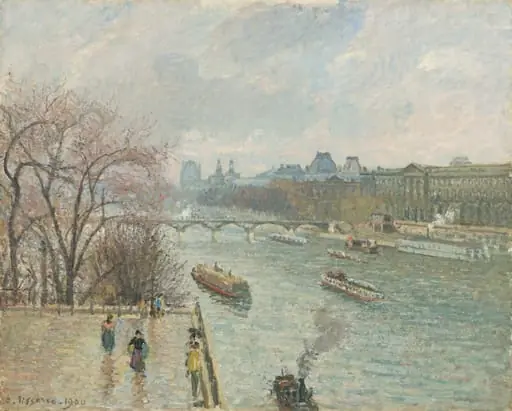
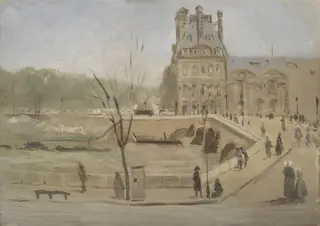
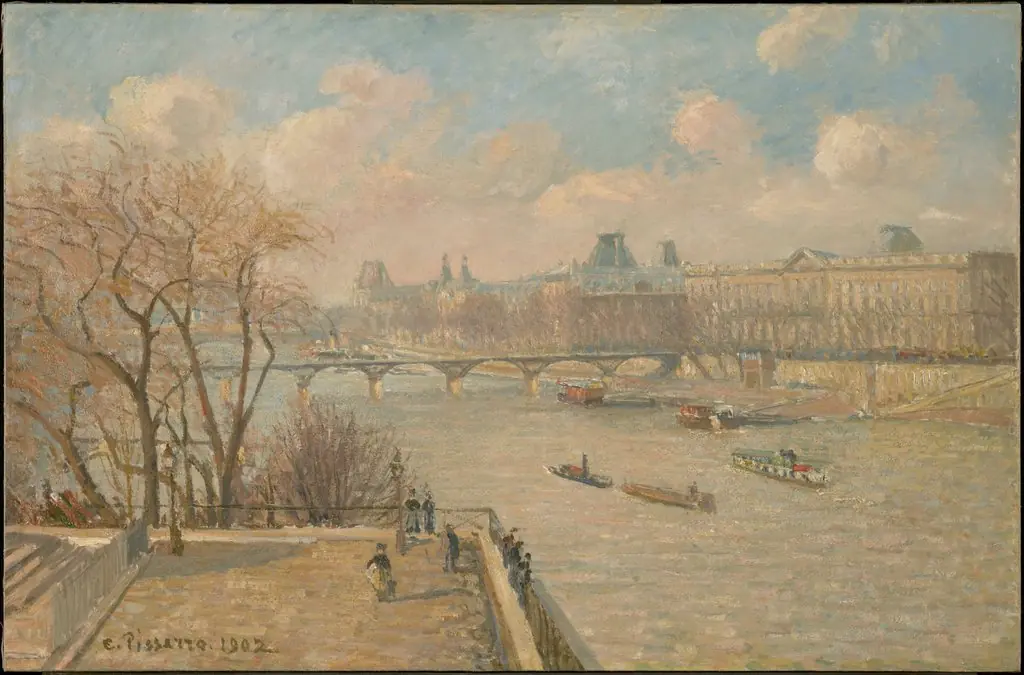
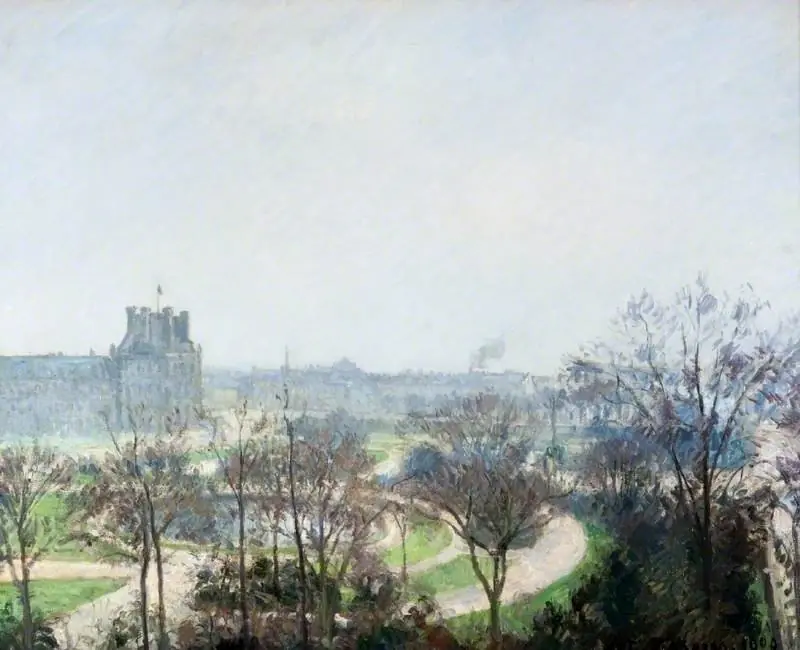
Place du Carrousel, Paris is an oil painting by the Impressionist artist Camille Pissarro. It dates from 1900 and is held in the collection of the National Gallery of Art.
- Inscription
- Inscribed:lower left: C. Pissarro.1900
About this work
A quiet Paris square with bare trees and a two-story cream house. Pissarro painted it in 1900, nearly 70, using quick strokes to catch the winter light. Smoke curls from the chimneys and a few people walk below.
He often worked from windows, which gave his street views a fresh, almost photographic feel. National Gallery of Art, Washington.
History & Provenance
The painting later entered the collection of Bruno Stahl in Berlin, which was likely established by his father, Heinrich Stahl.
Camille Pissarro created the oil-on-canvas cityscape Place du Carrousel, Paris in 1900. Following the artist's death in 1903, the work passed by inheritance to his wife, Julie Pissarro. It was subsequently sold at the Galerie Georges Petit in Paris on December 3, 1928, and acquired by Van Riel.
The painting later entered the collection of Bruno Stahl in Berlin, which was likely established by his father, Heinrich Stahl. During World War II, the Nazi Einsatzstab Reichsleiter Rosenberg (ERR) confiscated the work from a bank vault in France, where it was stored alongside Wildenstein holdings. Hermann Göring appropriated the piece on March 17, 1941, listing it as Louvreansicht.
After the war, the painting was recovered and sold by Wildenstein & Co. to Ailsa Mellon Bruce on March 30, 1949. Upon her death in 1969, she bequeathed the work to the National Gallery of Art in Washington, D.C., in 1970.
Legacy
The painting entered the National Gallery of Art in 1970 through the bequest of Ailsa Mellon Bruce, having previously passed from Pissarro to his wife, then to Bruno Stahl, whose collection was looted by the ERR during World War II. Its journey reflects the broader pattern of wartime art seizures and post-war restitution. The work, classified as a cityscape of Place du Carrousel, is documented in both the provenance file and Wikidata as a 1900 oil on canvas depicting a house and tree.
Its inclusion in a major U.S. museum collection has made it a reference point in studies of Pissarro’s urban subjects, reinforcing his reputation as a leading Impressionist chronicler of Parisian streets.
Overview
Place du Carrousel, Paris is an oil on canvas painting by Camille Pissarro, created in 1900. This work captures a tranquil winter scene in the Parisian square, featuring bare trees and a two-story cream-colored building. Pissarro, nearly seventy at the time, rendered the urban landscape with a sense of quiet vitality, depicting subtle signs of life such as smoke rising from chimneys and a few figures strolling.
Technique & Style
Pissarro employed rapid brushwork to convey the specific quality of winter light in the Parisian square. This approach imbues the scene with a dynamic yet serene atmosphere. Despite the stillness of the bare trees and architectural elements, the artist's technique suggests movement and life, evident in the curling smoke and the sparse human presence, creating a fresh and immediate impression.
Context
Pissarro frequently adopted the practice of painting from an elevated vantage point, often a window, to maintain a certain detachment from the bustling urban environment below. This method allowed him to observe the city's rhythms from a removed perspective, lending his street views, including this depiction of the Place du Carrousel, a distinct clarity and an almost photographic immediacy in their composition and light.
Own this work as a print
Artist & collection