八仙猿鶴図|Eight Daoist Immortals, Cranes, and Gibbons by Kano Tanshin (Morimasa) 狩野探信
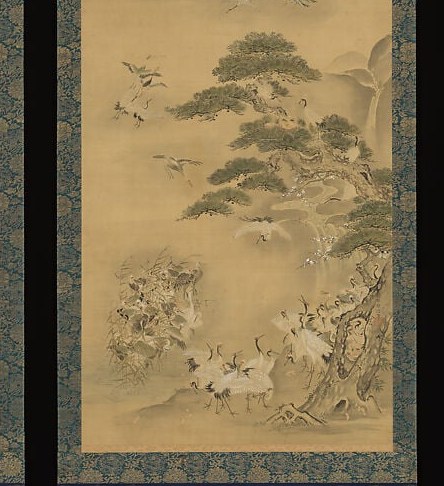
Kano Tanshin's "Eight Daoist Immortals, Cranes, and Gibbons," painted around 1685, is a stunning example of late Edo period Japanese religious art. This triptych, displayed at a prestigious museum, showcases the enduring popularity of Daoist themes.
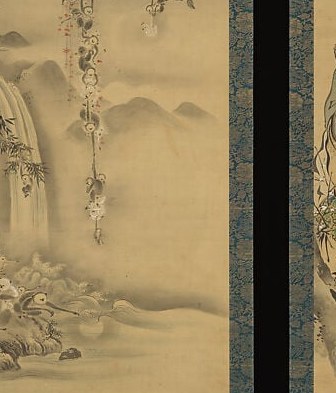
The painting depicts the Eight Daoist Immortals traversing a rugged, mist-shrouded landscape. Each immortal is identifiable by a unique attribute, such as a flute, a fan, or a flower branch. The integration of mythical figures with natural elements like towering waterfalls and ancient pine trees creates a dynamic composition.
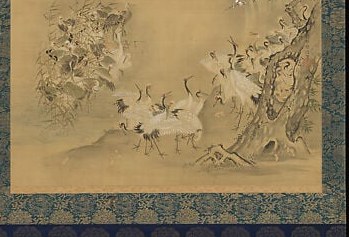
Tanshin, a master of the Kano school, employed fine, precise brushwork for the intricate details, especially visible in the swirling mists and dense forest foliage. The presence of cranes, traditional symbols of longevity, further reinforces the spiritual message of the work. This piece beautifully balances spiritual symbolism with atmospheric depth, inviting viewers into a timeless realm.
What details do you find most captivating in this work?
Details
Transcript
This 17th-century triptych shows the Eight Daoist Immortals. Each immortal has a specific attribute, like this flower branch. Or this one, holding a scroll of knowledge. The painter, Kano Tanshin, used fine brushwork for mist and trees. Cranes symbolize longevity, reinforcing the Daoist themes. Look closely at the swirling, ethereal mist around them. These elements balance spiritual symbolism with atmospheric depth.