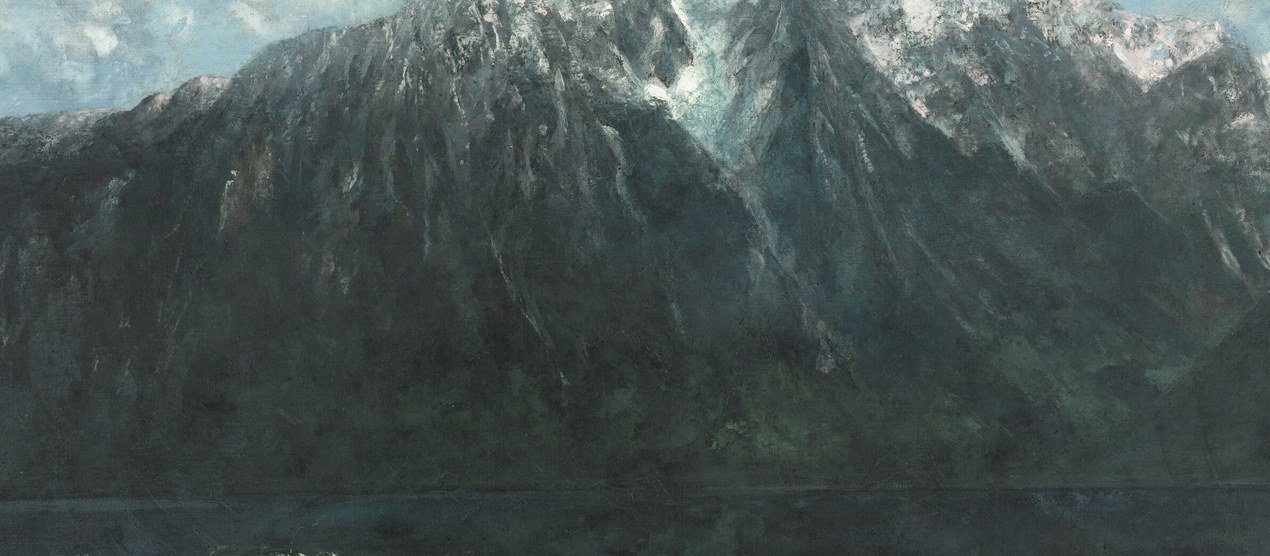
Panoramic View of the Alps, Les Dents du Midi by Gustave Courbet
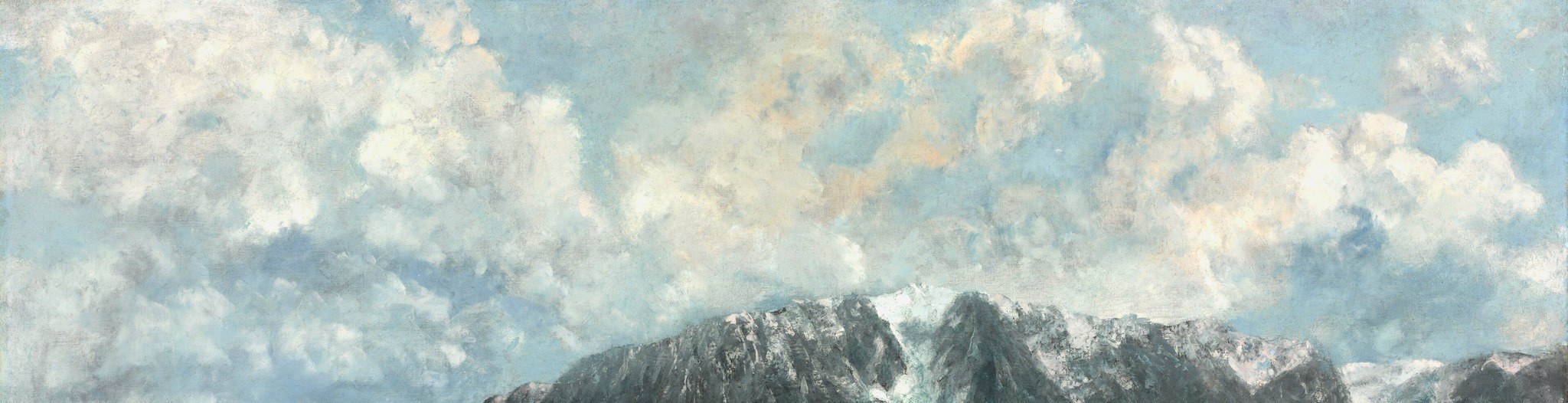
This is Gustave Courbet's Panoramic View of the Alps, Les Dents du Midi, painted in 1877 during the artist's final exile in Switzerland.
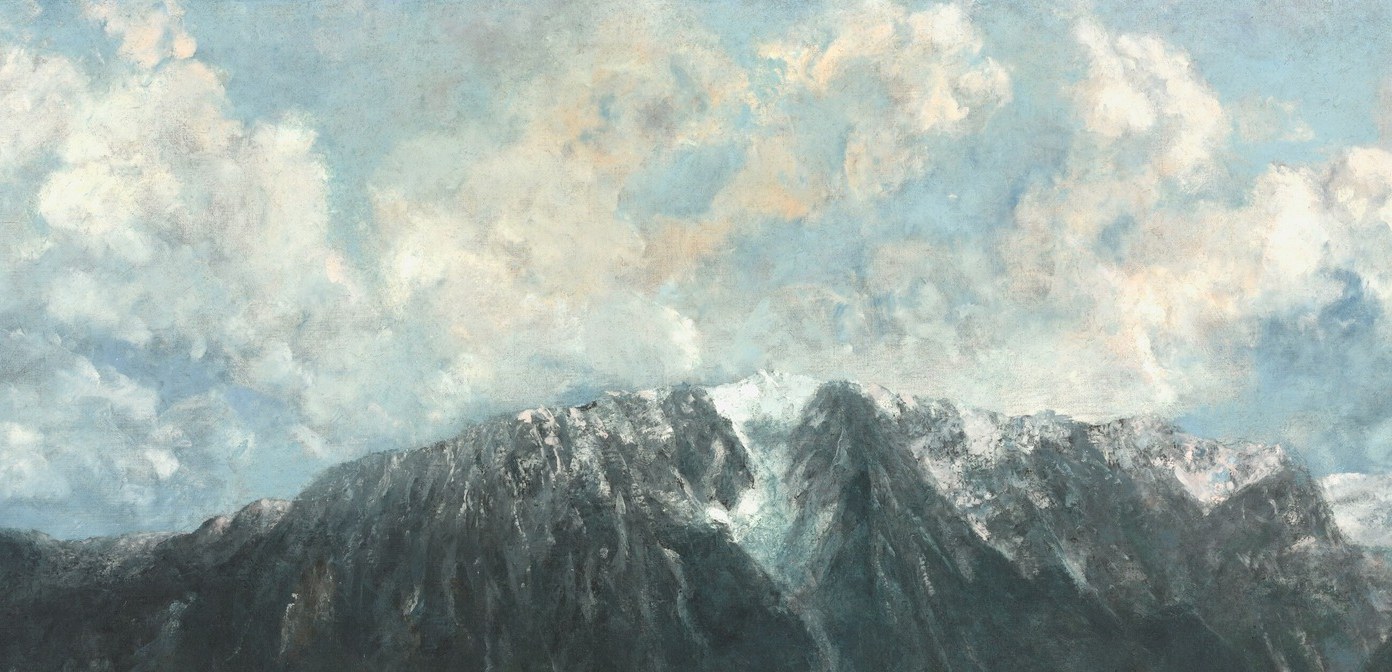
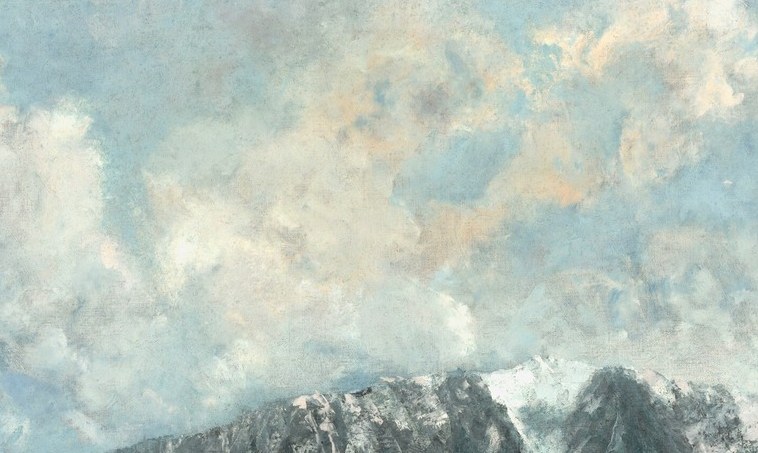
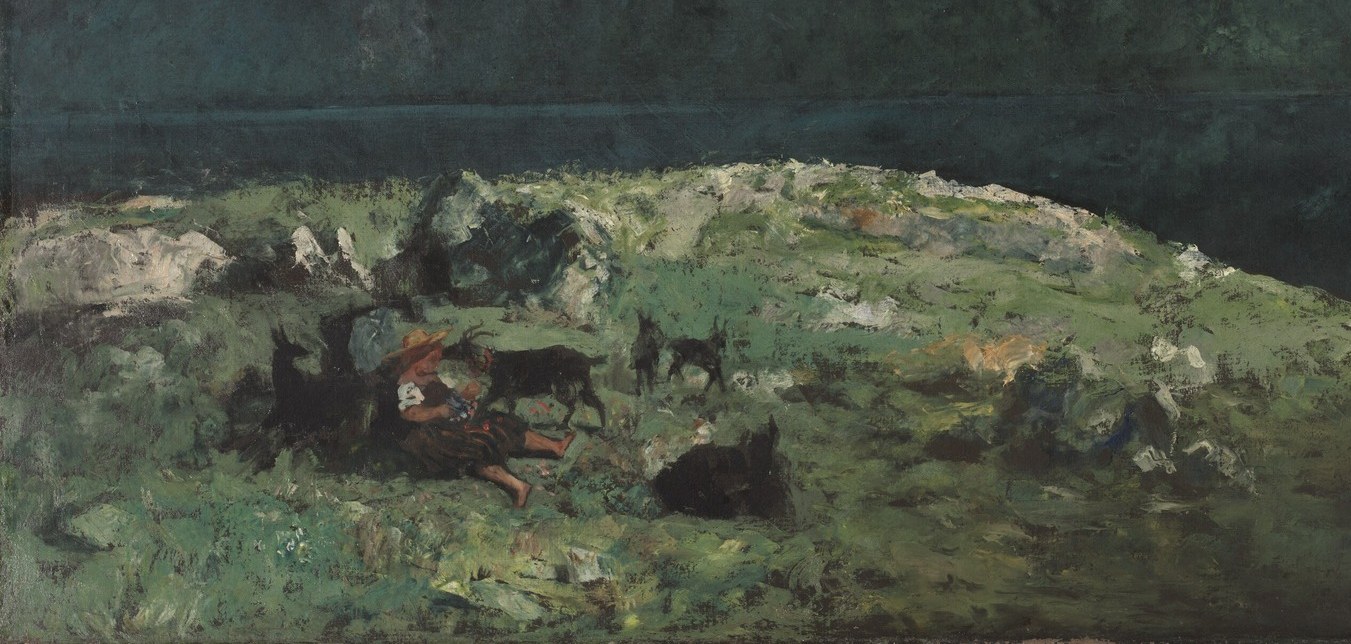
Look closely at the way Courbet handles the snow on the central summit. He built it up with heavy impasto, so the white physically catches light and glows against the dark cliff faces beneath. Then let your eye drop to the foreground hillside where small dark cattle are grazing. They look like nothing at first, but the moment you notice them, the entire mountain behind them becomes unthinkably vast. That is Courbet's realism: not drama, but a quiet, observable truth.
Courbet was not on holiday. He fled France in 1873 after being held liable for the reconstruction of the Vendôme Column, toppled during the Paris Commune. The French state demanded 323,000 francs he could never pay. So he painted landscapes of his new Swiss surroundings and sold them to survive. He died before the final installment was due.
In 2015, the Cleveland Museum of Art acquired this painting at auction for roughly $10.9 million. A work born from crippling debt now holds a permanent place in a major American museum, where its silent precision outlasts the political chaos that created it. Next time you see a Courbet landscape, ask yourself what it cost the painter to make it.
Details
Transcript
1877. Gustave Courbet is in exile in Switzerland. France gave him a bill for the cost of rebuilding a column. He owed 323,000 francs. He painted to survive. He painted this: the Dents du Midi range. The peaks aren't sentimental. They're specific and true. In 2015, the Cleveland Museum of Art bought it for just under $11 million.