The Old Castle by Emanuel Murant
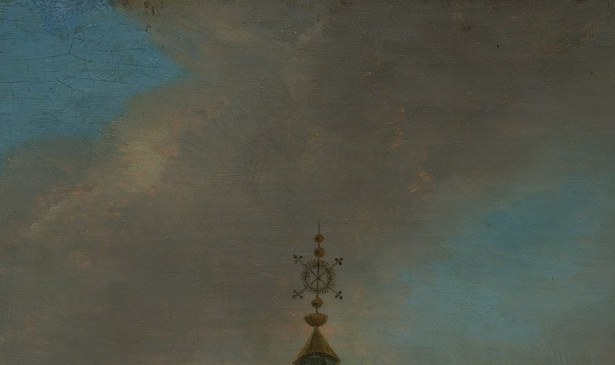
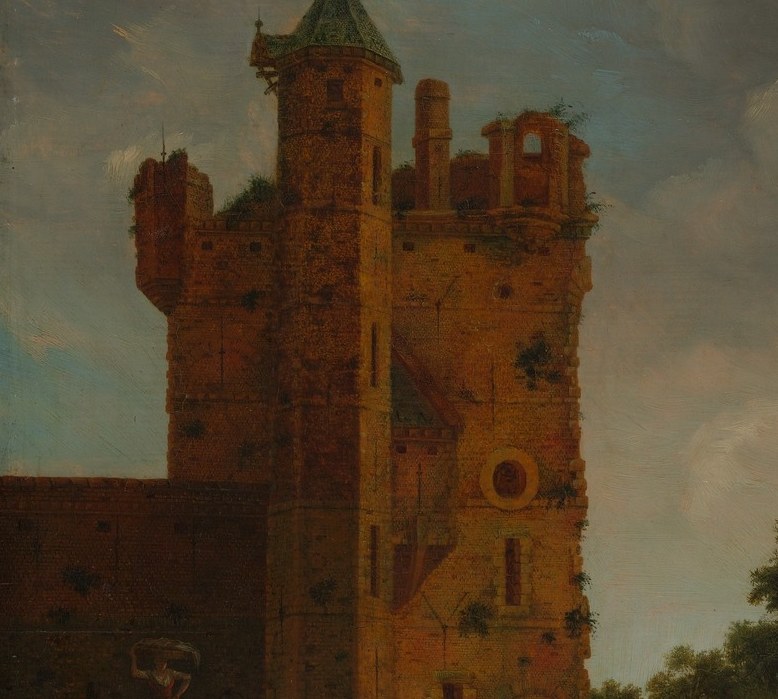
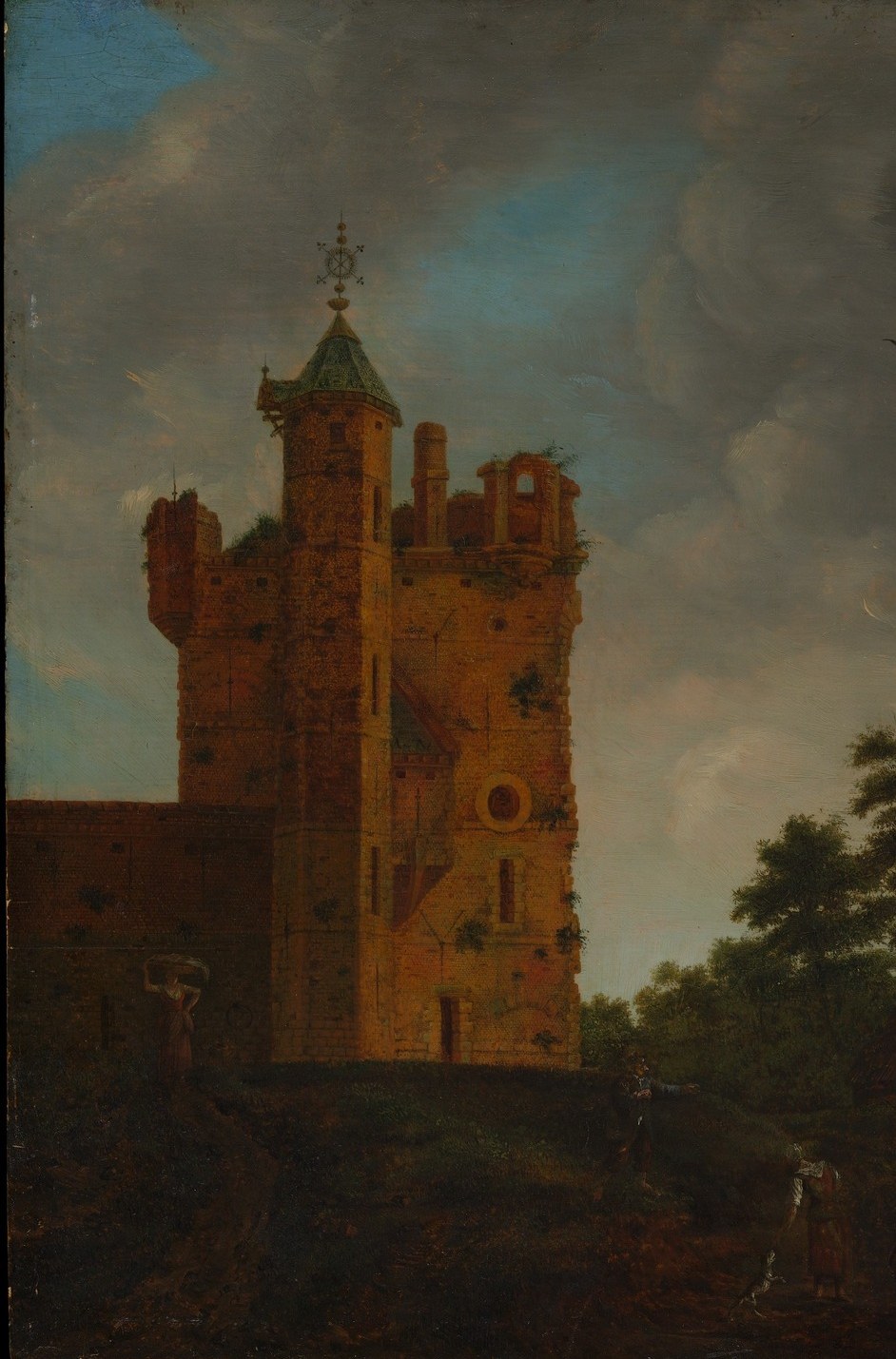
This is Emanuel Murant's "The Old Castle," painted in 1671. It belongs to the National Gallery in London, and it is one of the quietest and most truthful documents of architectural decay in Dutch painting. Murant was born in Amsterdam in 1622 and spent much of his career traveling through the countryside, sketching farmhouses, village streets, and abandoned structures. This is not an imaginary ruin conjured for a romantic mood. It is a specific place, rendered with an archaeologist's eye for a particular kind of Dutch brick and a particular stage of collapse.
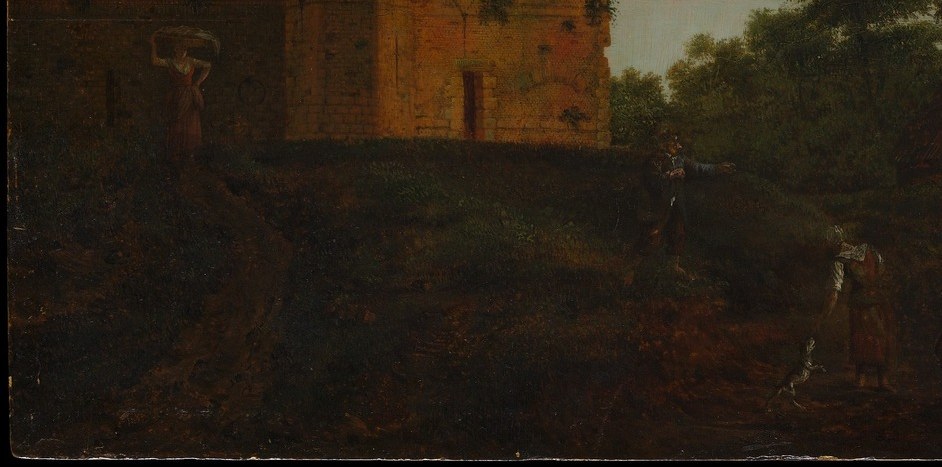
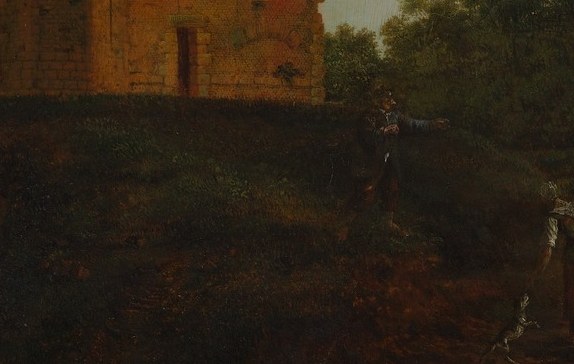
What makes the painting work is the scale. The tower fills the frame and is flanked by dark, compressing trees, but the entire composition is built around a trick you might miss on a phone screen. At the base of the tower, a few tiny figures stand against the wall. They are the painting's quiet thesis: humanity is small, and what we build outlasts us only in fragments. The weathered brick texture, especially around the arched window and the crumbling base, is painted with a restrained, factual brush that refuses to exaggerate.
Emanuel Murant lived until 1700, but his reputation faded quickly. He is not a famous name. In this single painting, though, he captured something that later artists would turn into a theatrical formula. He did it a hundred years early, and he did it by looking carefully at a real ruin under a real stormy sky. The light breaking through the clouds at the upper right is the only drama he allowed himself, and it is enough.
Details
Transcript
1671. A Dutch painter walks into the countryside. He finds a castle that has been falling apart for decades. The pointed turret is intact, but the brick below is crumbling. Look at the base. Vegetation is reclaiming the stone. The tiny figures at the wall give away the true scale. Murant painted this not as fantasy, but as a record of a real place.