Garden at Sainte-Adresse by Claude Monet
View the artwork: Garden at Sainte-Adresse →
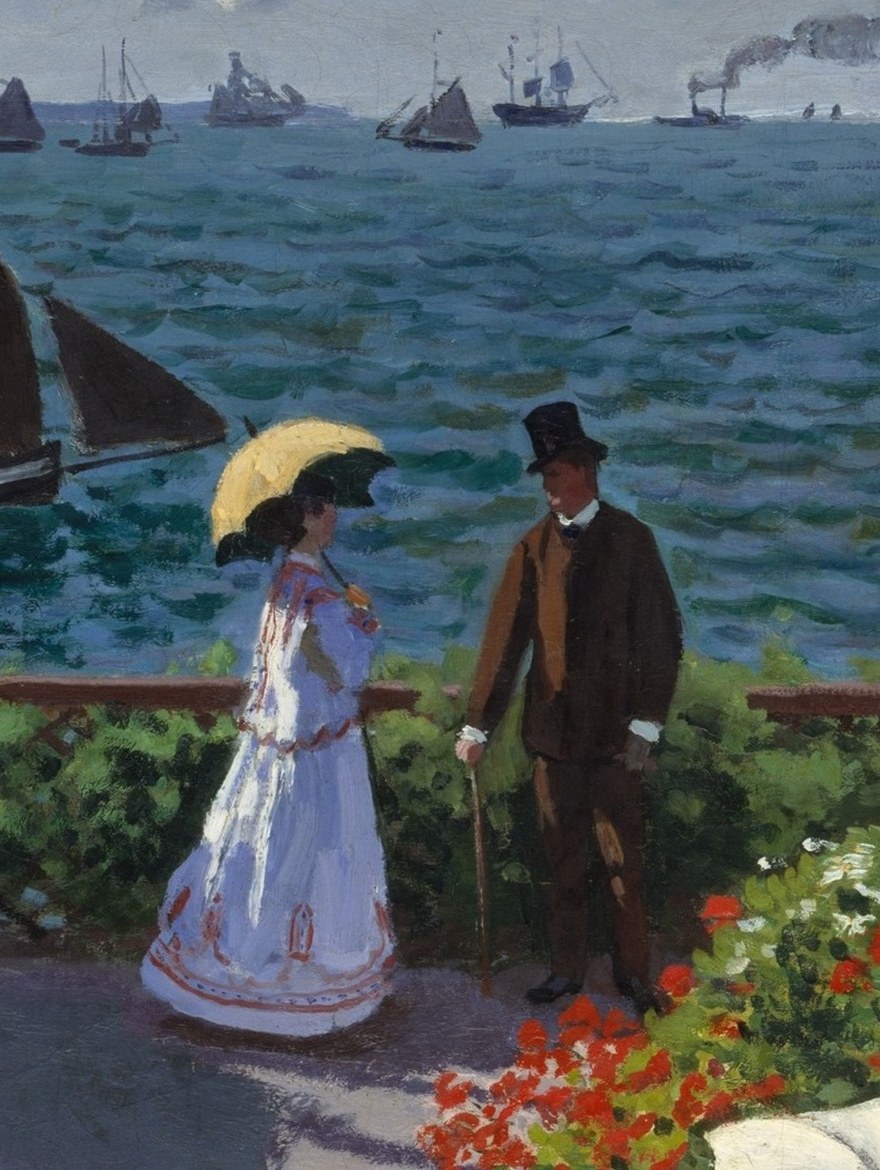
Claude Monet painted *Garden at Sainte-Adresse* in the summer of 1867, when he was 26 and broke. He was staying with his aunt in this seaside town near Le Havre, and the painting shows the terrace of the villa looking out over the English Channel. It is remarkably large for an outdoor painting of the period, and it now lives at the Metropolitan Museum of Art.
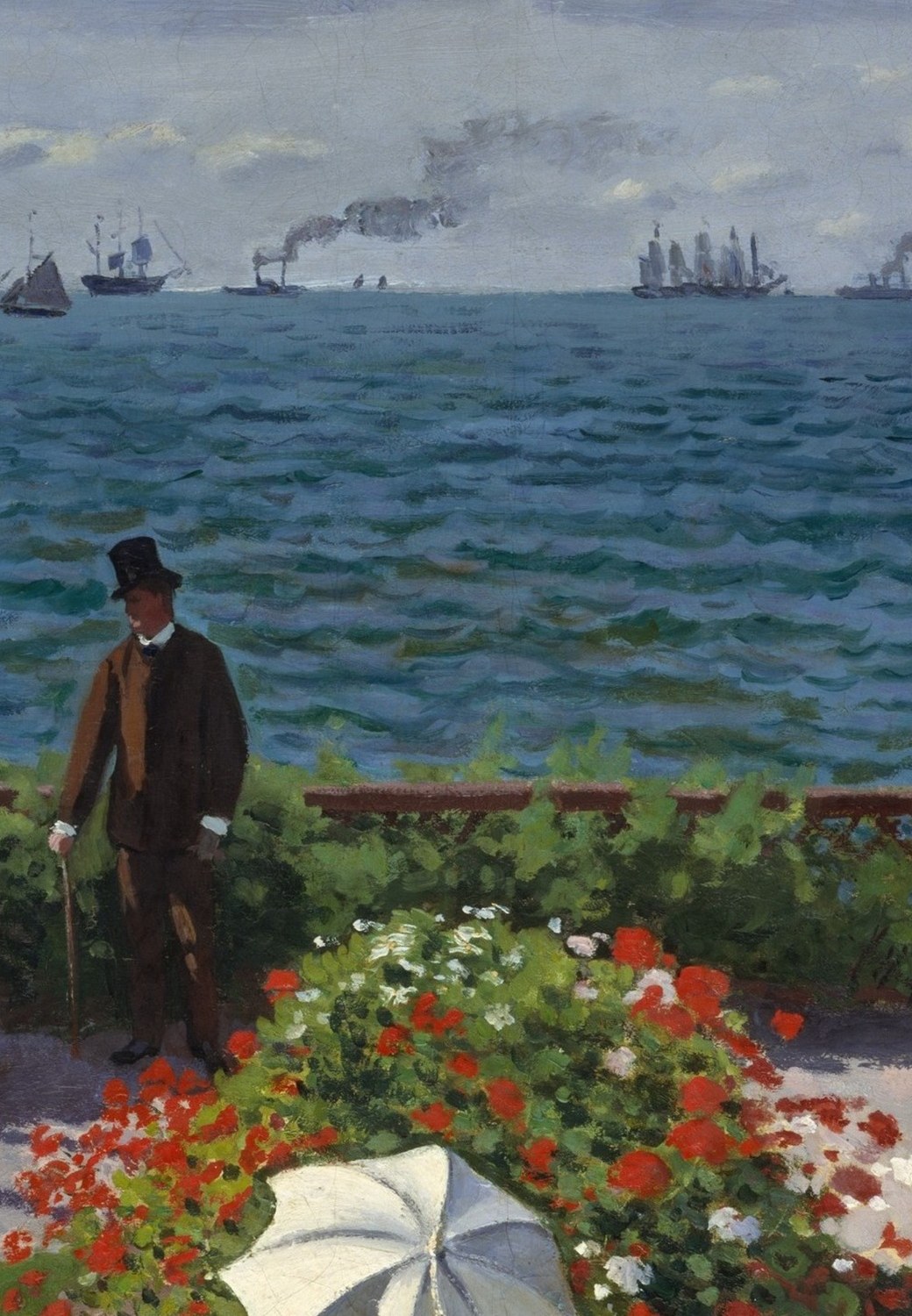
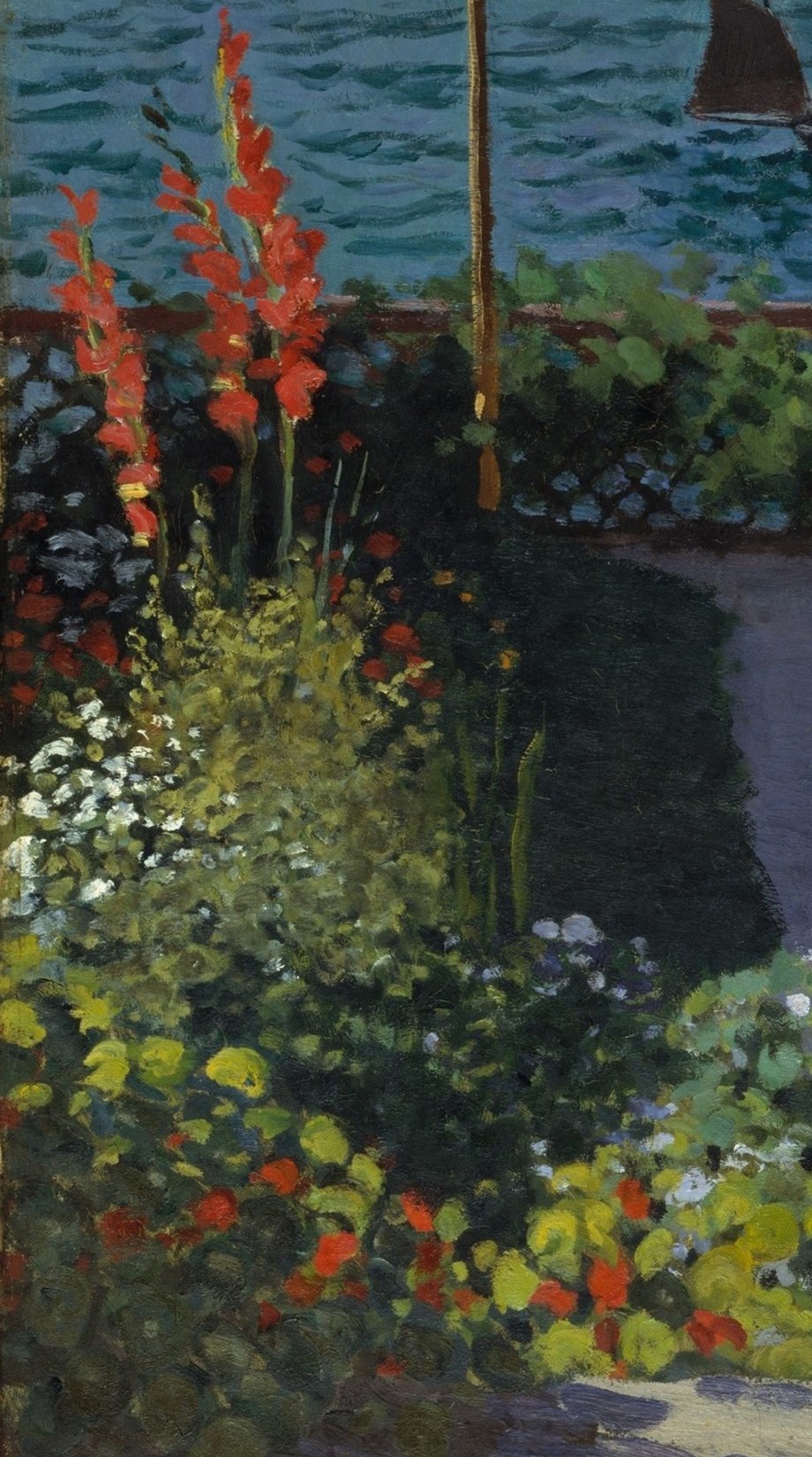
The scene looks like pure leisure: a man and woman stand by the railing, figures sit in wicker chairs, red gladioli blaze in the garden beds, and two French tricolor flags snap in the wind. Monet builds the whole composition around a flat white fence that divides garden from sea, keeping the eye level and the picture space deliberately shallow, almost like a Japanese woodblock print.
But look at the horizon on the right. Barely visible in the haze are dark steam ships trailing smoke. Sainte-Adresse overlooked one of the busiest shipping lanes in the world. While the bourgeois figures relax, the industrial present is already streaming past.
The painting was shown at the Fourth Impressionist Exhibition in 1879 and acquired by the Met a century later, in 1967. For all its sun-drenched charm, it is an early clue that Monet saw modern life whole: not just gardens and flags, but the smoke on the horizon too.
#arthistory #claudemonet #impressionism
Details


Transcript
A sunny terrace by the sea. A perfect summer day. Monet painted this in the summer of 1867. He was 26. Flags snap in the wind. Sailboats dot the harbour. On the right, almost invisible against the glare, something else. Steam ships. The English Channel was a busy industrial trade route. Pleasure in the foreground, modern commerce passing silently behind it.