明/清 佚名 劉松年 偽款 山水人物圖|Garden estate by After Liu Songnian
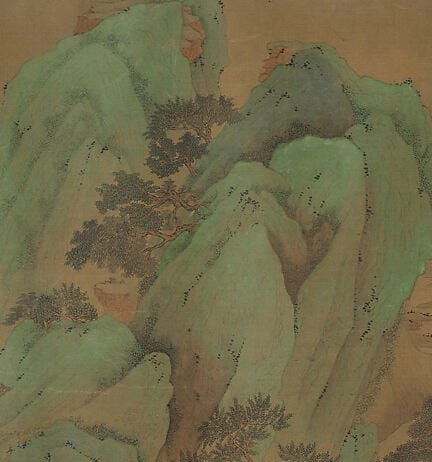
This is "Garden Estate," a handscroll from the 17th century, either Ming or Qing dynasty, by an unknown painter. Ink and color on silk. It is unsigned except for a false attribution to the Song dynasty master Liu Songnian, placed right on the painting itself.
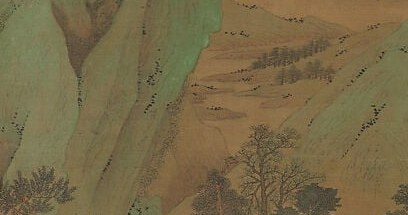
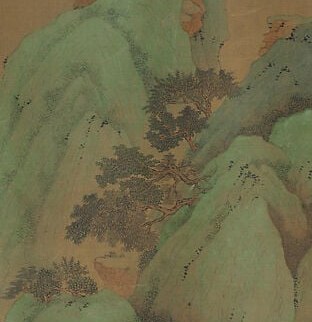
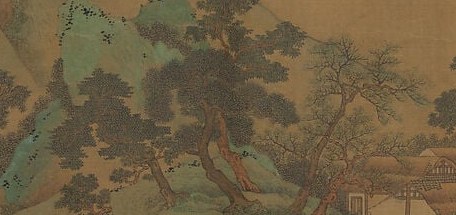
The scroll shows a mountain retreat: a red-roofed pavilion nestled in pines, tiny scholars strolling beneath ancient trees, mist parting the peaks. It is the classic ideal of withdrawal from public life into nature and intellect.
But the true signature is not the forged name. It is the tiny figure at the far right edge, where the scroll would unroll last. A lone servant crosses a bridge, carrying something under one arm, heading toward the pavilion. Scholars painted themselves into these scenes as the gentlemen in robes. The person who actually brought the food and lit the lamps is usually left out. Here, someone painted him in.
The scroll now sits in a museum collection, catalogued as "after Liu Songnian." The real painter is unknown. The person on the bridge is unknown. And somehow that feels exactly right.
Details
Transcript
Mountains, mist, a garden pavilion. Everything a scholar needs to retreat from the world. The red roofs among the pines announce the estate's boundary, marking out civilization from wilderness. But this is not a Song dynasty painting, even though the name in the corner says it is. It is a 17th-century forgery. Art historians spotted the labored brushwork, the missing energy. The forgery is the headline. But a handscroll is a journey, not a single frame. Travel past the mountains to the far right shore. Tucked where the journey ends: a single tiny figure, a servant crossing the bridge, barely an inch high. Alone on the margin, bringing provisions or a message. The one person who makes retreat possible.