The Lacemaker by Bernhard Keil
View the artwork: The Lacemaker →
A girl bends over a lacemaking pillow, her hands moving through a task so absorbing she never looks up. She is the subject of Bernhard Keil's 'The Lacemaker,' painted around 1665 and now in the Metropolitan Museum of Art.
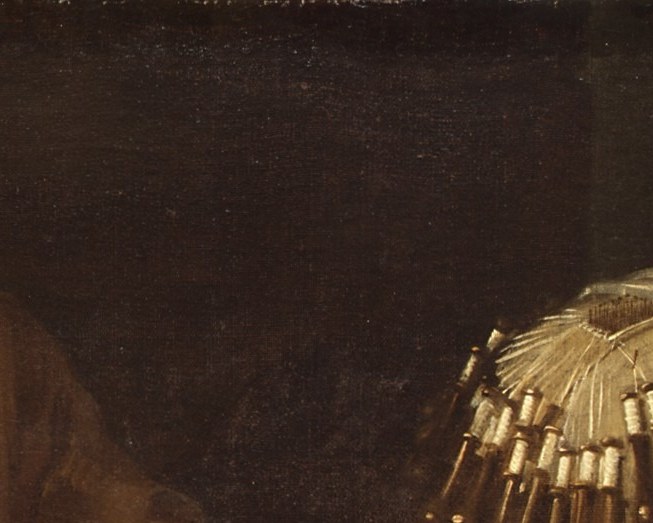
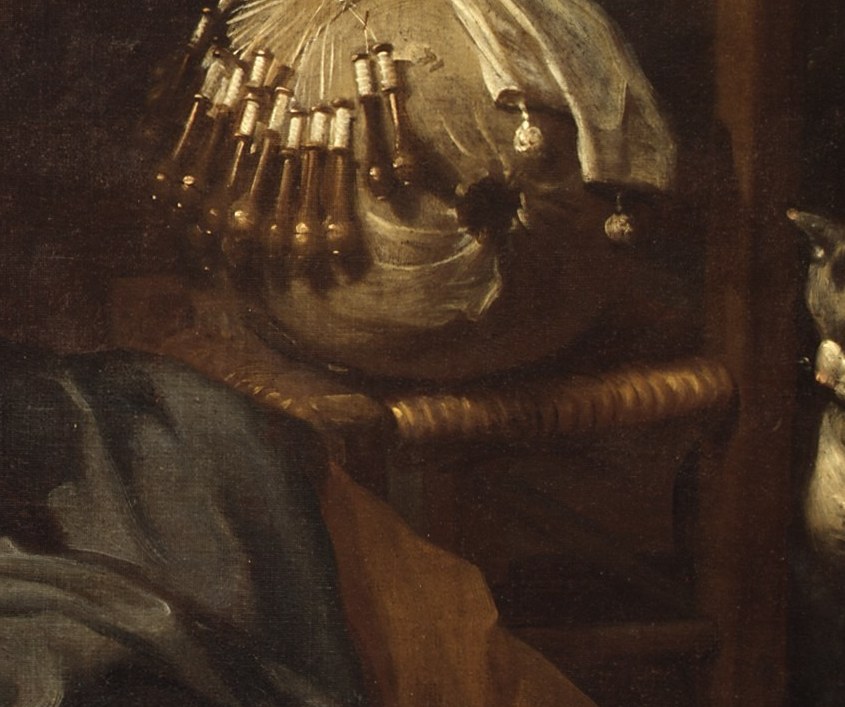
Keil gives us a rare, precise diagram of a mid-17th-century craft. The wooden bobbins and brass pins spread across the pillow are not generic props, they record exactly how needle-lace was made before industrialization erased this domestic technology. The lace she is producing, lighter threads stretched against the dark bolster, would have adorned a wealthier person's collar or cuff.
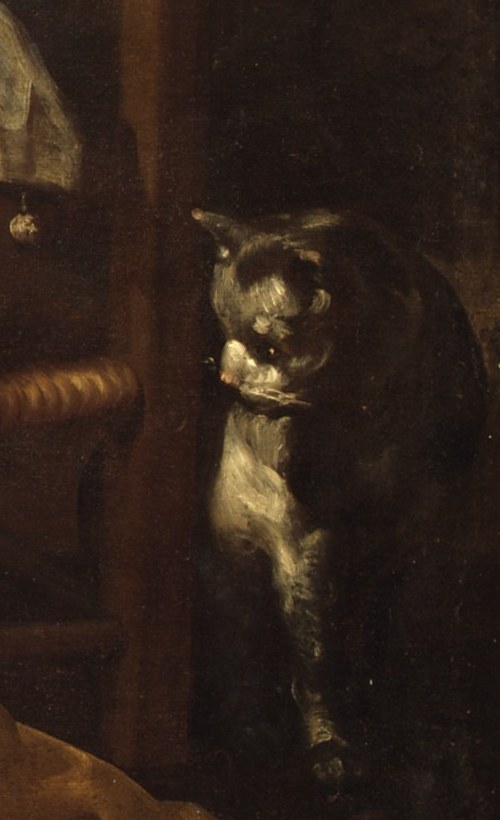
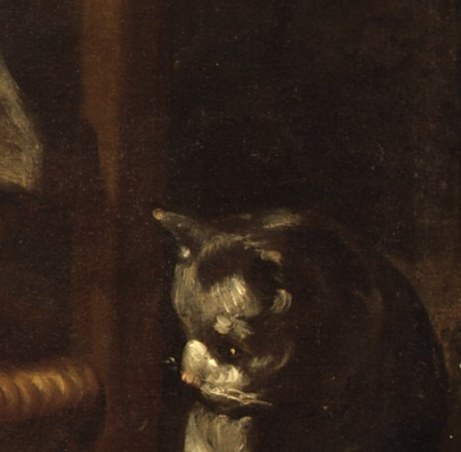
The Danish-born Keil trained in Rembrandt's Amsterdam workshop in the 1640s. You can see the master's influence in the deep, undifferentiated background that isolates the figure and in the bright white cap that anchors the composition. By the time he painted this, Keil had settled in Rome, converted to Catholicism, and absorbed Caravaggio's dramatic light. Art historians believe this canvas belonged to a series on the five senses. The girl's absorbed downward gaze and the unblinking cat at the right edge together symbolize sight.
'Duveen Brothers' once misattributed this canvas to Antonio Amorosi before correctly identifying Keil. It entered the Met's collection in 1971 as a bequest from Edward Fowles. Next time you see antique lace in a museum, look for the woman who made it, Keil already painted her.
#arthistory #dutchgoldenage #baroqueart
Details
Transcript
In 1665, this was not called a hobby. Lace was luxury, and making it was grueling child labor. Her face is downcast, focused entirely on the work. Look at her tools. This is a precise diagram of a lost technology. Those bone bobbins and brass pins vanished from homes by the 1800s. The painter trained in Rembrandt's studio. He learned to trap light. And this cat? It symbolizes sight, alert, unblinking, watching the labor.