Artwork
The Lacemaker
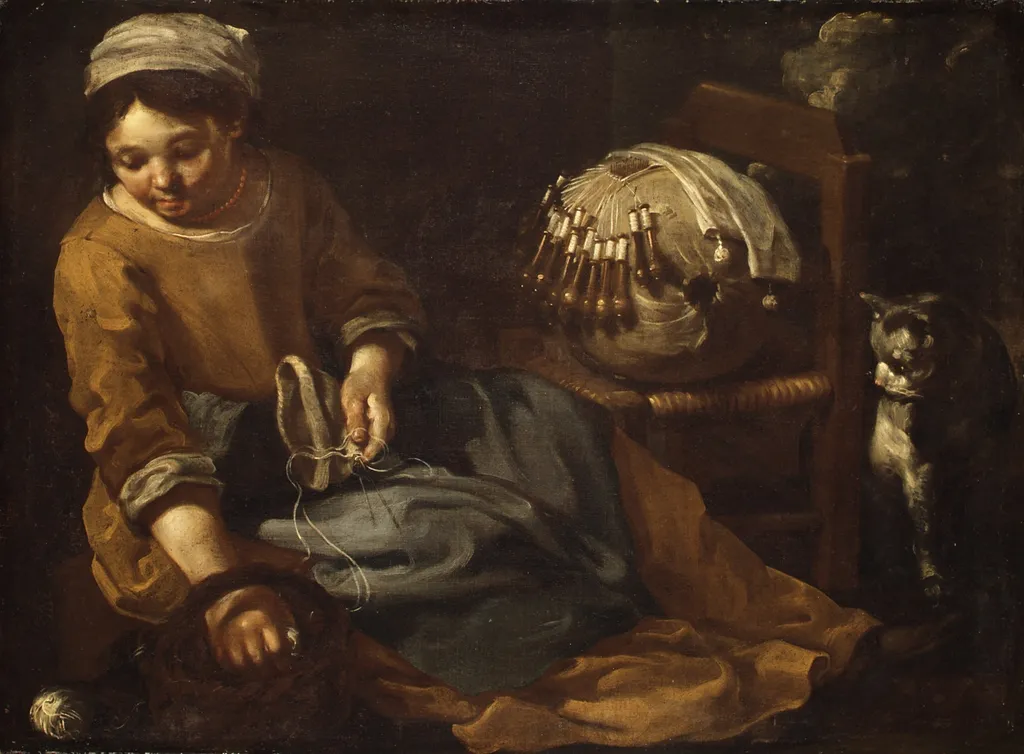
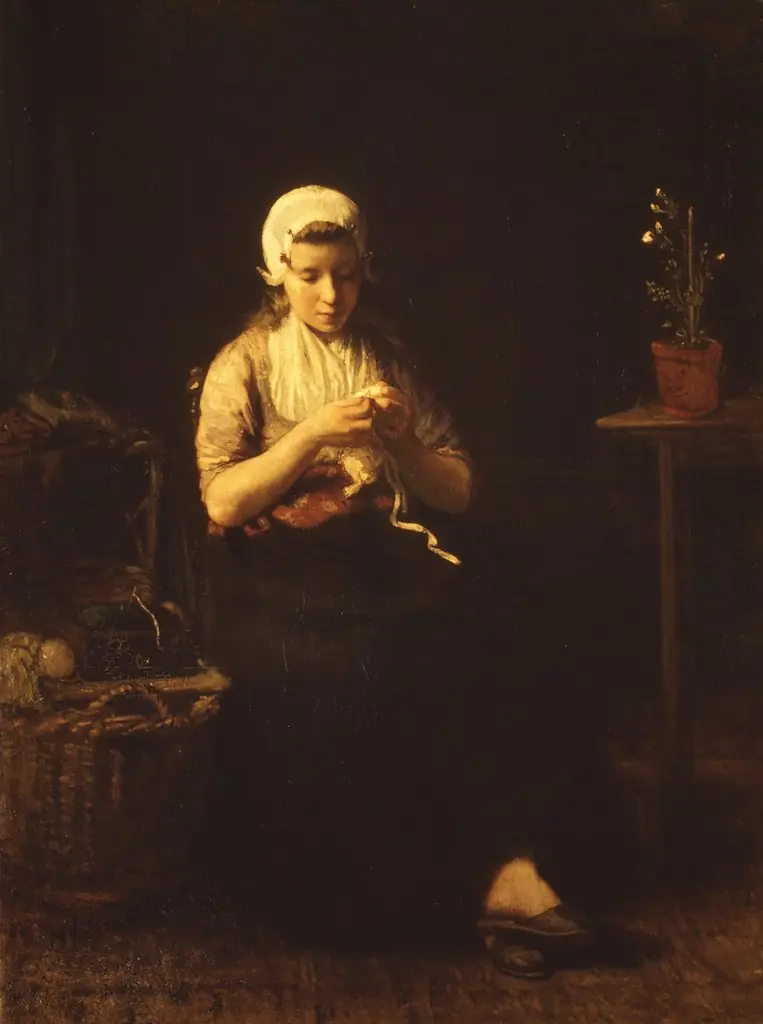
The Lacemaker is an oil painting by the Dutch Golden Age artist Bernhard Keil. It dates from 1665 and is held in the collection of the Metropolitan Museum of Art.
About this work
The Metropolitan Museum of Art holds the work, bequeathed by Edward Fowles in 1971; scholars think it may allegorize sight.
A cat watches from the shadows as a young girl bends over her lace pillow in Bernhard Keil's 1665 canvas. Born in Helsingør and trained in Rembrandt's Amsterdam studio, Keil painted this in Rome decades later, where Italian light and genre conventions replaced his Dutch habits. The Metropolitan Museum of Art holds the work, bequeathed by Edward Fowles in 1971; scholars think it may allegorize sight.
Subject & Meaning
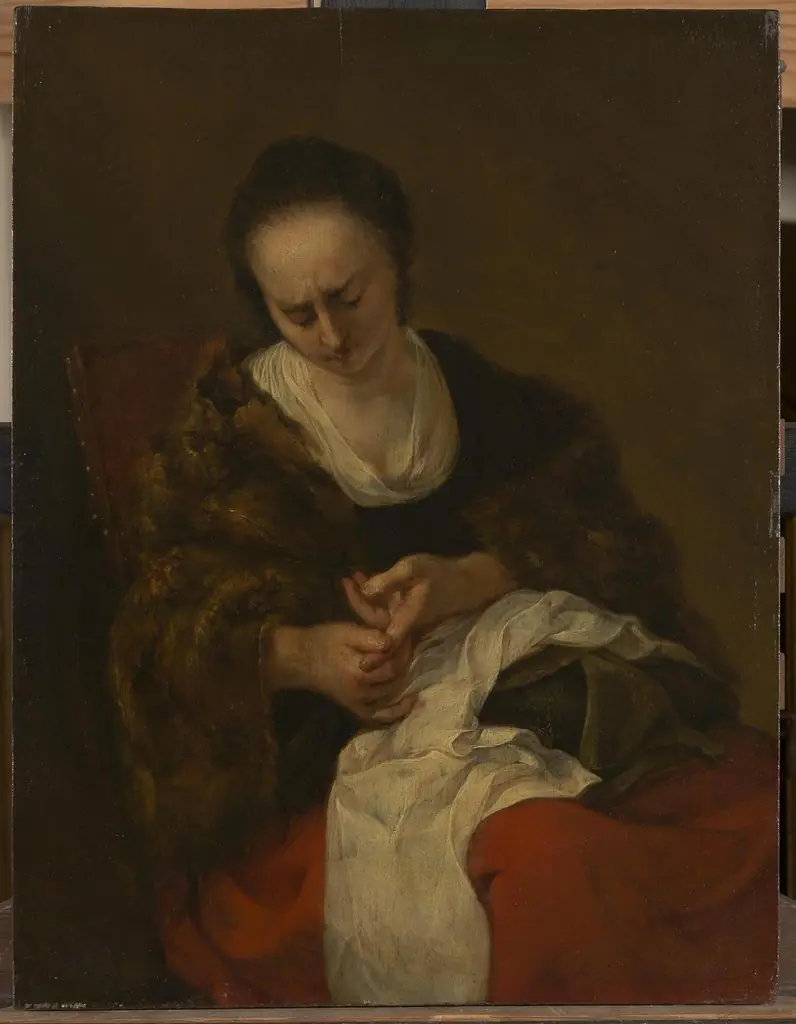
The painting depicts a young woman (or girl) seated with a lace pillow, engaged in bobbin lacemaking. A cat is present, and other objects include a basket, yarn, pins, thread, and a necklace. The scene is a domestic interior, emphasizing the craft of lacemaking as a subject.
Technique & Style
The Lacemaker is an oil painting on canvas, executed in 1665. It measures 71.8 cm in height and 97.2 cm in width. The composition depicts a girl engaged in lacemaking, accompanied by a cat, a lace pillow with bobbin lace, a basket, and various sewing items including pins, thread, yarn, and needlework.
These elements collectively characterize the work as a genre scene focused on domestic craftsmanship, a common stylistic choice in 17th-century Dutch and Flemish art. The attention to textile details and the arrangement of tools suggest a deliberate composition. Condition and handling are not described in the provided sources.
Overview
Bernhard Keil's painting, "The Lacemaker," created around 1665, depicts a young woman engrossed in her craft, observed by a cat. Executed in oil on canvas, this work measures 28 1/4 by 38 1/4 inches (71.8 by 97.2 cm). It belongs to the artist's mature period in Rome, where he settled after training in the Netherlands. The scene exemplifies Keil's engagement with genre painting, often imbued with symbolic undertones.
Context
Born in Denmark in 1624, Bernhard Keil initially trained with Morten Steenwinkel before entering Rembrandt's studio in Amsterdam around 1642. He later established his own practice in the Dutch Republic before relocating to Italy in 1651. After time in Venice and Bergamo, Keil settled permanently in Rome by 1657, converting to Catholicism.
There, his style evolved under the influence of Caravaggism and the Bamboccianti, shaping his mature Roman output, including "The Lacemaker."
History & Provenance
The painting's ownership history includes Baron Lazzaroni in Paris. It later passed through the dealers Dowdeswell & Dowdeswell and Duveen Brothers, who initially misattributed the work to Antonio Amorosi before correctly identifying Keil as the artist. Edward Fowles acquired the canvas in 1963 and subsequently bequeathed it to The Metropolitan Museum of Art in 1971, where it is now part of the permanent collection.
Own this work as a print
Artist & collection