Church interior by Daniël de Blieck
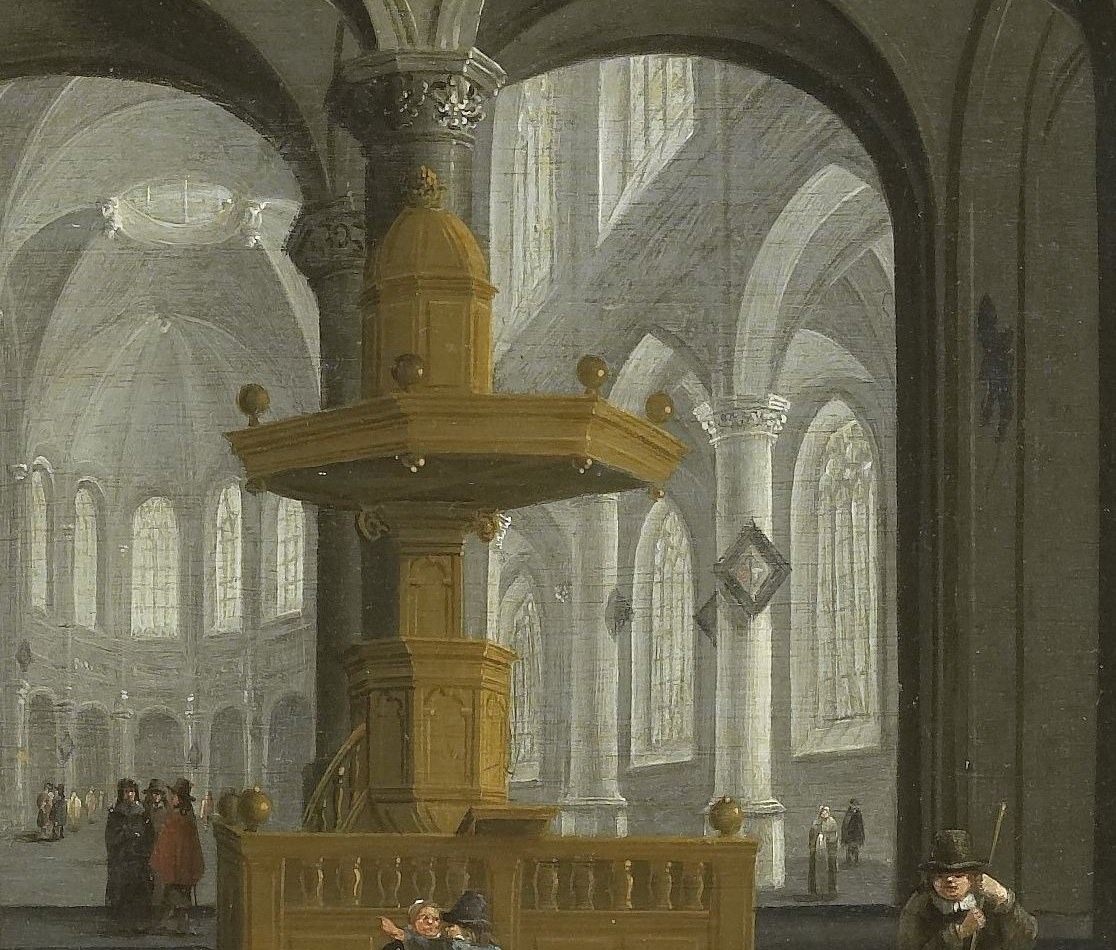
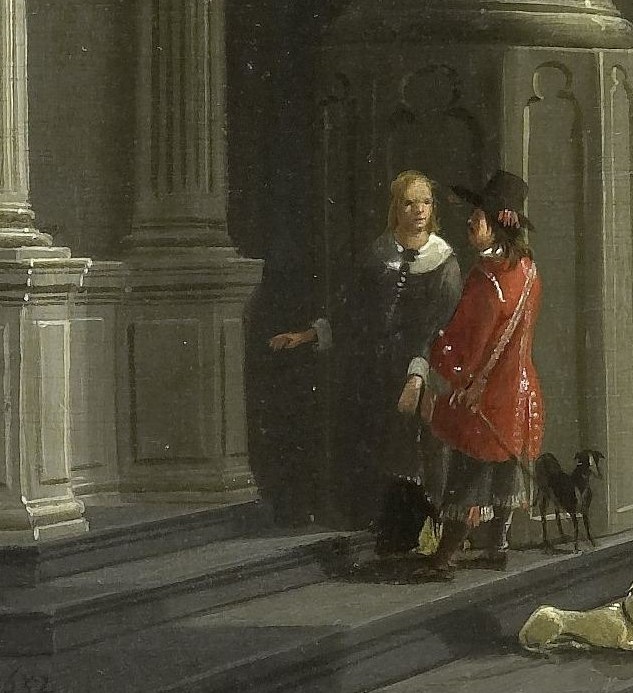
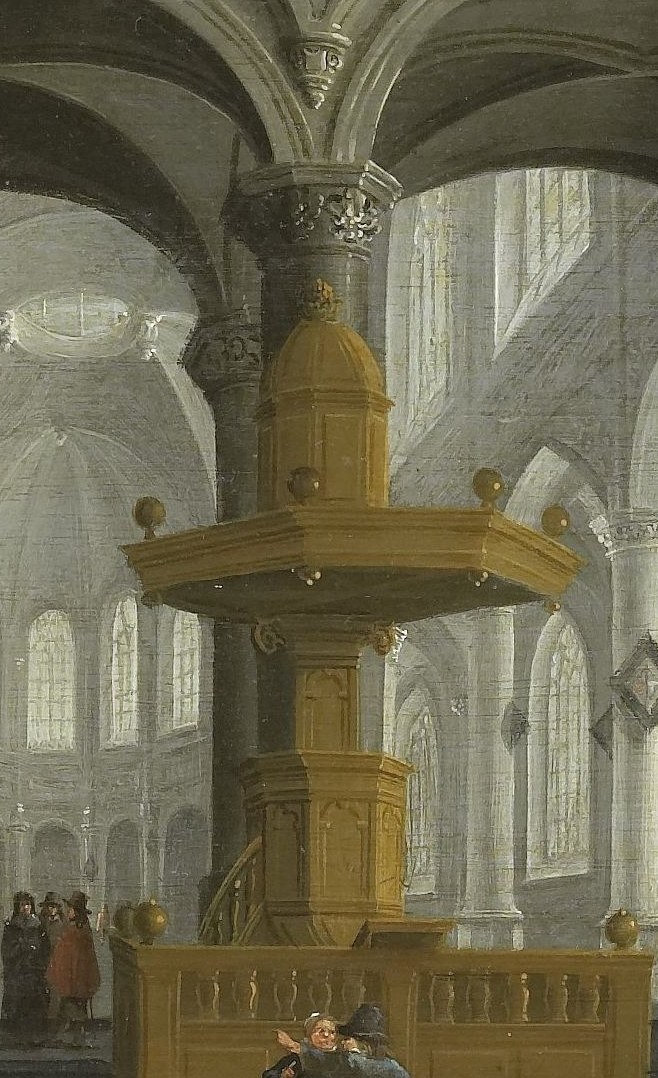
Daniël de Blieck, a Dutch Golden Age painter, masterfully created the illusion of immense architectural space and light in his 1652 oil painting, "Church interior," held at the Rijksmuseum.
Observe how the light streams through the stained-glass windows, illuminating specific areas of the church floor and drawing the eye into the vast nave. This clever use of light and shadow, known as chiaroscuro, is central to the painting's breathtaking realism.
De Blieck specialized in architectural scenes, often designing entirely imaginary church interiors. His skill in rendering such detailed and atmospheric spaces made him a notable figure during the Dutch Golden Age, a period celebrated for its detailed depictions of everyday life and environments.
How does this play of light and shadow transform your perception of the space?
Details
Transcript
This painter was a master of grand spaces. He designed entire imaginary churches on canvas. Notice how light from the stained glass falls on the floor. This effect, called chiaroscuro, creates immense depth. It makes this oil painting feel like a real place.