Madame Cézanne (Hortense Fiquet, 1850–1922) in the Conservatory by Paul Cézanne
Paul Cézanne painted his wife Hortense twenty-nine times, and not once did he grant her a smile. 'Madame Cézanne in the Conservatory' (1891, The Met) is not a love letter. It is a laboratory.
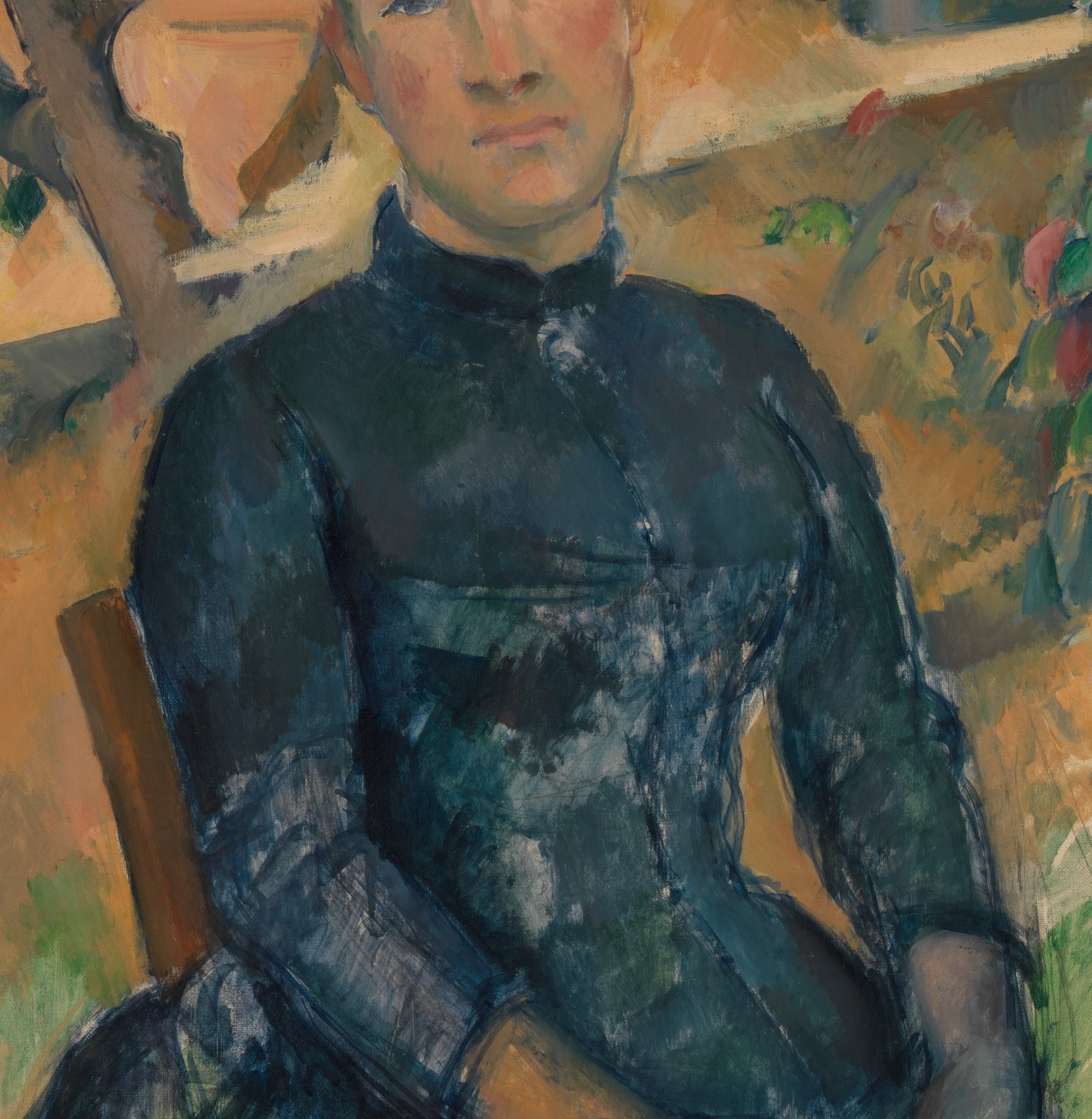
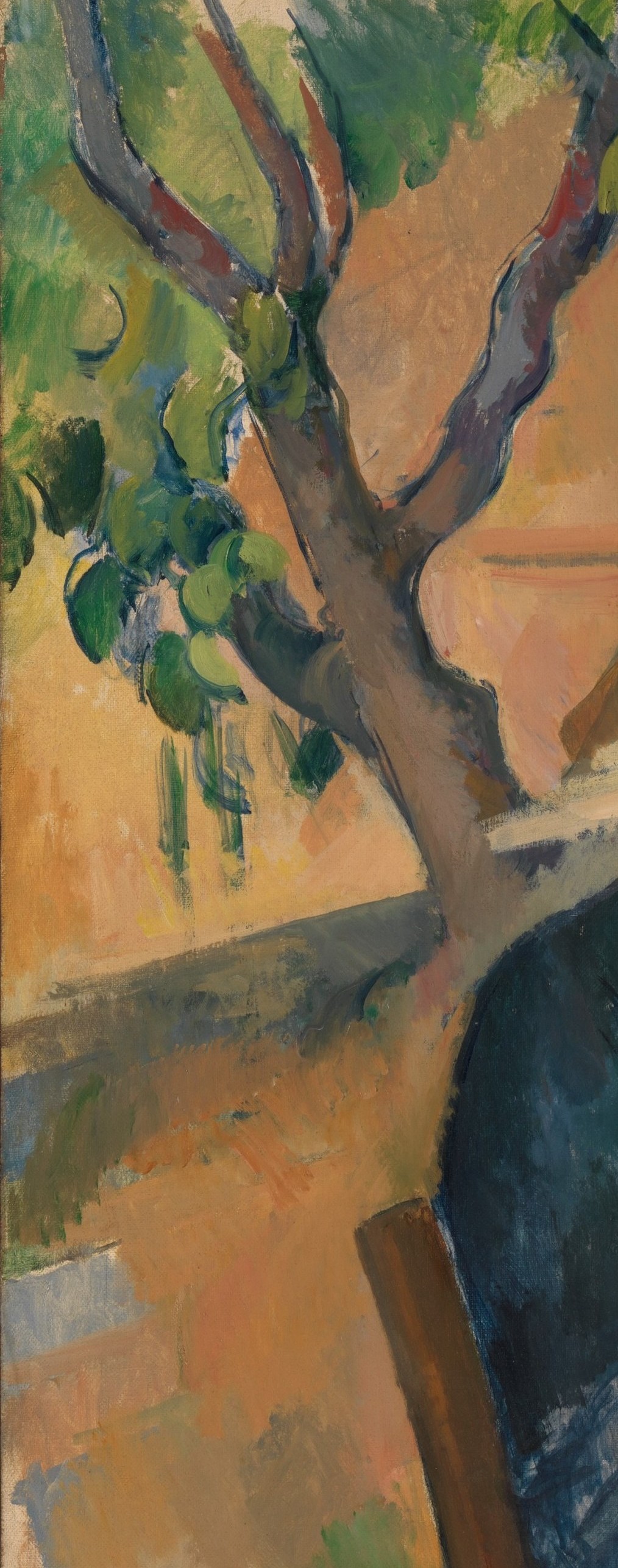
Watch where your eye goes. The orange wall behind her left shoulder advances toward you aggressively, while the green foliage behind her right shoulder recedes. Cézanne is not using perspective to create depth. He is using color temperature alone.
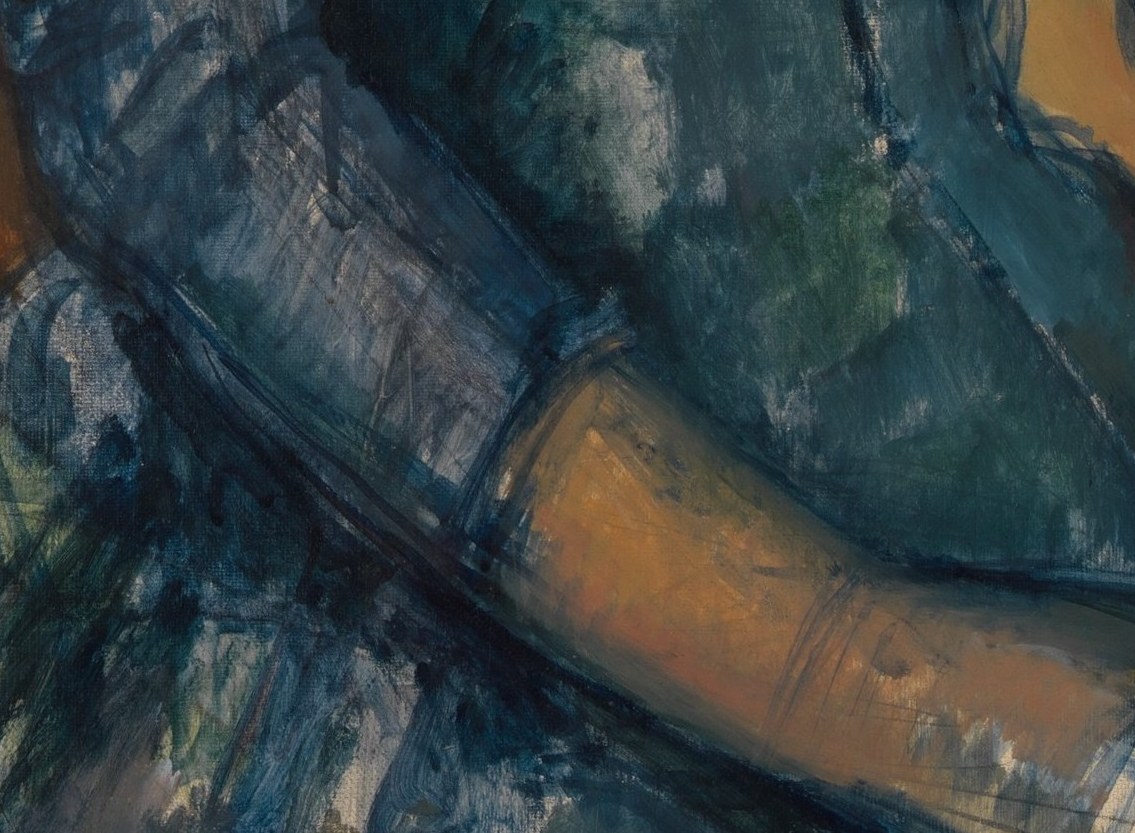
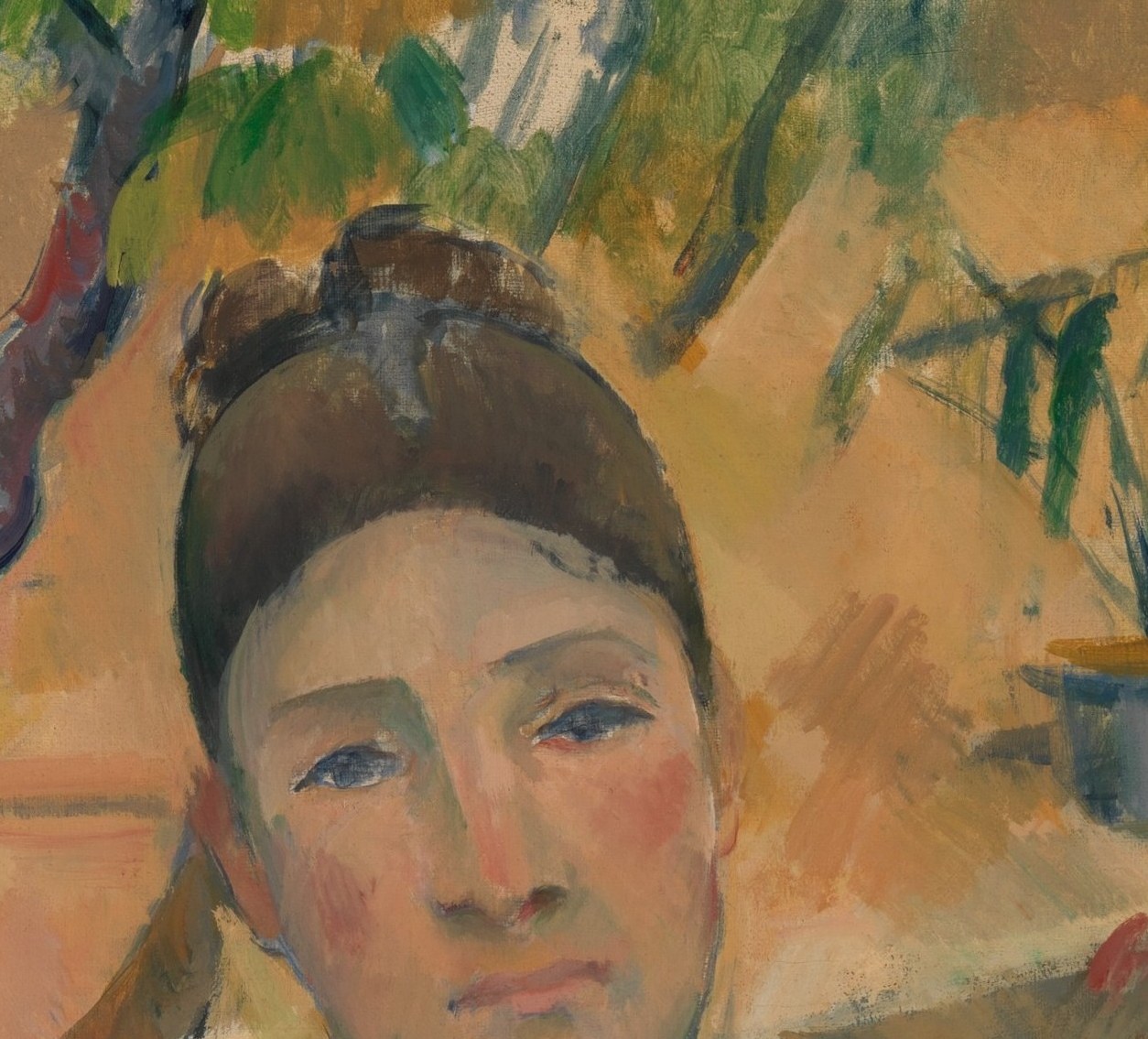
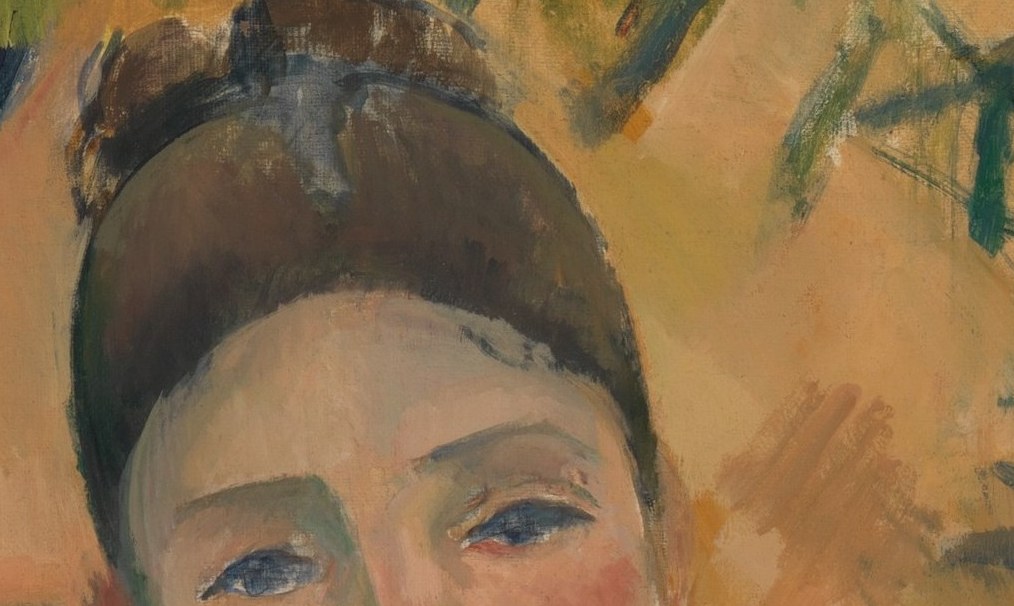
Hortense Fiquet was his model and the mother of his son, but they lived largely apart. He painted her as he painted apples and mountains: an object to build with. Her face is a mask of interlocking planes. Her dark dress is a geometric solid, not a textile.
This portrait is a bridge. Standing in front of it, you are watching academic art collapse and Cubism begin. The subject is not the woman in the chair. The subject is how the picture holds together.
Details
Transcript
He painted her twenty-nine times. Each time, she sits the same way. She does not smile. She does not yield. The dress is not a dress. It is a blue mountain. Cézanne was not chasing her likeness. He was inventing a new way to build a picture. The warm wall shoves forward. The green sits back. No story. No psychology. Just form, in a human shape.