Masked Ball at the Opera by Manet, Edouard
View the artwork: Masked Ball at the Opera →
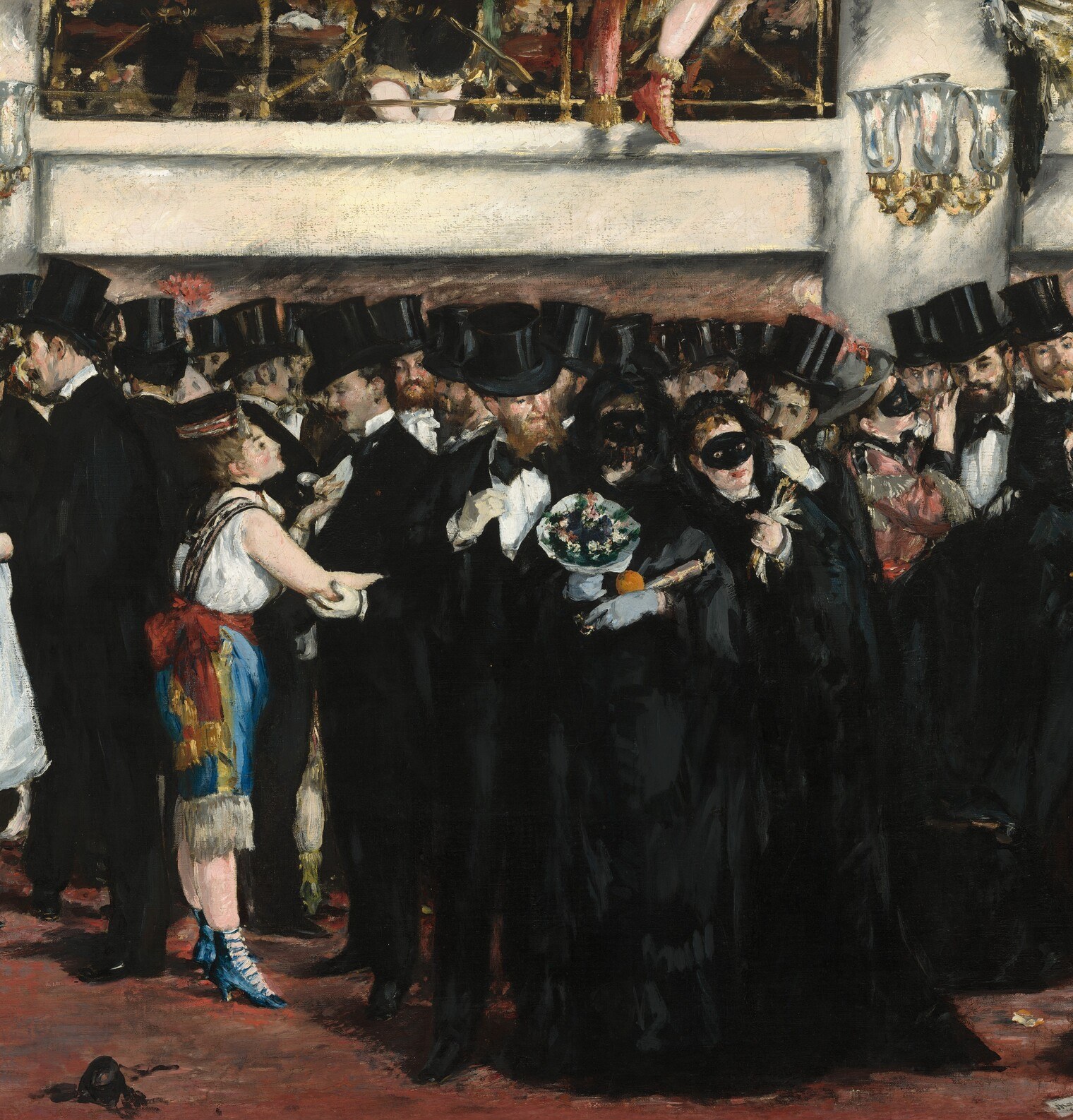
This is Édouard Manet's Masked Ball at the Opera, painted in the spring of 1873 and now held at the National Gallery of Art in Washington, D.C. It is the last visual record of a famous Parisian interior, the opera house on rue Le Peletier, because months after Manet made his sketches, the building burned to rubble.
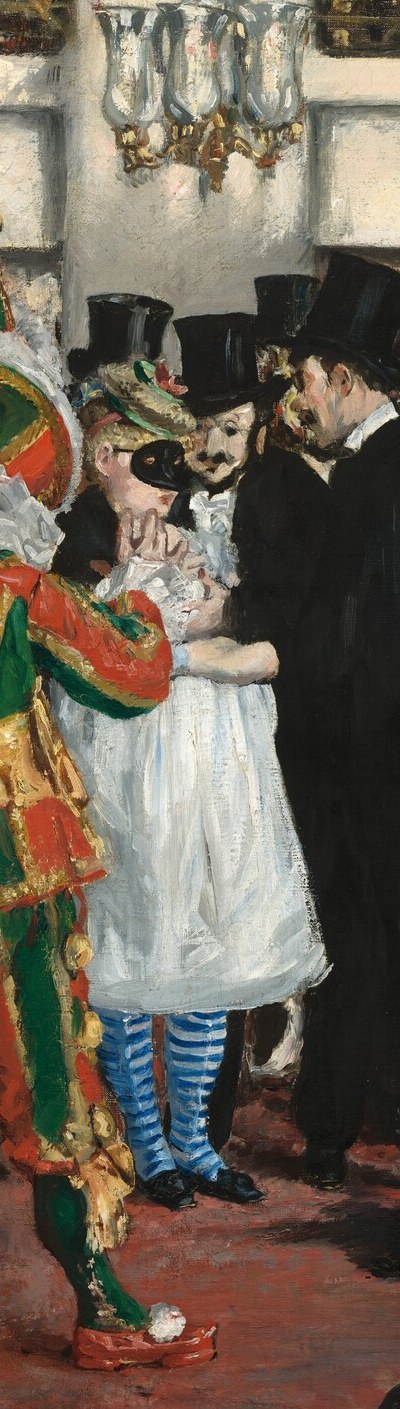
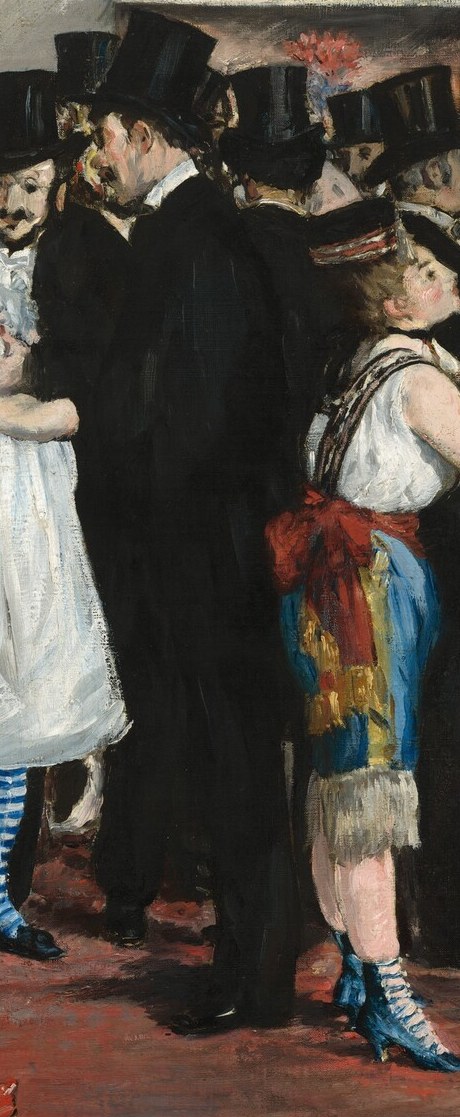
The painting is dense with men in black top hats and women in domino masks, a uniform that flattens individual identity into social type. Manet embedded real people in this crowd: the composer Emmanuel Chabrier and art collector Albert Hecht posed in his studio, their faces readable among the revelers. The masks, as Stéphane Mallarmé observed, are a visual break from the mass of dark formal clothes, not a concealment but a social ritual.
Manet sketched from life inside the opera house, then built the final canvas in his new studio on rue d'Amsterdam. The 1874 Paris Salon refused it, calling the naturalism too blunt. The work later passed into the collection of the opera singer Jean-Baptiste Faure, a major Manet collector, before Mrs. H. Havemayer gifted it to the National Gallery of Art in 1982.
The party consumes itself. Confetti litters the floor, faces vanish into shadow, and the room that held it all disappeared in the same year. A painting that began as a scene of modern pleasure became an accidental memorial.
#arthistory #manet #19thcenturyart
Details


Transcript
Spring, 1873. Paris at the height of carnival. A sea of men in black frock coats and silk top hats. Mallarmé said the masks were a break from the monotony of black clothes. Some faces here are not anonymous. The composer Chabrier and collector Hecht posed in his studio for this. Months later, the opera house burned to the ground. This painting is the last record of a room that no longer exists.