Portrait of Aernout van Beeftingh, his Wife Jacoba Maria Boon and their Children by Nicolaes Muys
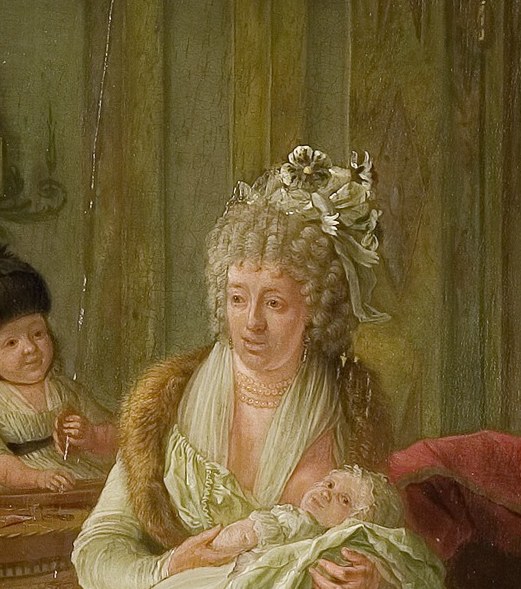
Portrait of Aernout van Beeftingh, his Wife Jacoba Maria Boon and their Children was painted by Nicolaes Muys in 1799, and it hangs in the Rijksmuseum in Amsterdam. On the surface it is a grand family portrait for a prosperous Dutch merchant at the close of the 18th century. But look longer and it becomes a study in the unruly reality of parenthood, where even the most opulent interior cannot make a small child cooperate with a painter.
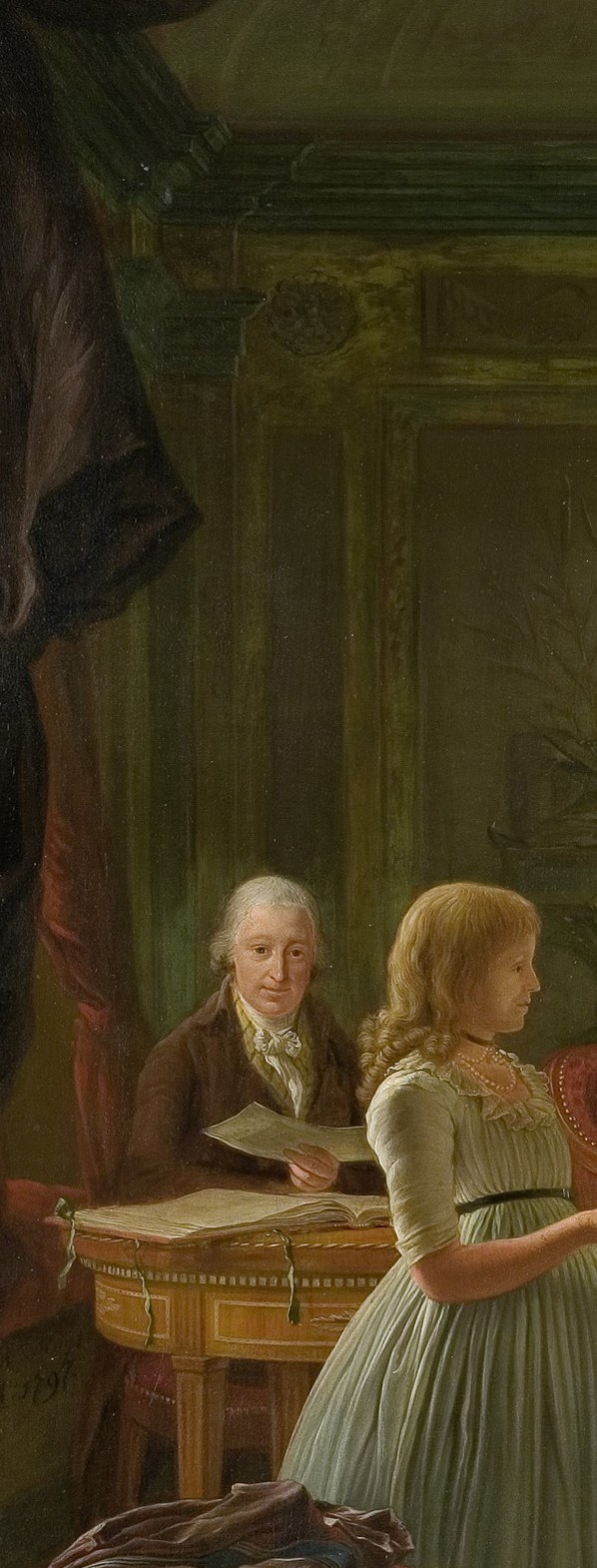
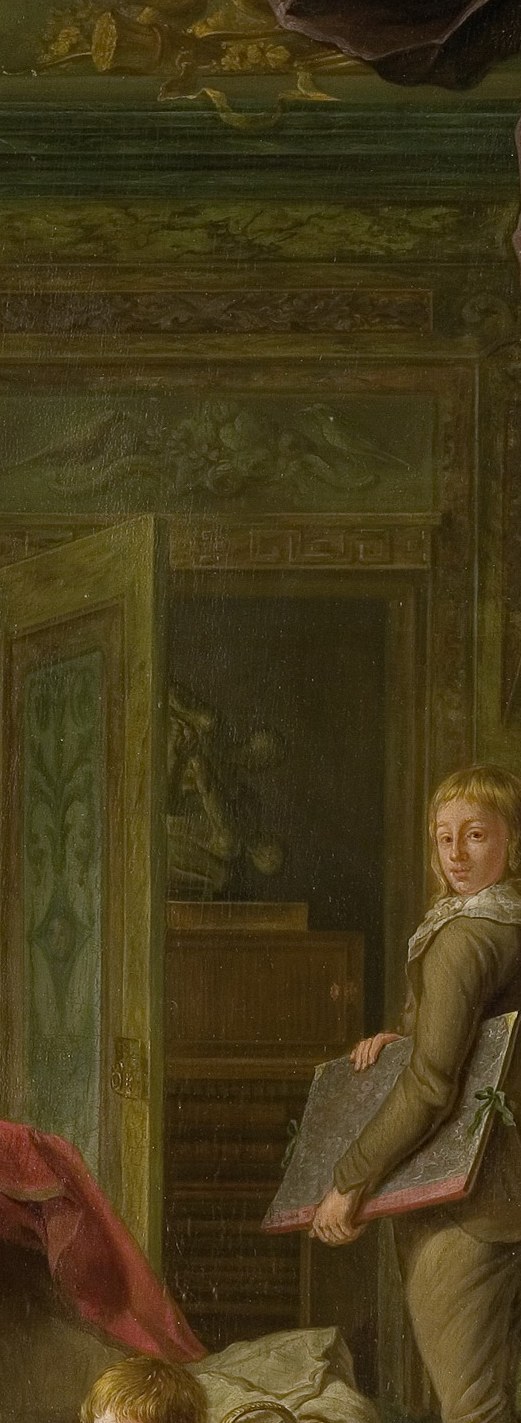
The eye travels first to Jacoba Maria Boon, luminous in pale-green silk at the center, her face calm and her arms full with a swaddled infant. Her towering powdered headdress and the neoclassical architecture behind her place the family firmly among the Rotterdam elite. Her husband Aernout stands near a harpsichord, surrounded by children reading and playing, every object chosen to broadcast cultivation.
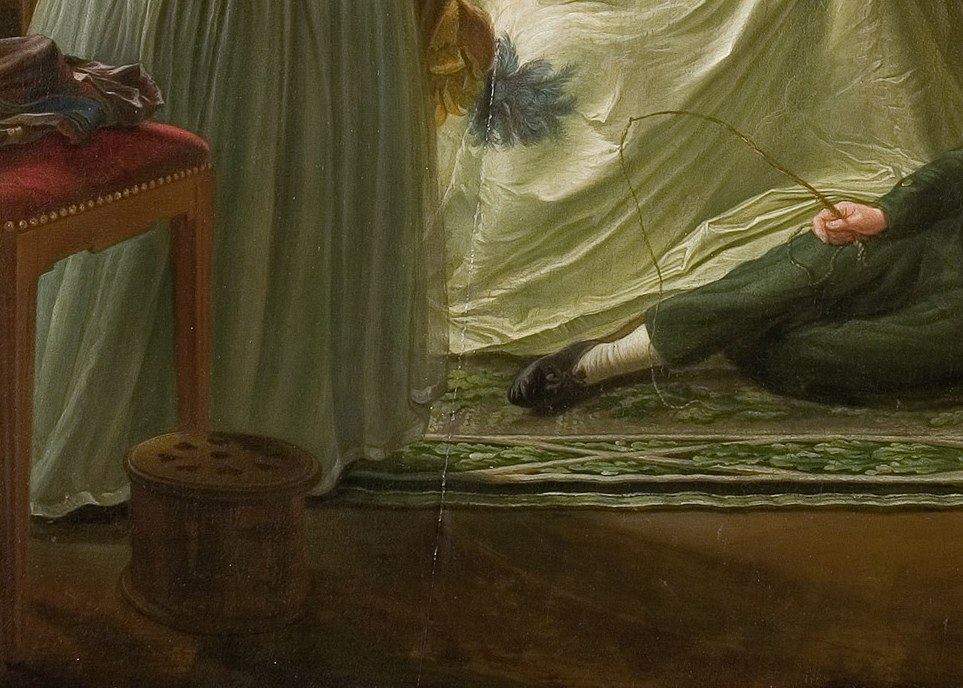
And then, in the foreground, a child lies sprawled across the ornate carpet. It is a startlingly honest detail in a formal portrait, the kind of moment a painter cannot stage and a parent cannot prevent. This child simply refused the decorum expected of them. The result is a painting that records not just a family's aspirations, but something realer: the beautiful, ordinary chaos of a house full of children.
Muys gave the van Beeftinghs the status they paid for, but he also preserved a parent's truth: you can buy the clothes, the furniture, and the setting, but you cannot buy a quiet afternoon.
Details
Transcript
You could commission a painter to show status. But you can't bribe a child to sit still. This is Aernout van Beeftingh. A prosperous Dutch merchant. His wife Jacoba Maria Boon, with their newest child. She had children for nearly twenty years. So this portrait holds two truths at once. The weight of a dynasty, and a child who won't pose.