La Sagrada Familia con santa Isabel y san Juanito by Luca Giordano
Luca Giordano's 'La Sagrada Familia con santa Isabel y san Juanito' (c. 1690) at the Museo del Prado holds a subtle detail that often goes unnoticed: the artist's unique way of dating his work. Rather than painting '1690', Giordano inscribed '690.', a common practice of the time for artists.
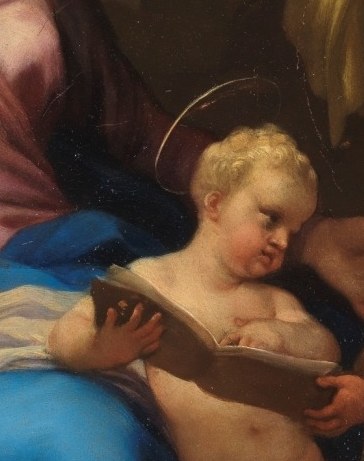
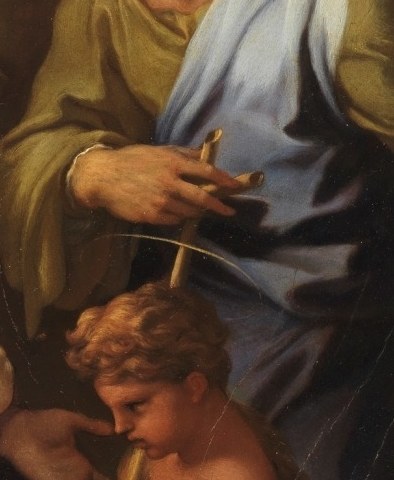
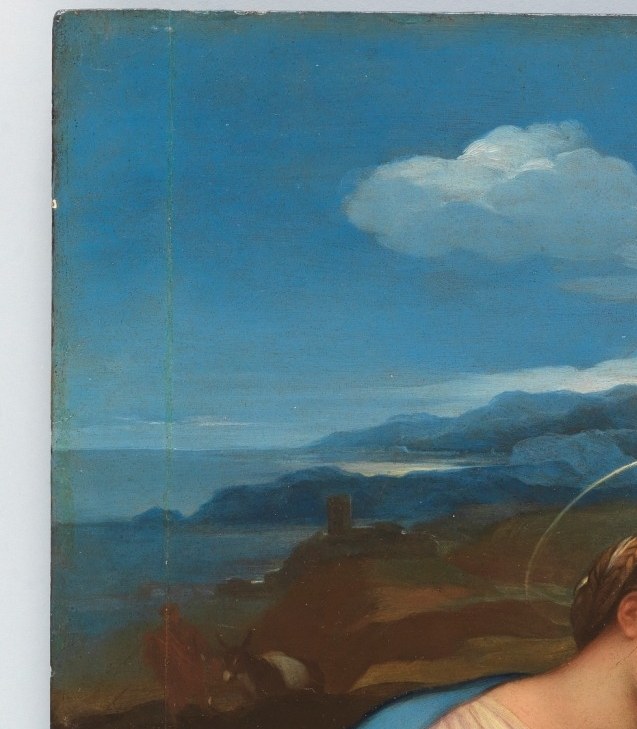
This painting captures an intimate moment between the Holy Family, Saint Elizabeth, and the young Saint John the Baptist. Look for the interactions between the children, the protective gaze of Saint Joseph, and the symbolic lamb, which represents Christ's sacrifice. Giordano's masterful use of light and shadow brings a dramatic intensity to this sacred narrative.
Giordano, one of the most celebrated artists of the Neapolitan Baroque, was known for his vast output, including altarpieces and decorative fresco cycles. He traveled widely, even working in Spain for King Charles II, introducing a new sense of light and glowing color to Baroque art. This work, from later in his career, showcases his mature style.
It's a wonderful example of how artists sometimes embed historical clues in plain sight, if you know where to look. What other hidden details do you think might be in older paintings?
Details
Transcript
This painting tells a familiar holy story. Notice the quiet interaction between the children. The artist was Luca Giordano, a prolific Italian painter. He worked for Spain's King Charles II. Look closely at the bottom left corner. His signature is here, with the date '690.' It stands for 1690, not 690 A.D.