Vanitas Still Life with the Spinario by Pieter Claesz
View the artwork: Vanitas Still Life with the Spinario →
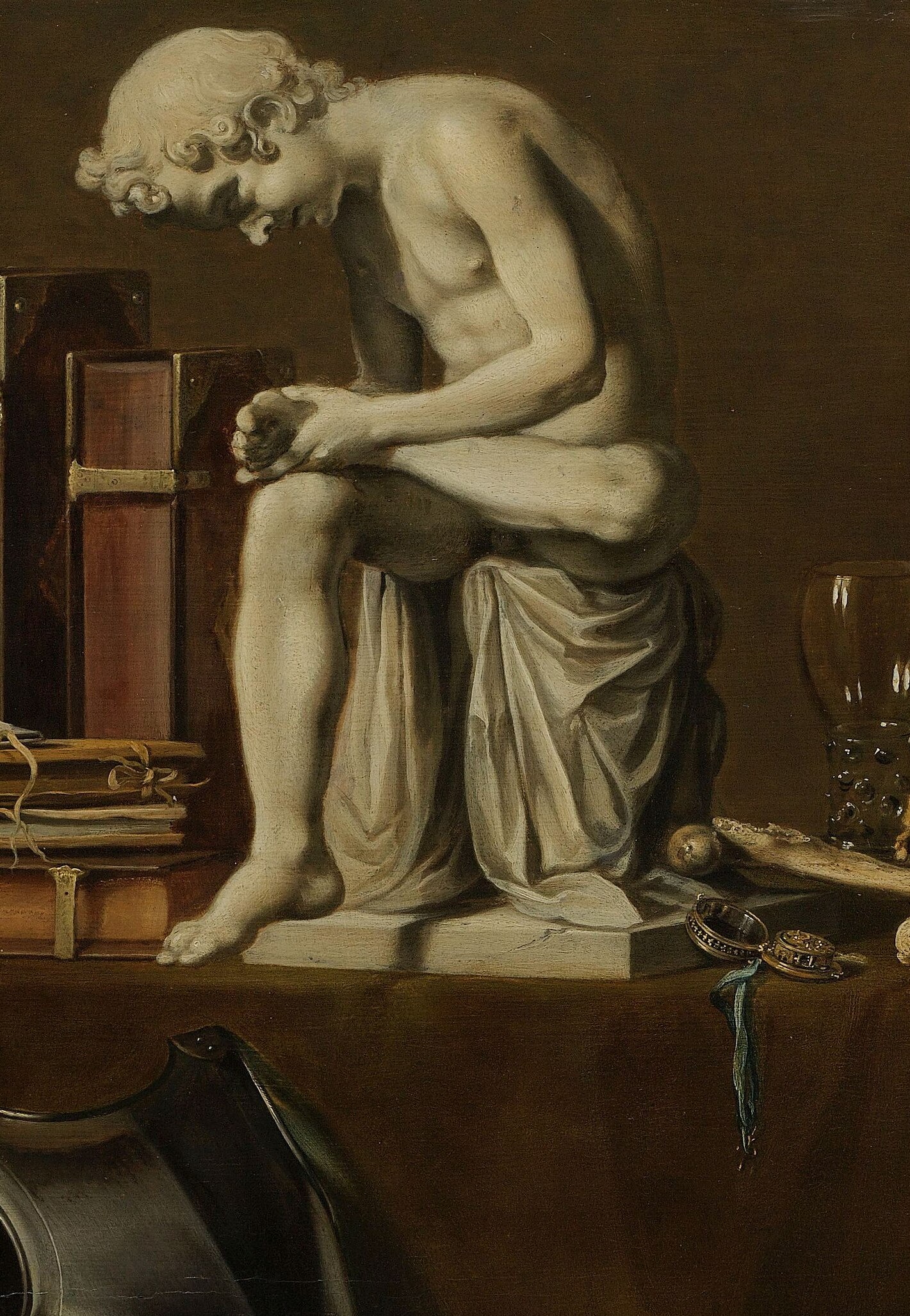
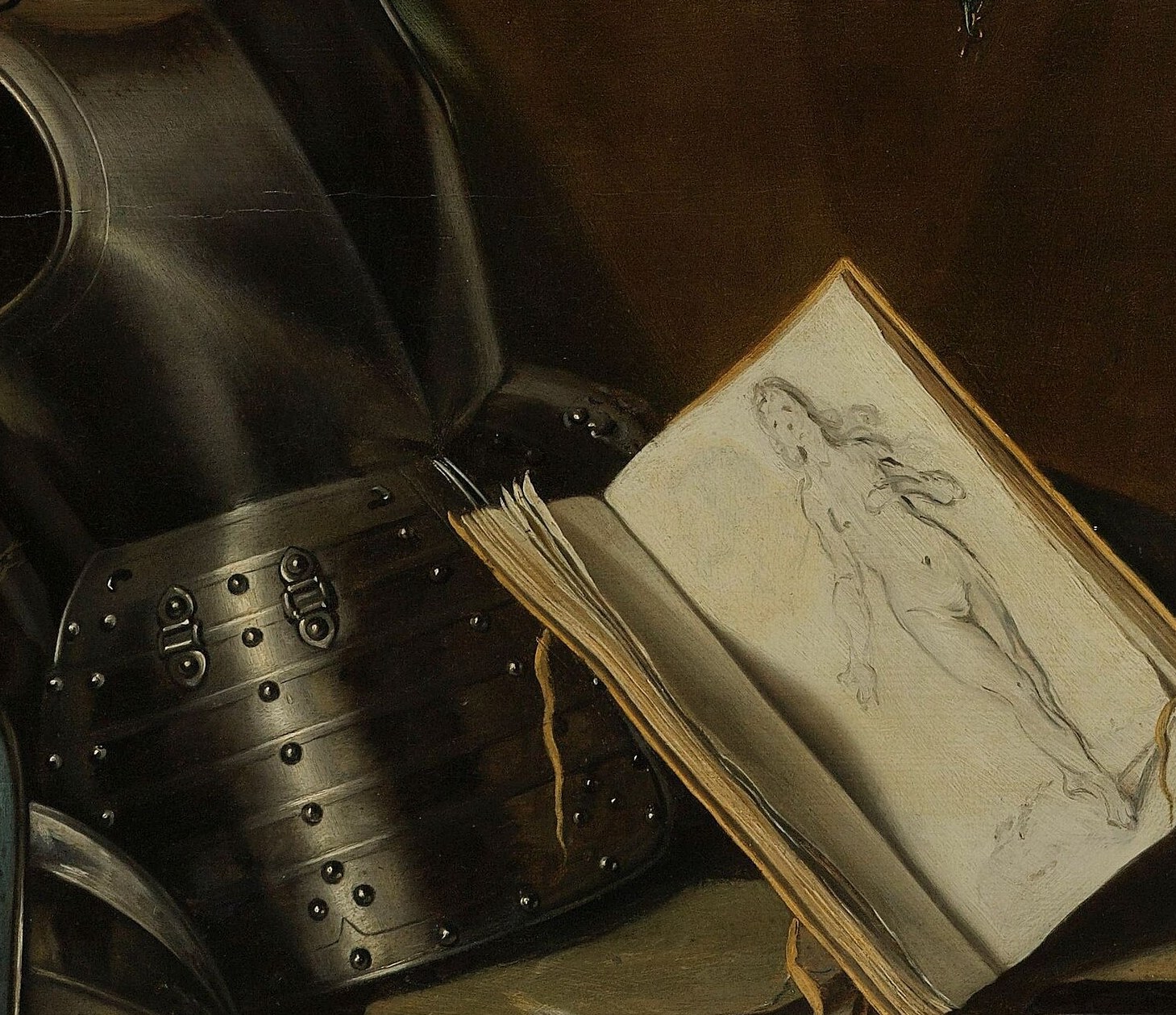
This is Vanitas Still Life with the Spinario, painted by Pieter Claesz in 1628 and now in the Rijksmuseum in Amsterdam. It is one of the quietest demonstrations of painterly control you will ever see, a whole world of objects rendered in nearly the same brown-grey key, and yet every surface reads distinctly.
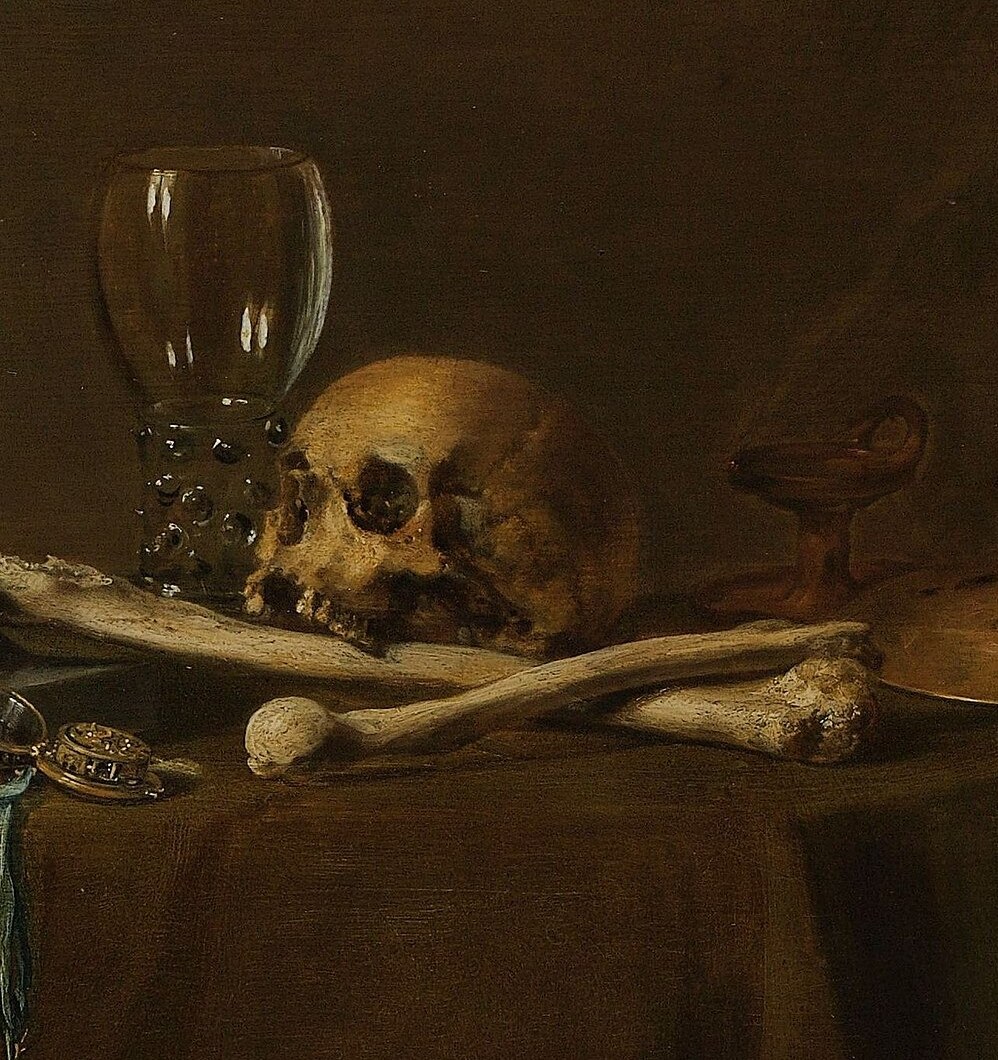
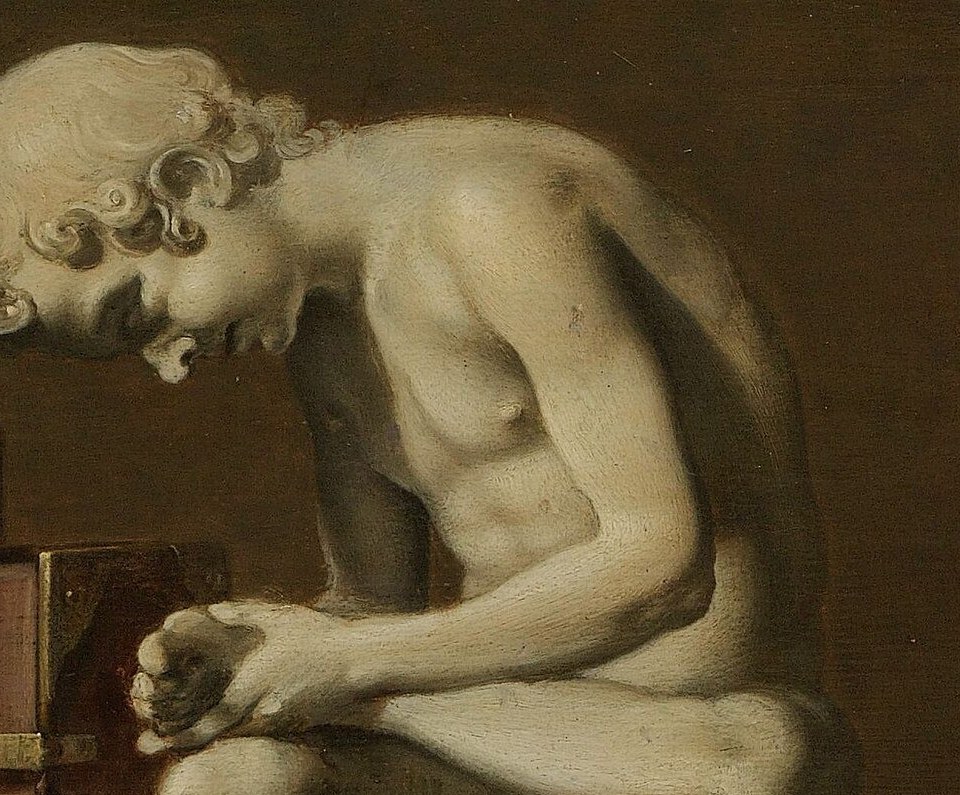
The first thing to look at is the table ledge running across the lower third. Claesz built that worn, grainy wood with a dry brush dragged over the canvas, a famously difficult technique that leaves just enough pigment on the highest points of the weave. From there, move up to the plaster cast of the Spinario, the boy extracting a thorn. Its chalk-white pallor is almost identical to the skull beside it, and Claesz makes you feel the difference between plaster and bone anyway.
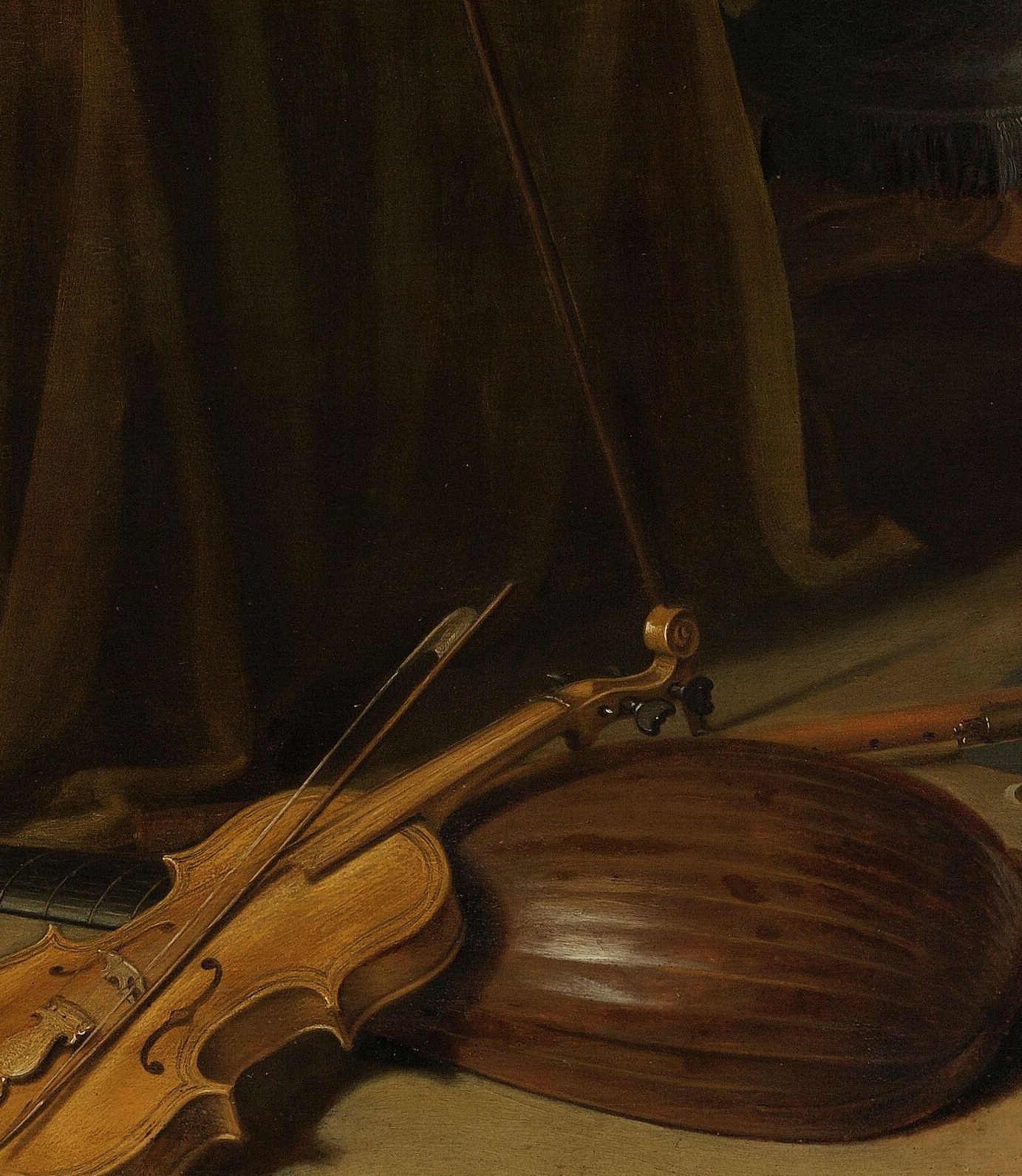
The painting belongs to the vanitas tradition of the Dutch Golden Age, a genre that stacked earthly pleasures alongside reminders of death. Here a lute, armor, open sketchbooks, and a quill represent art, music, military glory, and intellect, all abandoned, all lit as if they are about to disappear into the dark curtain behind them. The Spinario itself is a copy of an ancient Roman bronze, and its presence raises the stakes: even the art the Renaissance admired most is just another object on death's table.
Next time you stand in front of a monochrome still life, look for the table ledge first. That is where the painter proved they could do it. If the wood reads true, everything else will follow.
#arthistory #dutchgoldenage #pieterclaesz
Details
Transcript
Look at this table. Just look at the surface. Claesz did this with a single brush, dragging dry paint across the grain. Now step back. Bone, plaster, metal, wood, all painted in the same muted key. The skull and the statuette share almost exactly the same pallor. A plaster cast of an ancient Roman bronze, set among mortal objects. The trick is texture without color. Your eye reads chalk, reads bone, reads cold metal. The quill catches the only sharp highlight in the painting. One feather, in a silent room of objects, and the whole picture feels real.