Artwork
Vanitas Still Life with the Spinario
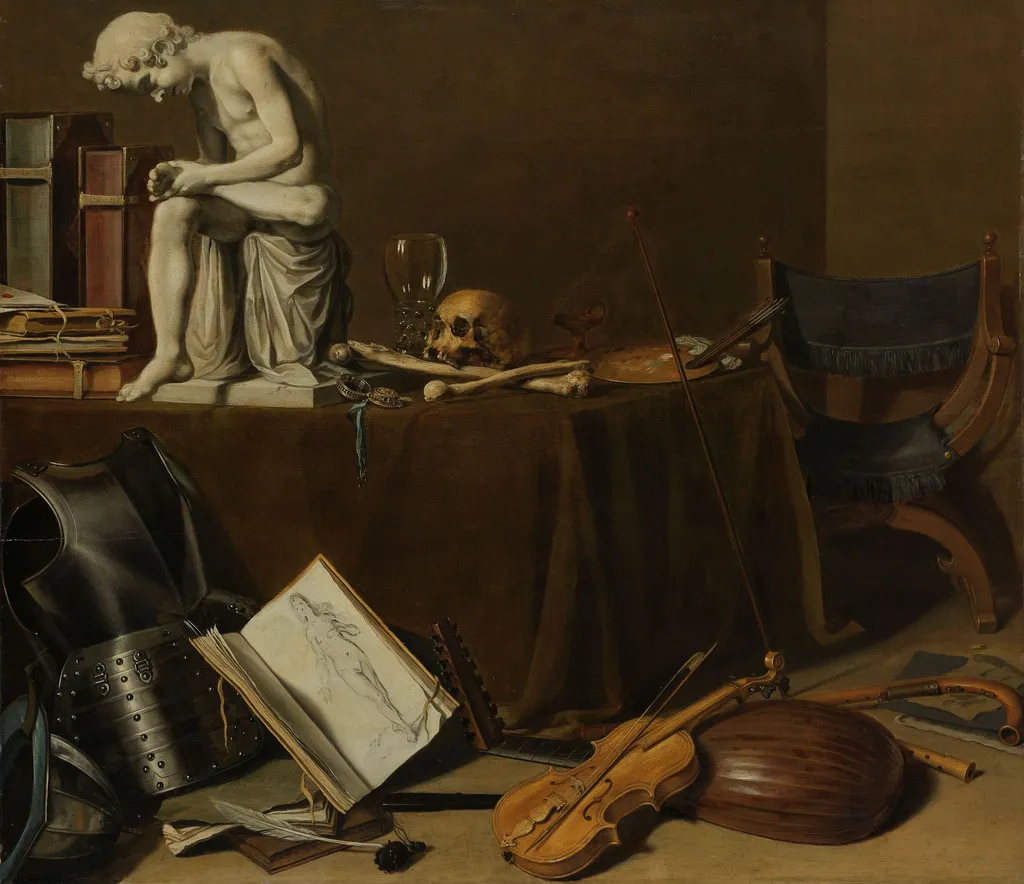
Vanitas Still Life with the Spinario is an oil painting by the Dutch Golden Age artist Pieter Claesz. It dates from 1628 and is held in the collection of the Rijksmuseum.
About this work
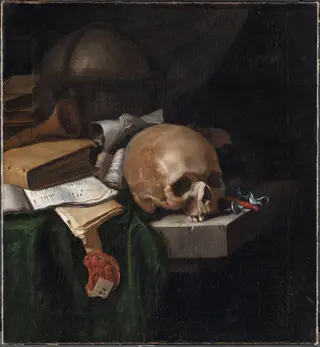
On a table in Pieter Claesz's 1628 panel, a plaster cast of the ancient Spinario, a boy pulling a thorn from his foot, stands among skulls, bones, and a painter's palette. The lute, armor, and open drawing books promise learning and pleasure, while the snuffed lamp and watch insist that time consumes even the most refined pursuits.
Subject & Meaning
The smoke rising from the lamp, a palette and brushes, and a femur bone complete the ensemble, each reinforcing that all worldly pursuits end in decay.
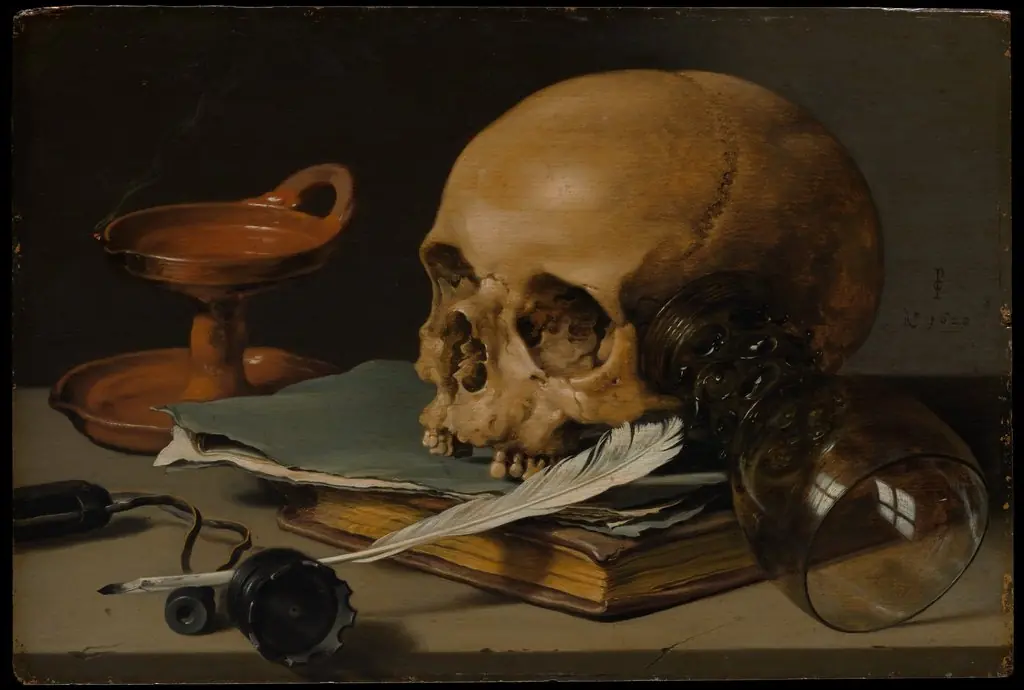
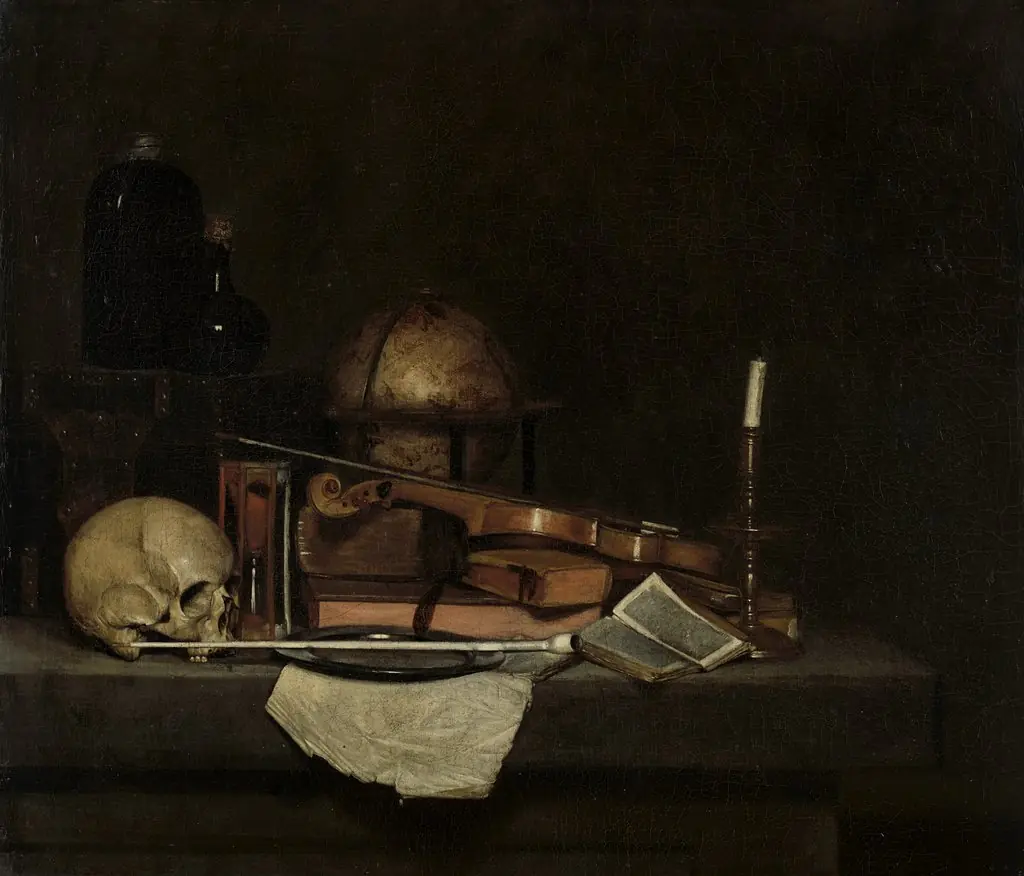
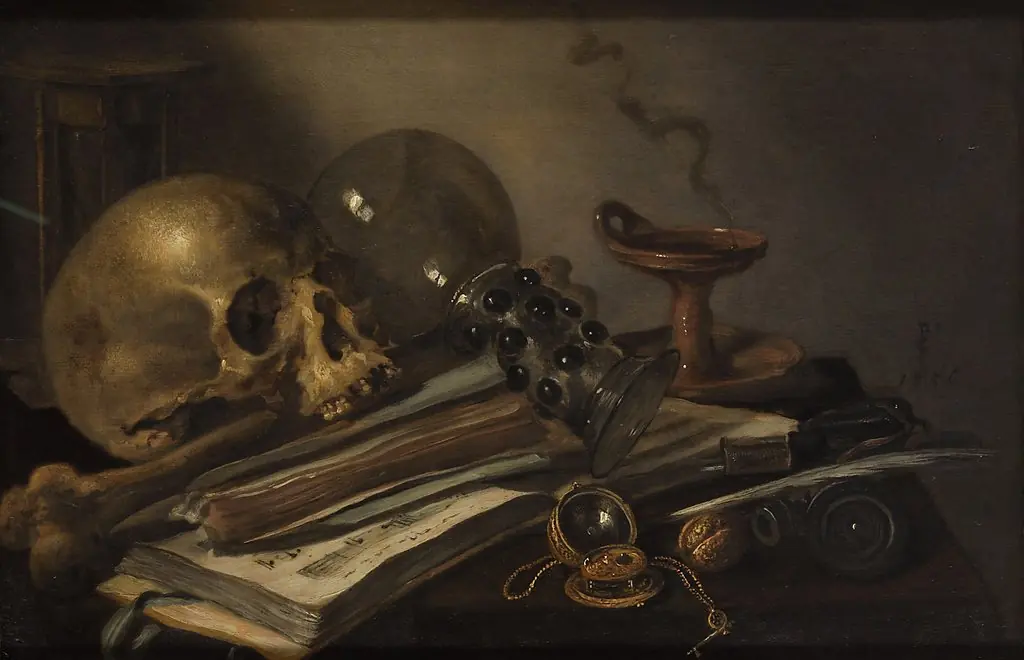
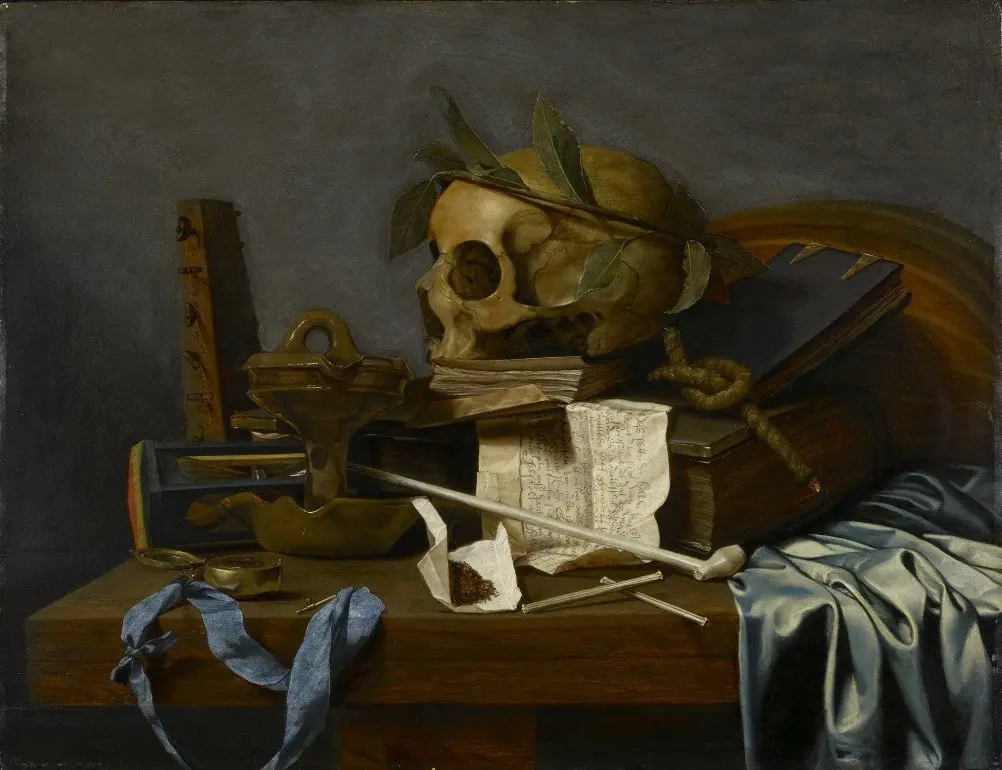
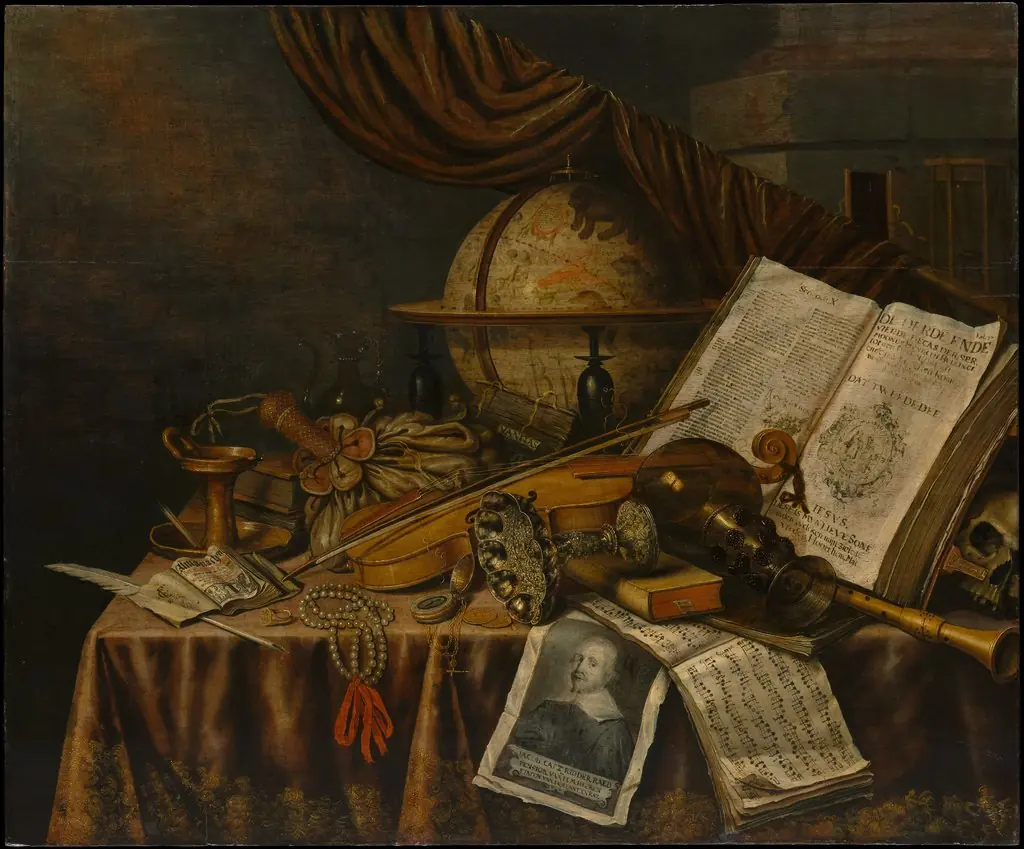
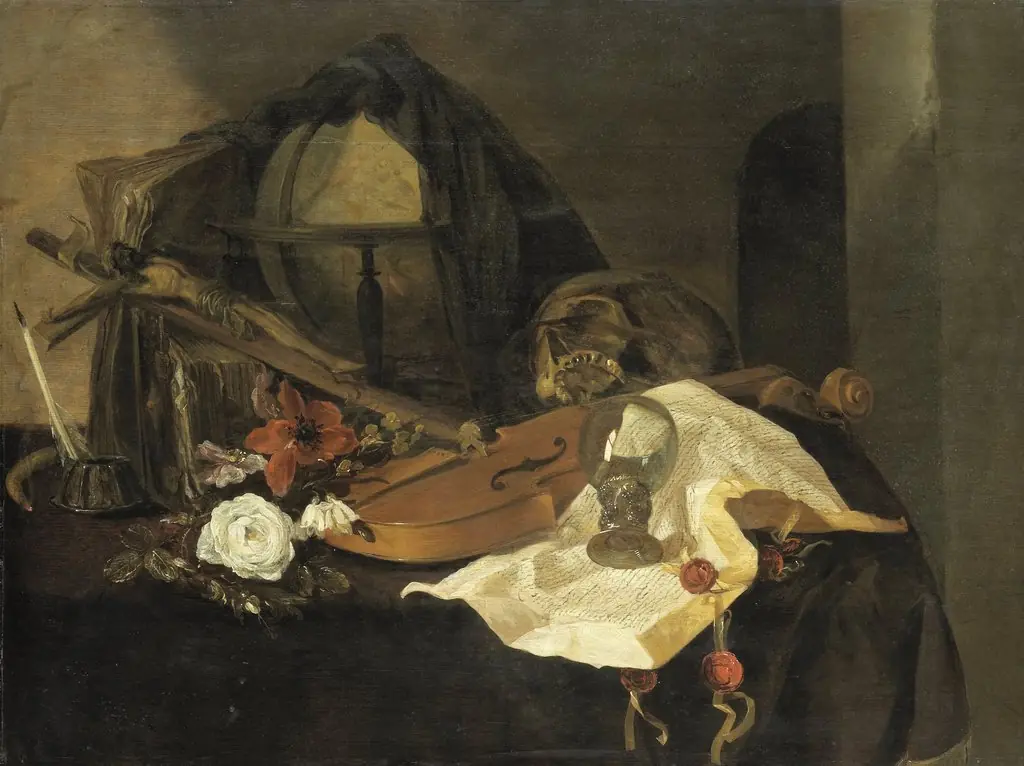
This painting is a vanitas still life, a sub-genre intended as a moralizing warning about the transience of earthly life. The composition is densely packed with objects carrying symbolic weight: a human skull, a watch, and an extinguished oil lamp directly allude to mortality and the passage of time. Military items such as a cuirass and combat helmet signify worldly power's futility, while musical instruments (lute, violin, crumhorn), books, and a sketchbook with quill represent the fleeting pleasures of art and knowledge.
A small bronze reproduction of the classical sculpture Boy with Thorn (the Spinario) sits among these items; its presence as a collector's piece within the scene comments on the vanity of humanist collecting and fame. The smoke rising from the lamp, a palette and brushes, and a femur bone complete the ensemble, each reinforcing that all worldly pursuits end in decay.
Technique & Style
Executed in oil on panel, this vanitas still life dates to 1628 and exemplifies the Dutch Golden Age tradition. Its support is a wooden panel, with dimensions recorded as either 80.5 × 70.5 cm or 71.5 × 80.5 cm depending on the source. The composition gathers a dense array of symbolic objects, including a skull, timepiece, oil lamp, musical instruments, and the Spinario figurine, characteristic of Claesz’s moralizing vanitas style. The handling and condition are not detailed in the available sources.
Overview
Pieter Claesz's 1628 oil painting, Vanitas Still Life with the Spinario, exemplifies the Dutch Golden Age tradition of vanitas. This still life, executed in oil paint, is currently housed in the Rijksmuseum in Amsterdam. It presents a collection of objects carefully arranged to convey a message about the transient nature of earthly life and human endeavors, a common theme in 17th-century art.
History & Provenance
Painted in 1628 by Pieter Claesz, Vanitas Still Life with the Spinario has been preserved as a significant example of its genre. The artwork is part of the permanent collection of the Rijksmuseum in Amsterdam, where it continues to be displayed as a key representation of Dutch Golden Age still-life painting and its philosophical underpinnings.
Own this work as a print
Artist & collection

 Studied in the Dutch Golden Age course