View in the Woods by Johannes Warnardus Bilders
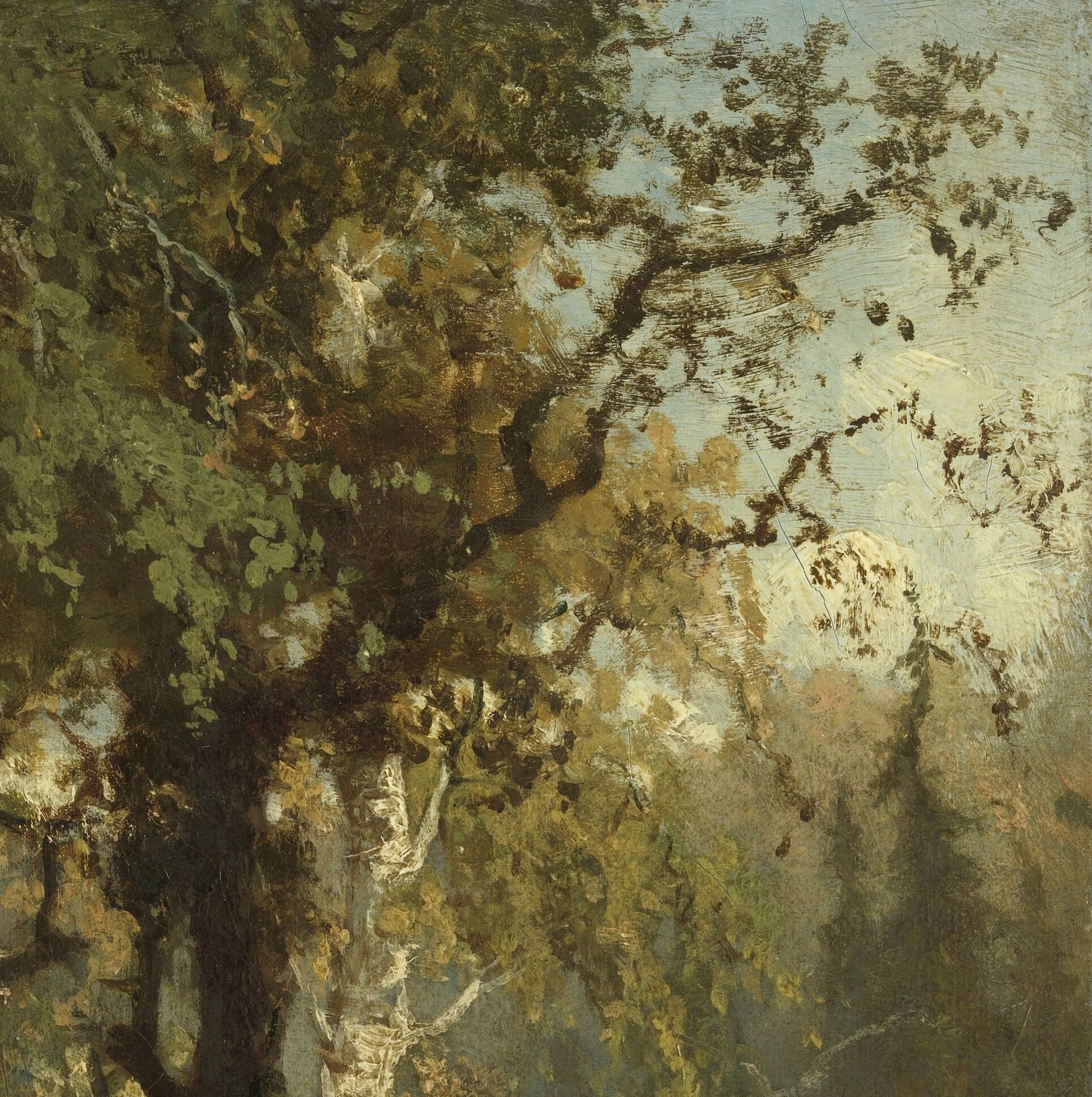
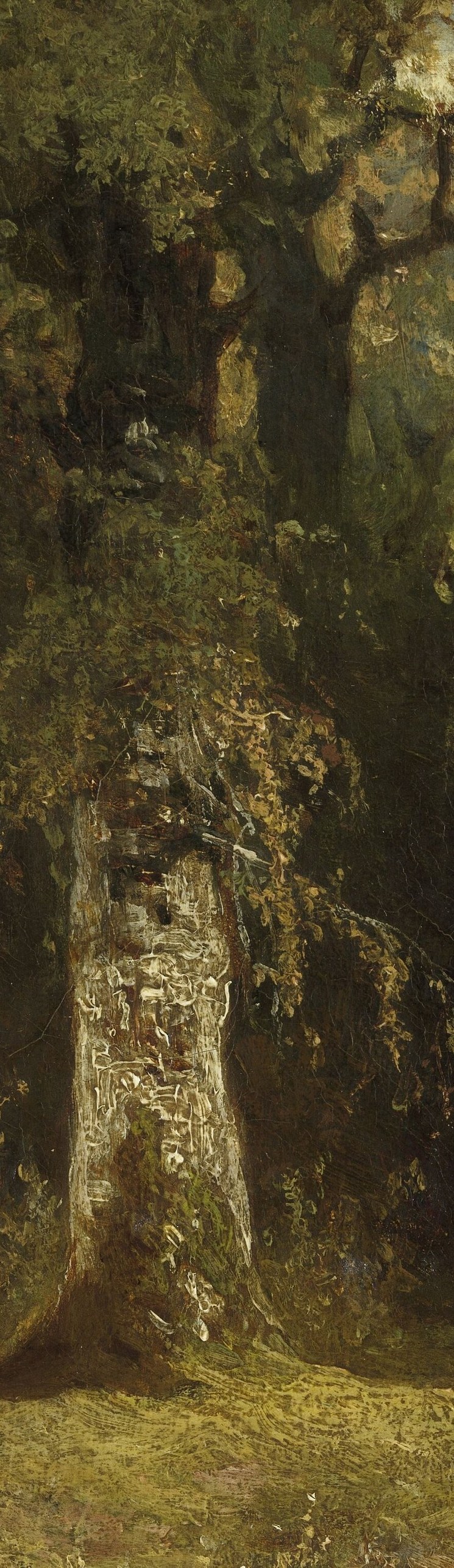
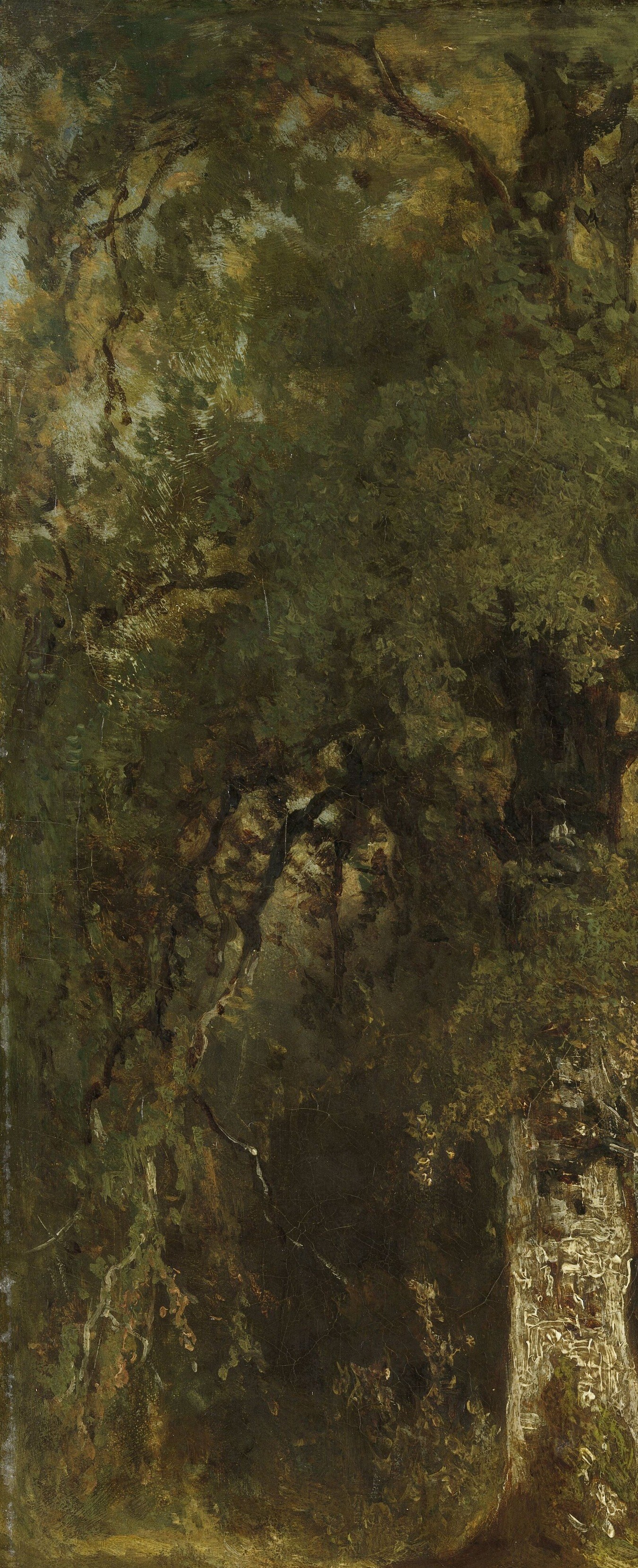
Johannes Warnardus Bilders painted View in the Woods in 1870. It hangs in the Rijksmuseum, Amsterdam. The bark on these trees was not brushed on, it was built, layer by layer, in thick oil impasto.
A close look at the central trunk reveals thick ridges of oil paint, pigment piled into bark. Then step back: the canopy breaks the sun into scattered pools, a chiaroscuro effect that carves depth out of deep shadow.
Bilders was 58 when he painted this, a forerunner of the Hague School. He worked alongside Mesdag and Israëls, but his real education came from walking into Dutch forests and studying how light breaks through a canopy.
A painting is pigment on a surface. Bilders never let the surface disappear, and somehow, the forest feels more real because you can see how it was made.
Details
Transcript
1870. Oil on canvas. A Dutch forest. Light breaks through the canopy in scattered pools. A figure in red stands apart, holding something small. This bark was built with thick oil, not brushed. Close up, it is not bark. It is paint.