Madonna and Child with Saints Philip and Agnes by Donato de' Bardi
In this small, luminous altarpiece from 1425, Donato de' Bardi painted a precise theological argument in symbols. Madonna and Child with Saints Philip and Agnes, now in the collection of the Metropolitan Museum of Art, is a portable triptych built for private devotion, and every object in it was chosen to teach.
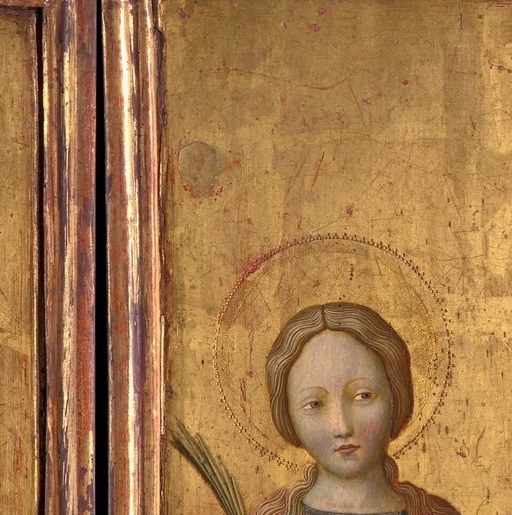
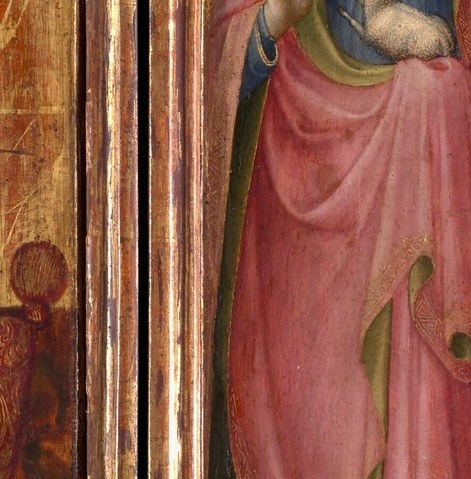
Start with the woman on the right. She cradles a lamb and carries a palm frond. Her name is Agnes, a word that means pure but sounds nearly identical to the Latin agnus, meaning lamb. The creature in her arms is three things at once: her saintly attribute, an emblem of her innocence, and a deliberate visual echo of the Agnus Dei, the Lamb of God whose sacrifice the Mass reenacts.
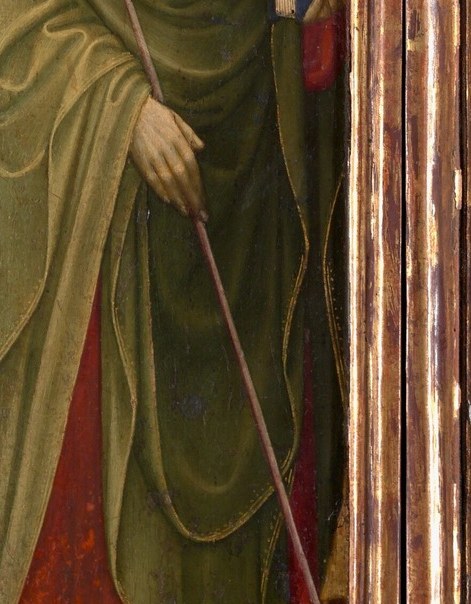
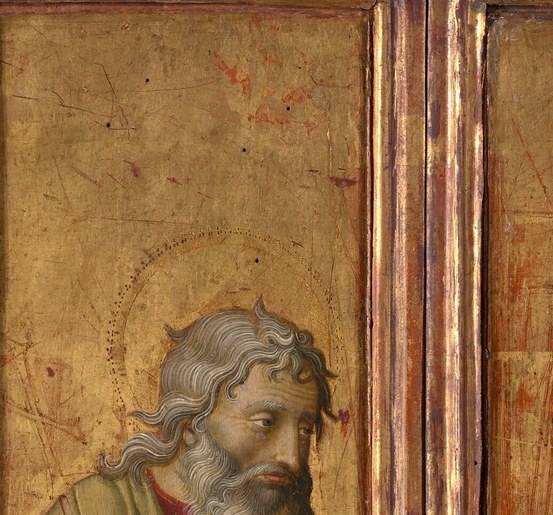
Across from her, an elderly man holds a book. That book tells us he is the apostle Philip, a man who preached and died for the Word it contains. The two flanking saints frame the central Virgin and Child like a living argument: the Word and the sacrifice point inward to the infant who will fulfill both.
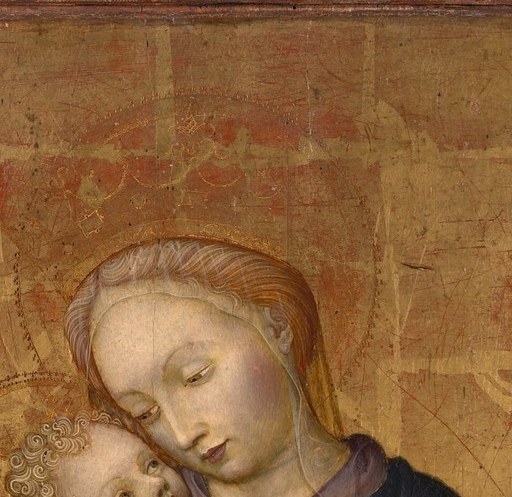
Bardi painted in tempera on gessoed panel, building up the delicate pink folds of Agnes's dress and the gold ground with meticulous layering. Look closely at that gold background above the Madonna, and in raking light you might find punch-work rosettes, a hidden craft layer that a digital reproduction can never quite show. What other coded details do you think are waiting inside the gold?
Details
Transcript
A young woman holds a lamb and looks past us. Her name is Agnes. The lamb is a pun. 'Agnes' means pure, but it sounds like 'agnus', the Latin word for lamb. That lamb echoes the Agnus Dei: the Lamb of God, sacrificed. Now the old man opposite her. He holds a book. The book tells us he is Philip, an apostle, a bearer of the Word. Philip's book, Agnes's lamb: the Word and the sacrifice, bracketing the Child in gold.