Bathing Party by William P. Chappel
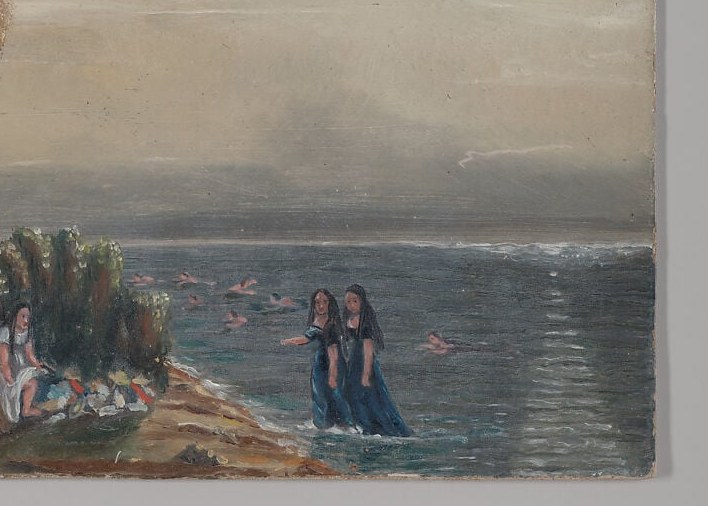
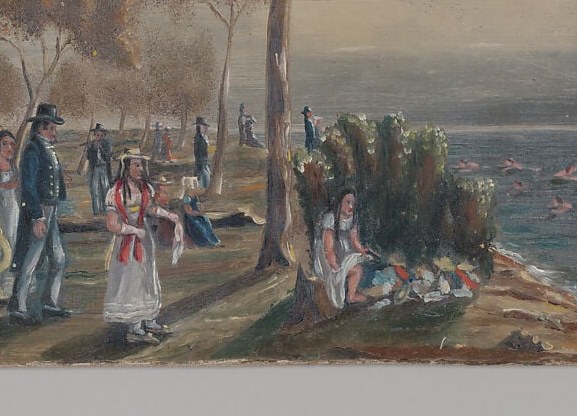
William P. Chappel’s 'Bathing Party' (1870s) is a rare American scene of recreational swimming, and a technical anomaly. Painted not on canvas but on a sheet of slate paper, the picture’s soft, chalky surface is the result of a support that actively resists the brush in useful ways.
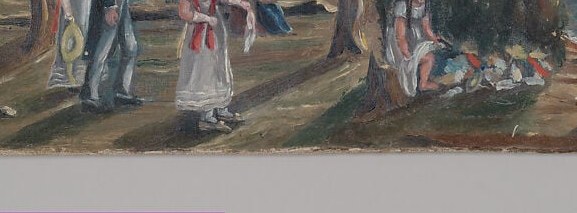
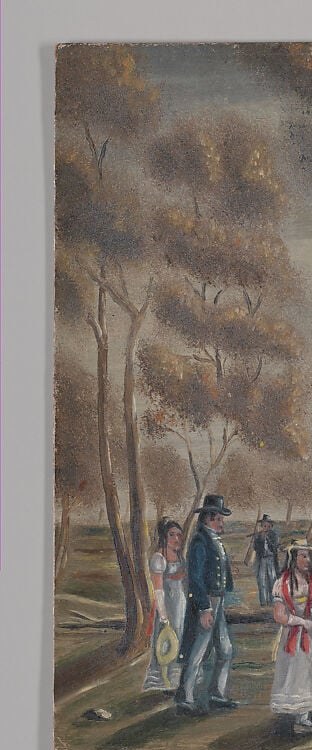
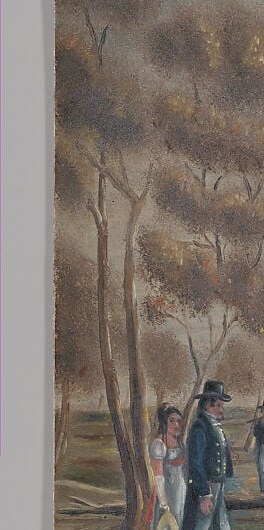
Look first at the tan bank in the foreground. That warm grey isn’t a pigment, it’s the slate itself, left bare. Then scan the pale tree trunks on the left. The thin paint drags across the slate with a dry, granular pull that no primed canvas can produce. Even the river surface owes its color to the support; much of the water is merely suggested by the slate’s natural tone.
Slate paper was an experiment. In the 1870s, American artists were exploring new portable materials for outdoor sketching. The rigid, smooth surface of slate paper let Chappel work quickly, capturing an informal mixed-gender bathing party without the labored finish of a studio oil. The stormy clouds may nod to Hudson River School drama, but the technique is all economy.
The party was mostly forgotten. Chappel remains a marginal figure in American art history, and this painting sat barely noticed for generations, a quiet document of leisure that turns out to be an object lesson in letting the material speak.
Details
Transcript
A lazy afternoon. Men and women cooling off in the river. Look closer at the bank beneath them. That warm grey isn't paint. It's raw slate paper. The artist skipped canvas entirely. He painted on roof tiles, essentially. Slate gives the paint a soft, chalky drag, impossible on fabric. And the slate itself does half the work. It is the mid-tone, the sky, the water. William P. Chappel let the ground play the lead role.