The Dispatch of the Messenger by François Boucher
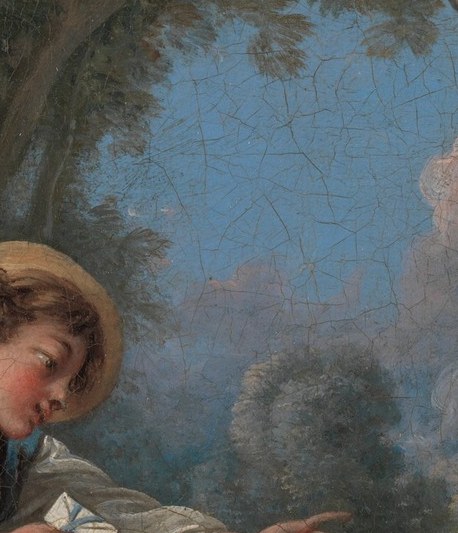
A young man holds a folded dispatch, a carrier pigeon in his outstretched hands. He is half a second from release. This is François Boucher's *The Dispatch of the Messenger*, painted in 1765 and now in the collection of The Metropolitan Museum of Art.
The pigeon is easy to miss. The eye goes to the blue jacket, the red cloak, the upturned face. But the pigeon is the whole point: an 18th-century telecommunications network, feathered and portable, used to carry compact messages across distances that would take a rider days.
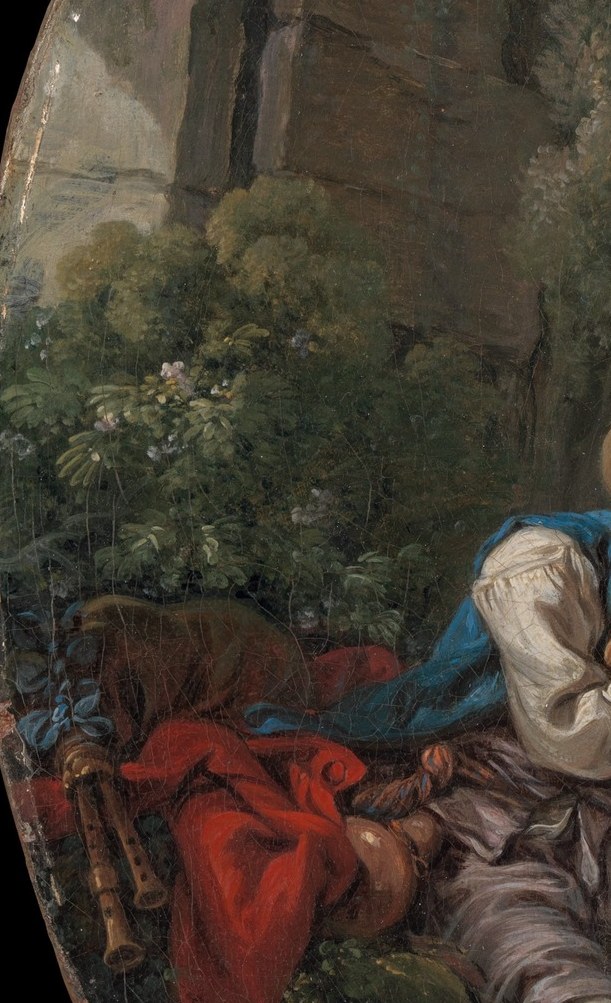
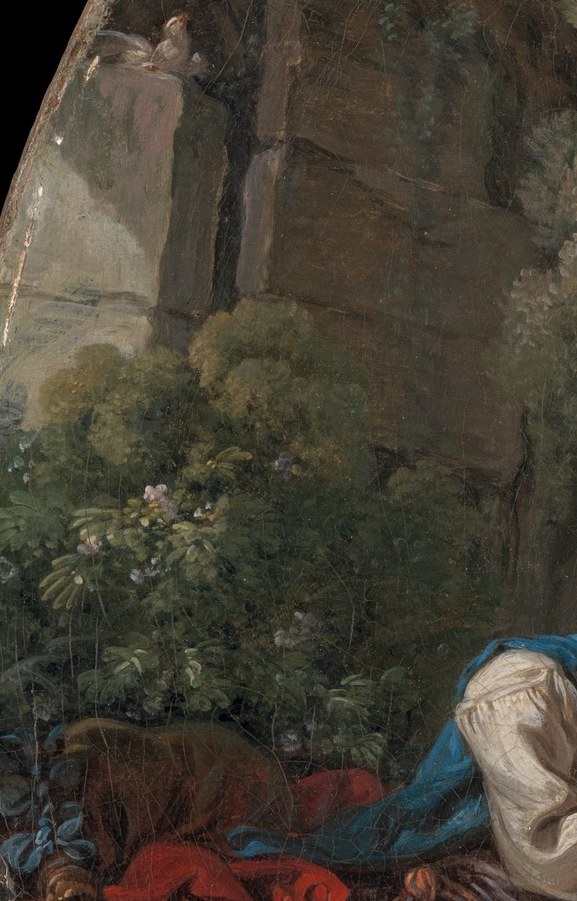
Boucher painted this for the Parisian private market, almost certainly as a *dessus-de-porte*, an over-door decoration for a wealthy townhouse. The oval format gives it away. What looks like a rustic pastoral scene is, in fact, a coded romance: the red cloak that anchors the composition was Boucher's standard signal for amorous stakes, and the woman half-hidden behind the shepherd raises the central question, is she the sender urging the message forward, or the recipient waiting for its return?
The man's face holds the answer. He is tilted upward, mouth slightly open, caught in the instant before decision. The dispatch is not sent. It is being dispatched. Everything in the painting watches this moment: the loyal spaniel, the resting sheep, the woman in red. The only thing that can break it is him.
Details


Transcript
The carrier pigeon is the message. In 1765, this was your text message. The red cloak signals a love story. Red in Boucher means romantic stakes. The message is halfway out of his hand. He has not let go. The decision is still his. The woman behind him: sender, or recipient? The dog is loyal. The sheep are calm. Nature has no opinion.