Three Taruma Indians by Catlin, George
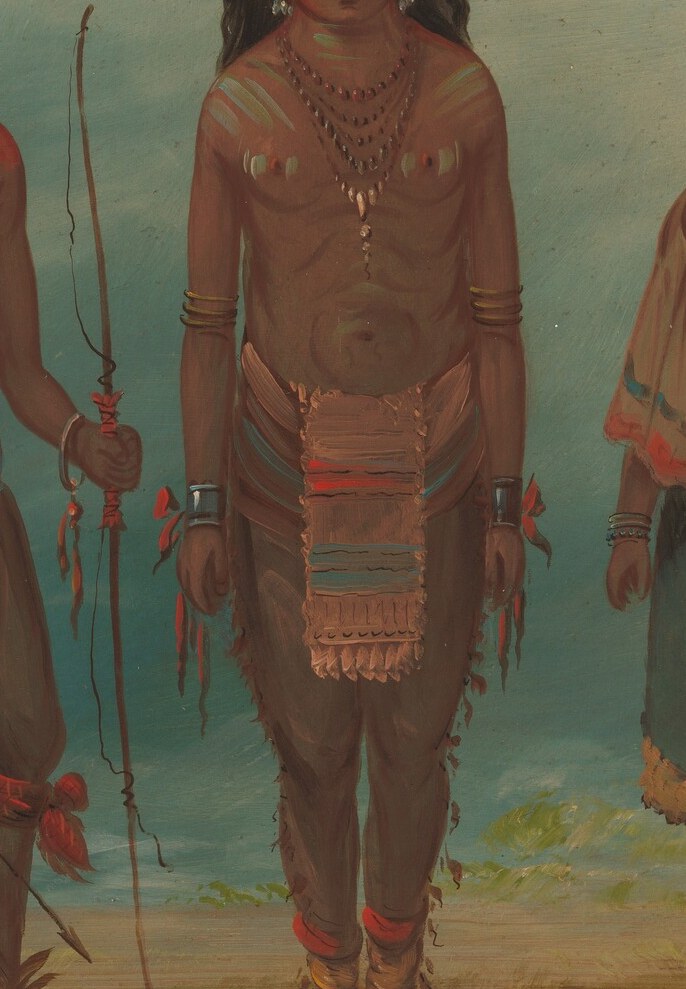
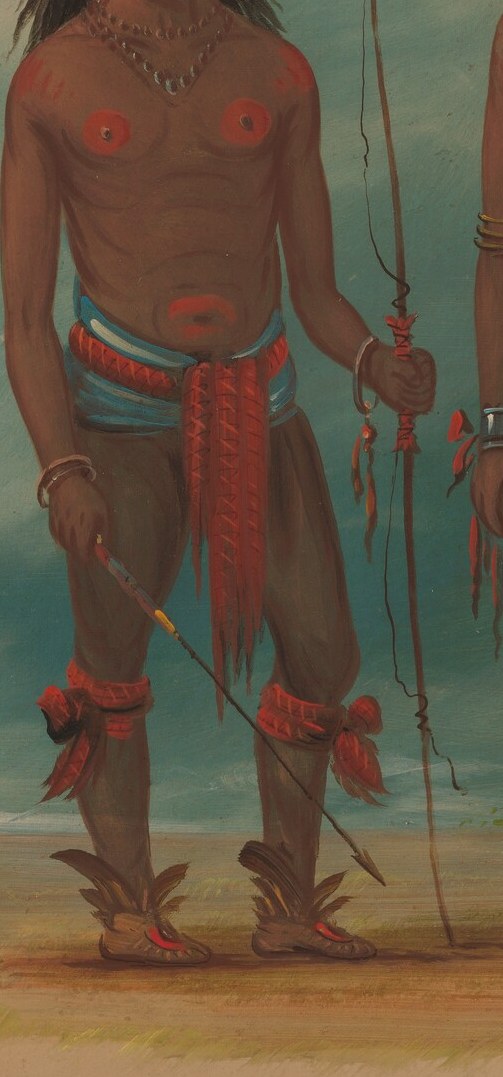
George Catlin, a lawyer-turned-artist, dedicated much of his life to documenting Native American life in the American frontier. His painting, *Three Taruma Indians*, created between 1854 and 1869, is a poignant record of the Taruma tribe members. It is held at the National Gallery of Art in Washington, D.C.
Look closely at the figures' traditional attire, from the feathered headdresses to the intricately woven garments and shell necklaces. These elements are not just decoration, but vital expressions of their cultural identity and heritage, each detail telling a story of their way of life.
Catlin began his extensive documentation in the 1830s, traveling to the American West to paint and write about the Plains Indians. This particular work belongs to a later phase of his career, reflecting his enduring commitment to preserving visual information about tribal customs during a period of immense change and displacement for Indigenous communities.
His art serves as a powerful, enduring testament to the lives and cultures he sought to capture. What do these silent portraits convey to you about the people they depict?
Details
Transcript
This artist traveled the American frontier in the 1830s. He sought to record Indigenous customs before they were lost. These men are members of the Taruma tribe. Their attire highlights skilled artistry and cultural heritage. Each detail, like this bow and arrow, tells a story. The artist made this painting years after his travels. It is a quiet, lasting record of their enduring identity.