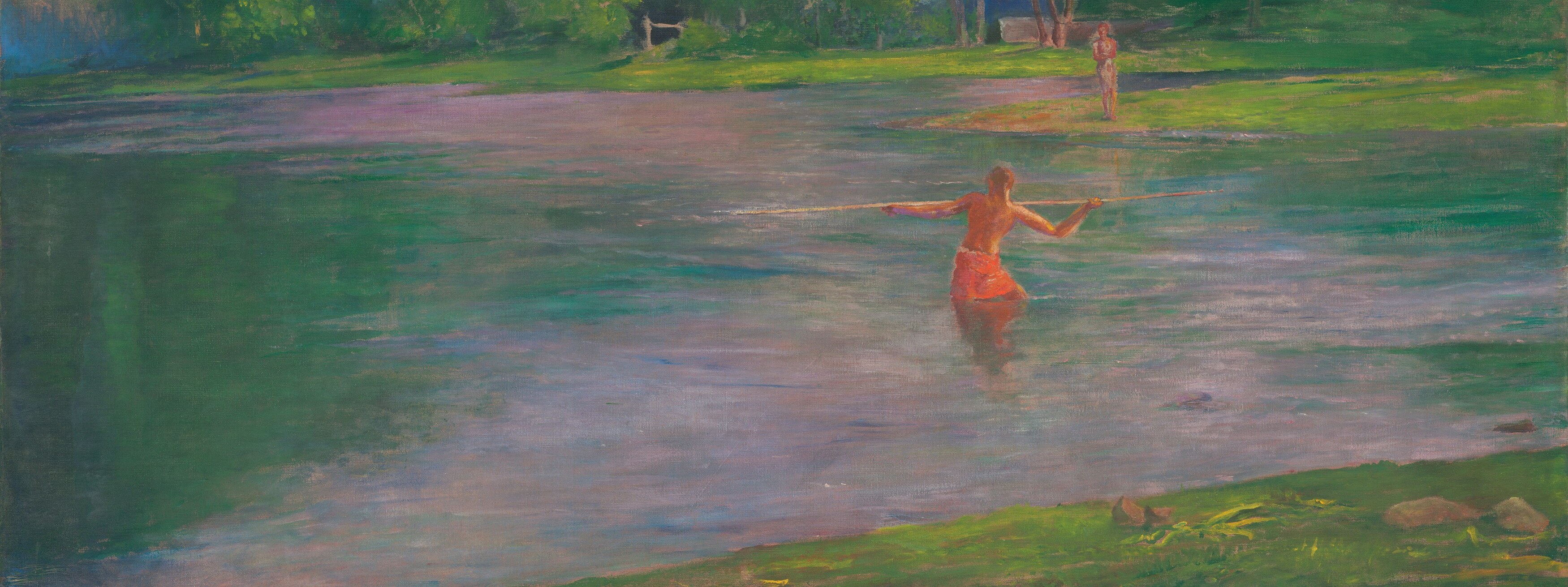
The Entrance to the Tautira River, Tahiti. Fisherman Spearing a Fish by La Farge, John
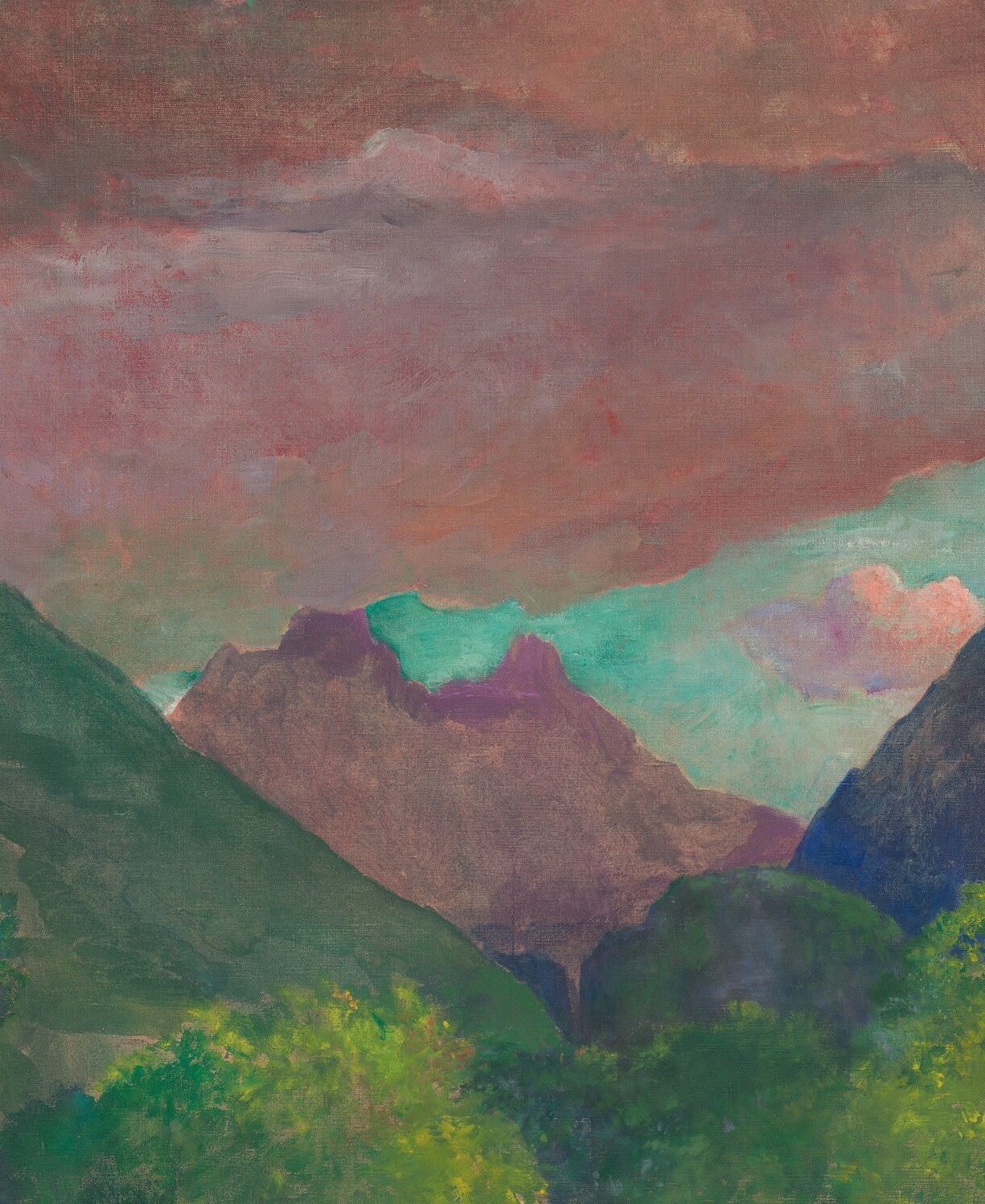
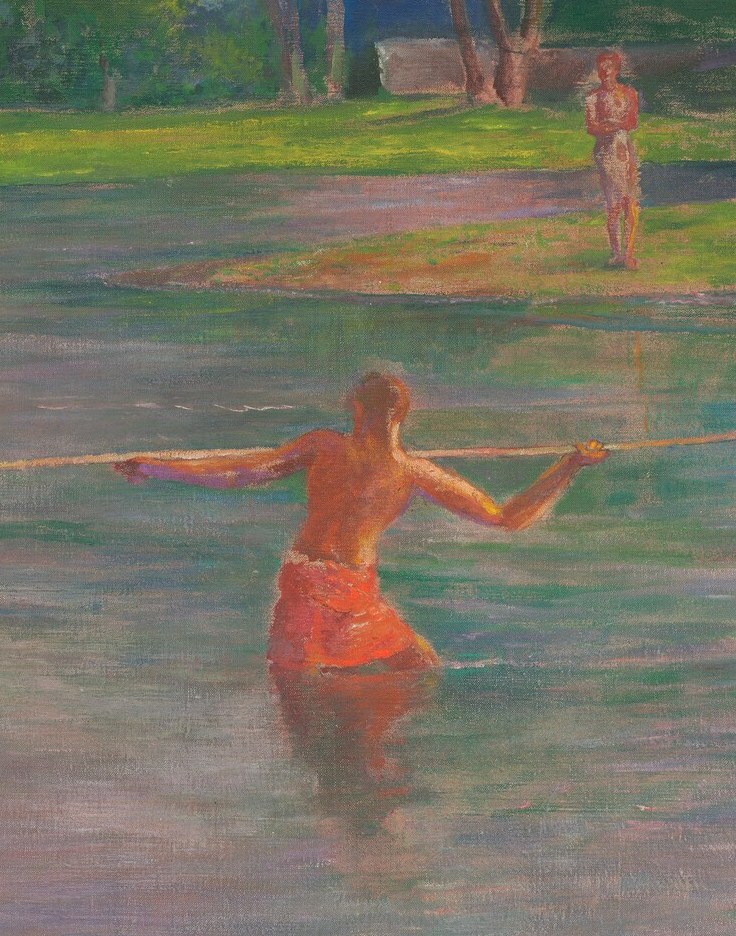
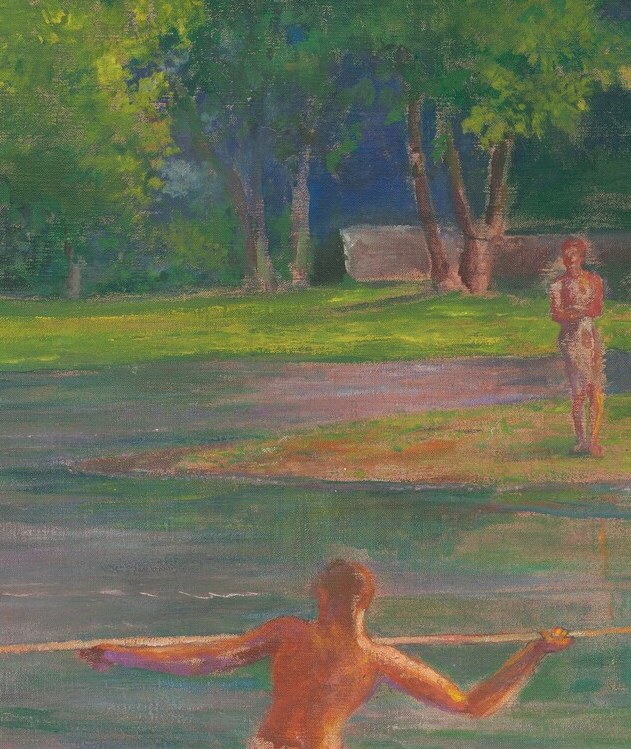
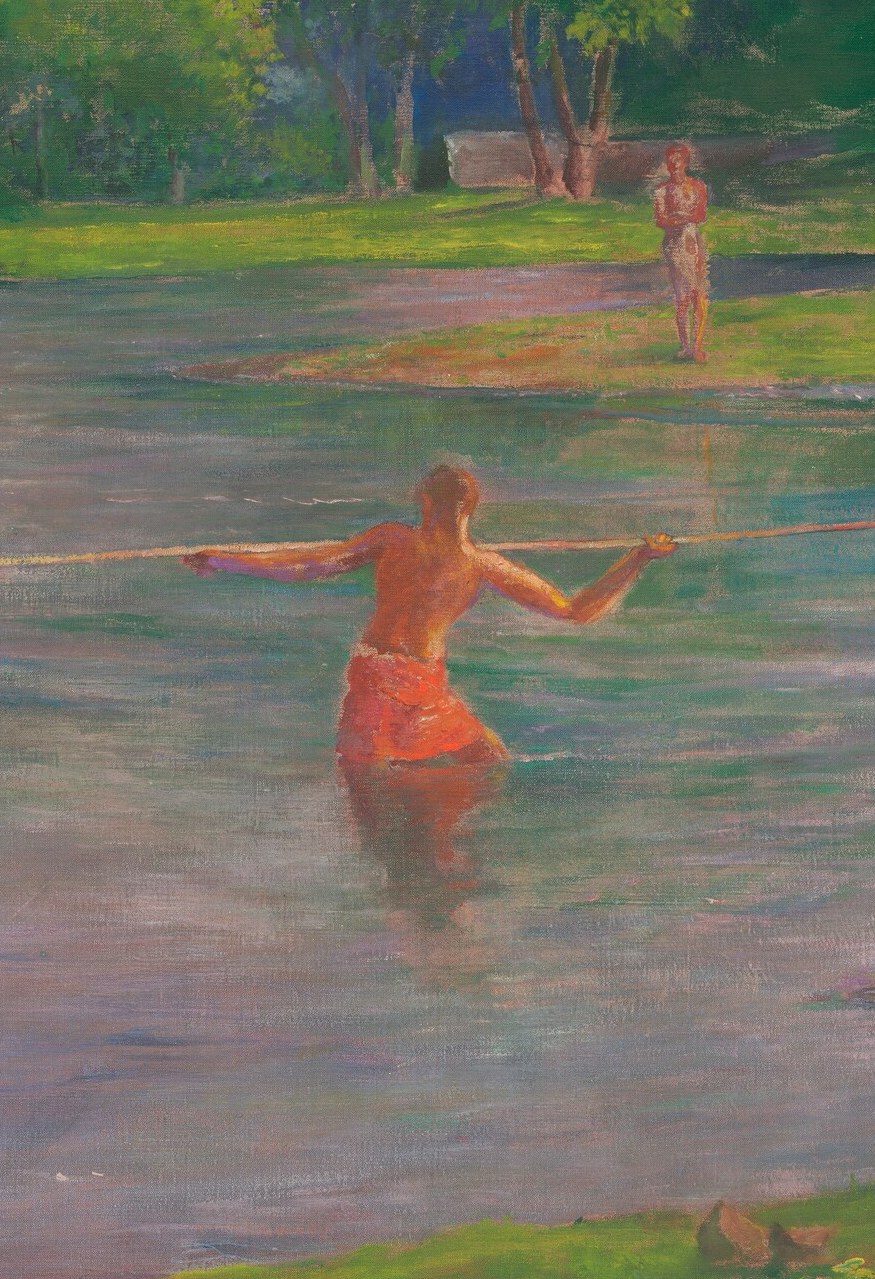
John La Farge's "The Entrance to the Tautira River, Tahiti. Fisherman Spearing a Fish," painted around 1895 and held at the Detroit Institute of Arts, offers a vibrant glimpse into Polynesian life.
Notice the lone figure in the canoe, his orange garment a striking contrast against the lush green landscape. He's captured in the timeless act of spearfishing, a tradition deeply embedded in Tahitian culture.
La Farge visited Tahiti in 1890, collecting sketches and observations. He often worked up his finished paintings years after his travels, allowing him to synthesize his experiences and create works that evoke the island's unique character and the harmony between its people and nature.
This piece stands as a beautiful testament to his engagement with the South Pacific. What details draw your eye into this serene scene?
Details
Transcript
This American painter traveled to Tahiti in 1890. He sought subjects that captured the island's unique character. This painting from 1895 captures the Tautira River. The vibrant orange garment anchors the lone fisherman. He is poised to spear a fish from his traditional canoe. La Farge translated his memories into vivid, lasting compositions.