Amos Lawrence by Harding, Chester
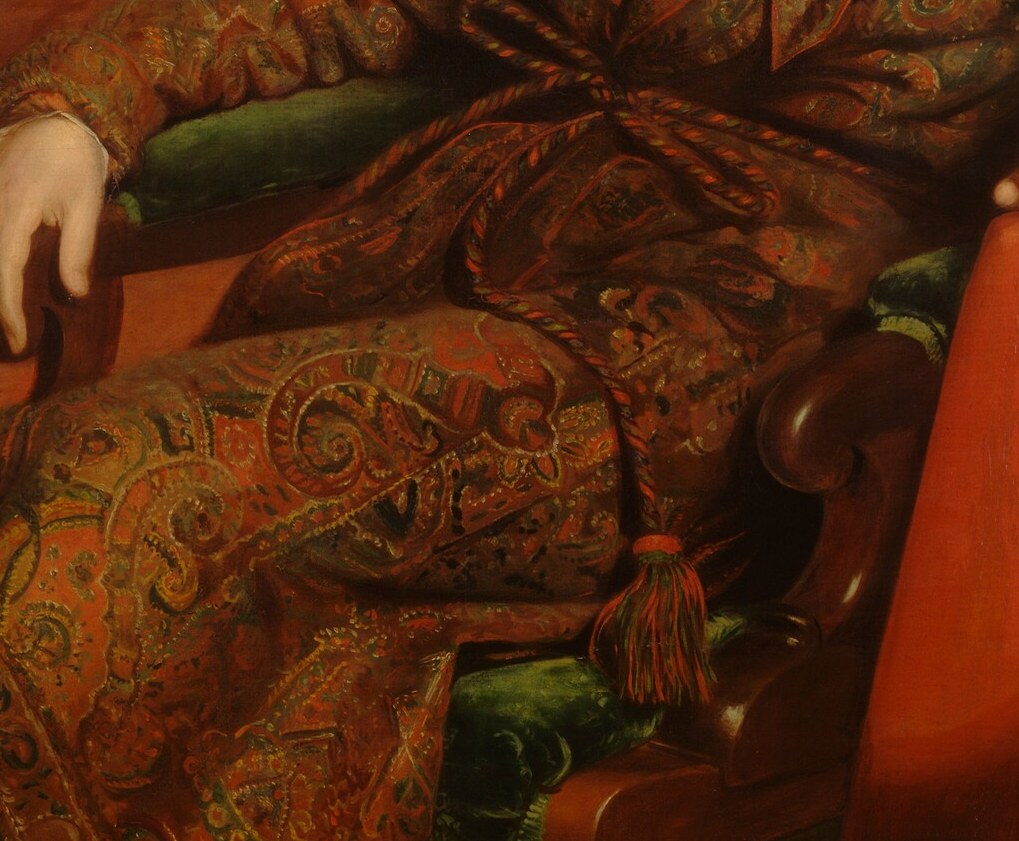
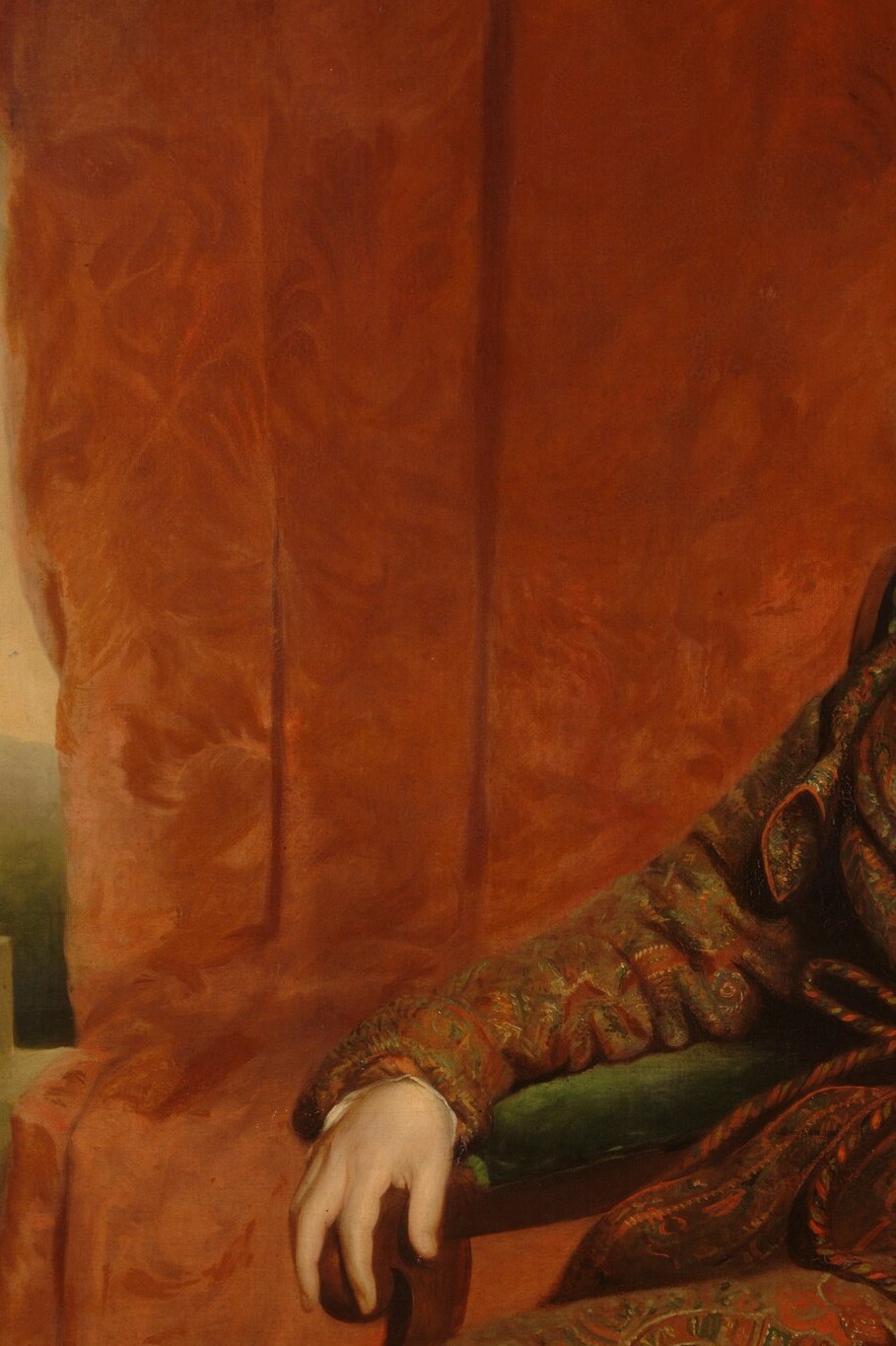
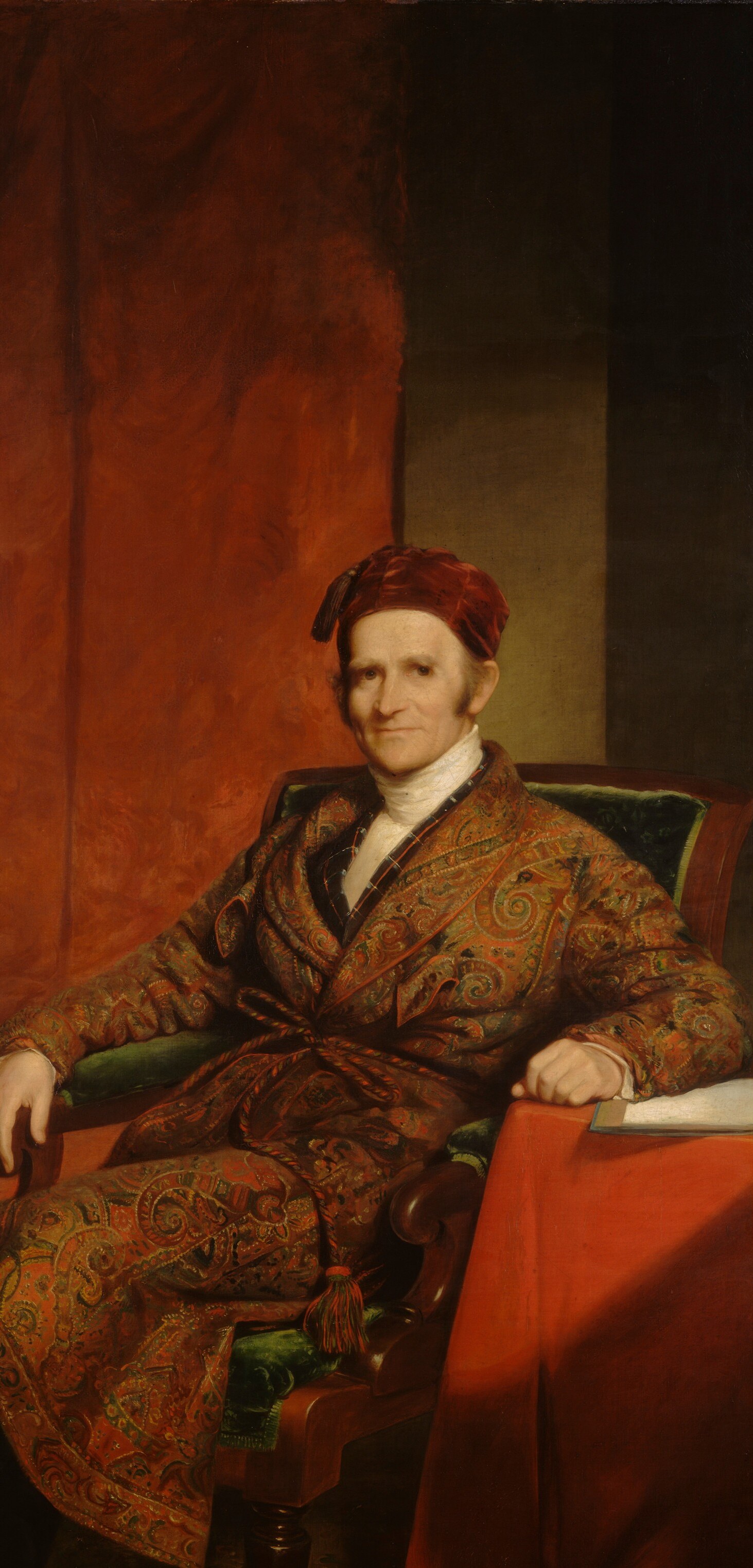
In Chester Harding's portrait from about 1845, Amos Lawrence sits in a red velvet chair, wearing a patterned banyan and a calm, direct expression. He looks like a man with nothing left to prove.
Look closely at his hands, resting softly in his lap. Harding was praised for painting hands that told a life story, and these are the hands of a man who had long since left physical work behind. Then look at his eyes. Harding locks his sitter's gaze directly on the viewer across nearly two centuries. That unbroken directness is what separates a living presence from a formal likeness.
Amos Lawrence built a vast fortune as a Boston merchant, then retired in his forties to give it all away. He funded colleges, churches, libraries, and whole communities. In 1841, when the United States government faced imminent default, Lawrence personally loaned his country millions of dollars. He never asked to be paid back first, and he refused monuments. He simply called it a privilege.
The painting hangs in a private collection today, but the man in it built a public legacy. Harding gives us no allegories, no symbols of military victory, just a merchant in his dressing gown who happened to save a nation's credit and then went home.
Details
Transcript
He looks like a man who counts his own money. Amos Lawrence made a fortune as a Boston merchant. Then he stopped. He gave the rest of his life away. Look at the robe. A banyan for a man of letters, not a ledger. When the United States almost defaulted, Lawrence loaned the government millions. He simply said it was his duty, and asked for no memorial.