Madonna and Child [obverse] by Dürer, Albrecht
View the artwork: Madonna and Child [obverse] →
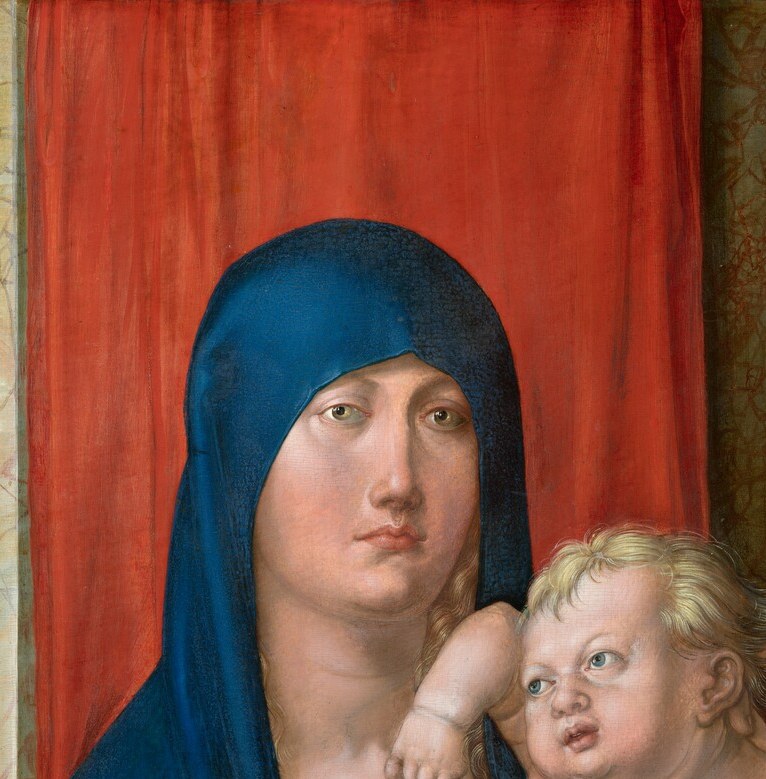
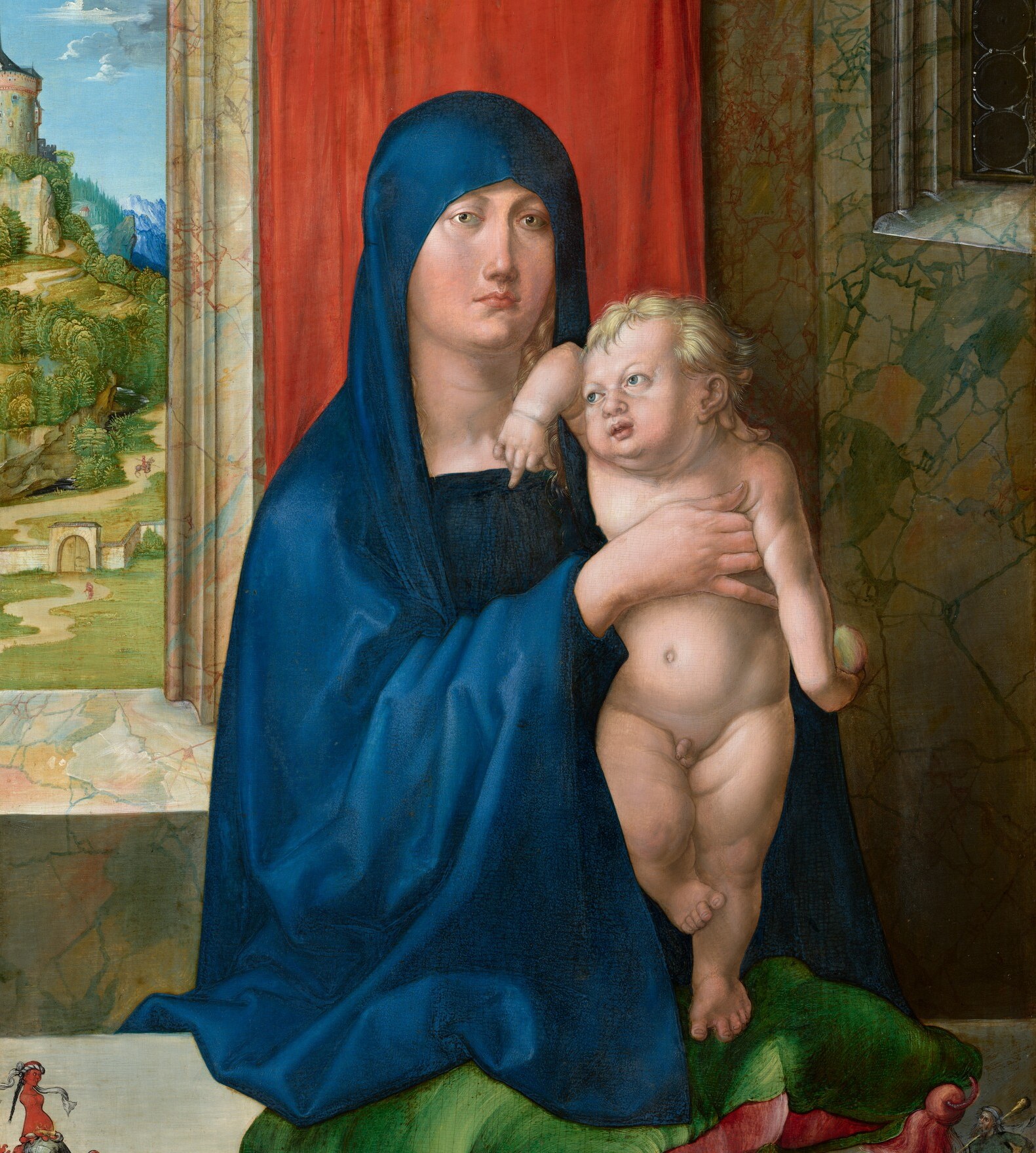
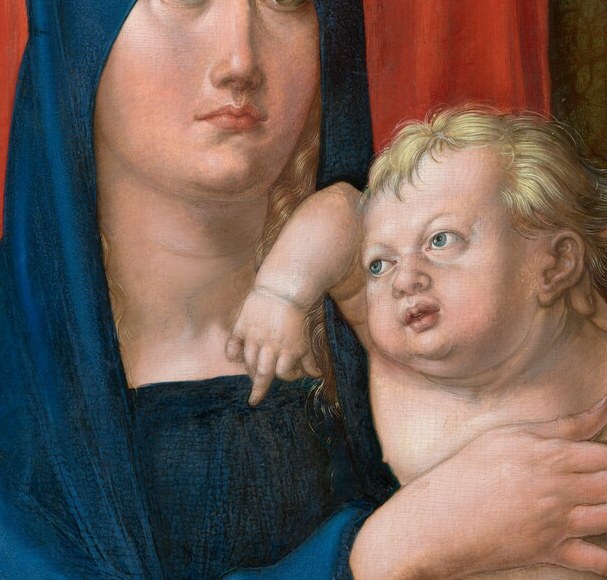
Albrecht Dürer's 'Madonna and Child,' painted around 1496 to 1499, lives at the National Gallery of Art in Washington, DC. It is also called the Haller Madonna, and the reason is hiding in plain sight at the bottom left.
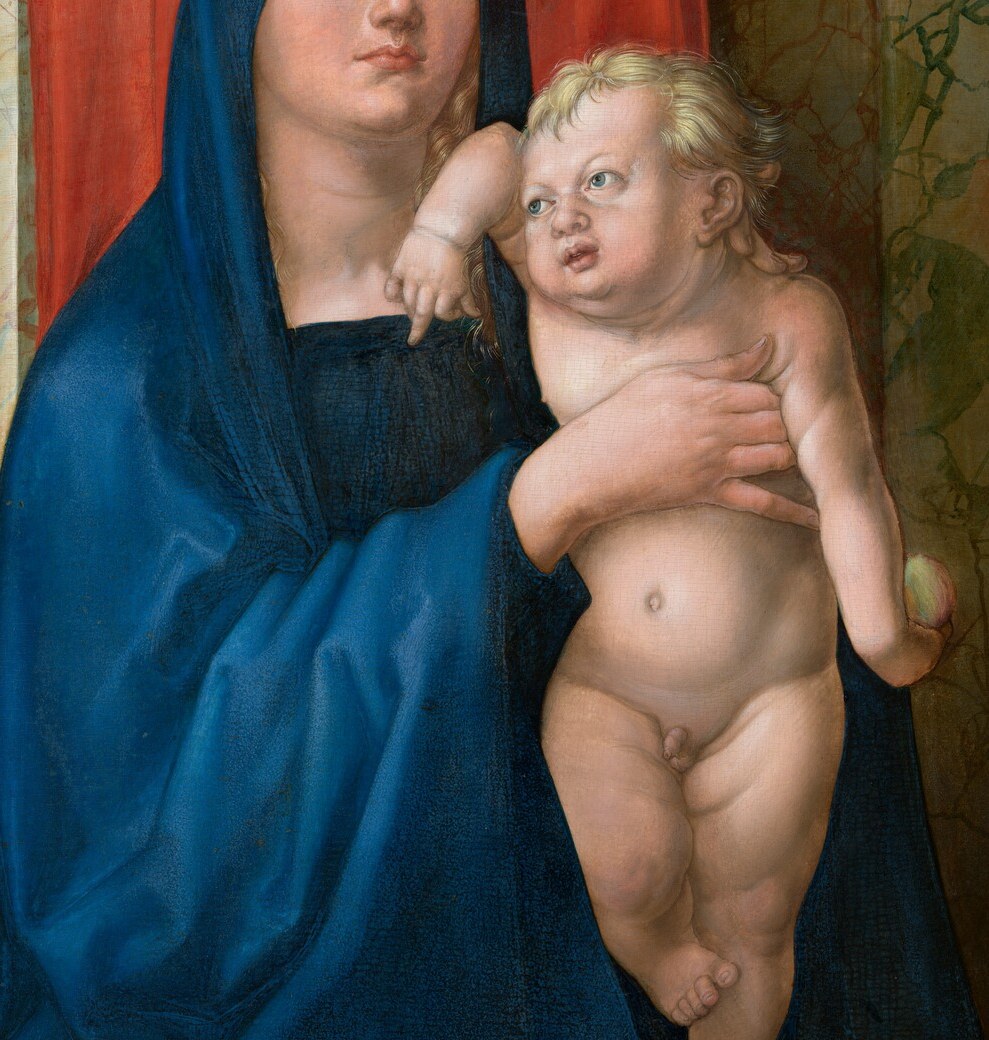
Tucked into the corner is the coat of arms of the Haller family, the wealthy Nuremberg merchants who commissioned this panel. That tiny heraldic detail turns a universal devotional image into a specific family's object of private prayer. Look also for the apple in the Christ Child's hand, Dürer used the same symbol of Original Sin in his famous Adam and Eve engraving, and the luminous blue of Mary's mantle, almost certainly painted with costly lapis lazuli.
This panel is doubly remarkable because its reverse side carries another complete Dürer painting, 'Lot and His Daughters,' executed with looser, broader brushwork. A double-sided panel like this may have been used in a domestic chapel, offering two scenes for contemplation.
Dürer was in his late twenties when he made this, absorbing Italian ideas about naturalism and anatomy while retaining the crisp detail of his Northern training. The next time you see a devotional Madonna, check the corners. Patrons often left their mark where only a close observer would find it.
#arthistory #durer #renaissance
Details
Transcript
You might scan past her and see a tender mother. But the child grips an apple. The fruit of Original Sin. Dürer painted this around 1498, for private devotion. The ultramarine mantle signals a serious commission. Now look down. Tucked into the corner. A coat of arms. The Haller family of Nuremberg. The other side of this panel hides a second finished painting.