Ali Pasha (born about 1741, died 1822) by Jacob Ritter von Hartmann
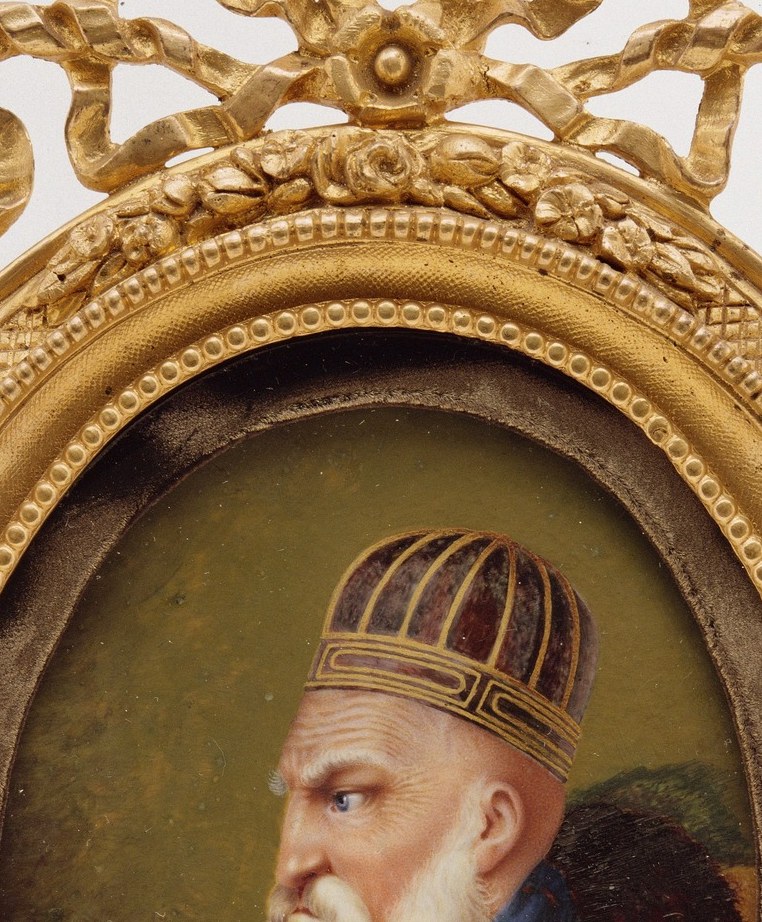
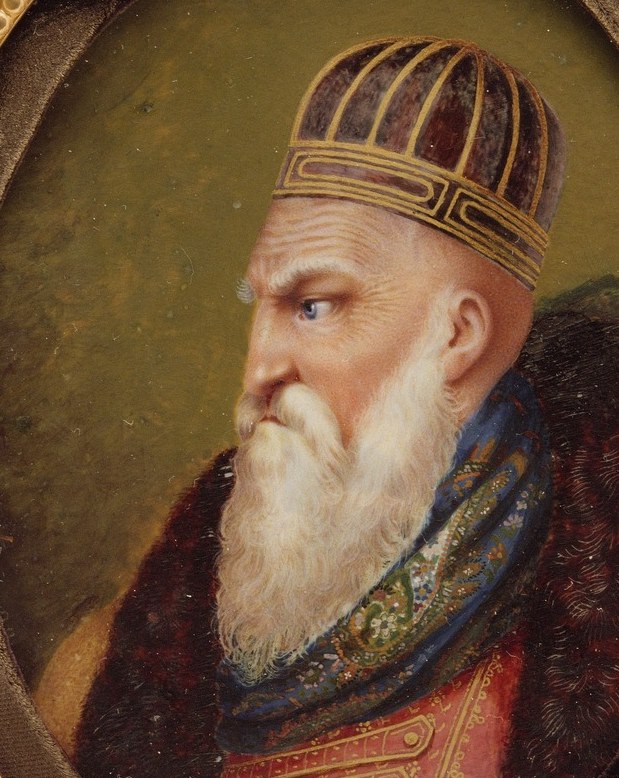
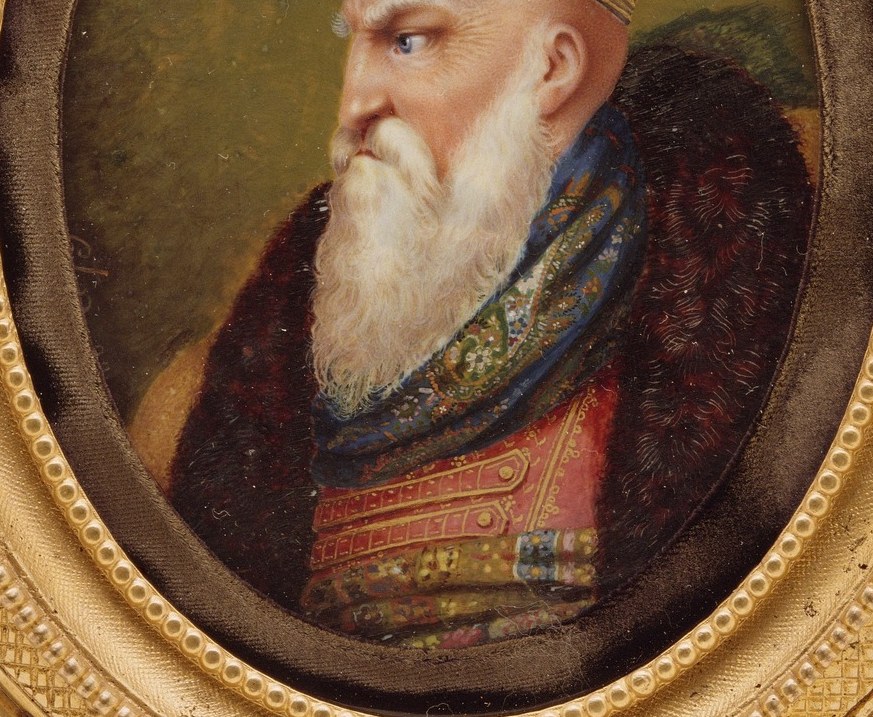
This is a portrait of Ali Pasha, the so-called Lion of Ioannina, painted by Jacob Ritter von Hartmann in 1822. It lives at The Metropolitan Museum of Art, and it was made in the very year its subject died.
Look at the single eye, visible only in strict profile. The artist gives Ali Pasha an aloof, imperious quality by denying us the second eye. The white beard sweeping down the deep red and gold robe signals an old age few rulers reached. He was 81, and the portrait seems to know there is no time left.
Ali Pasha governed the region of Epirus, in what is now Greece, for over three decades under the Ottoman Empire. He was a figure of immense cunning and notorious cruelty. By 1822, Sultan Mahmud II had decided to break his power. Ottoman troops besieged him on an island in Lake Pamvotis. When soldiers finally breached his room, Ali Pasha was shot from below, through the floorboards. His severed head traveled to Constantinople.
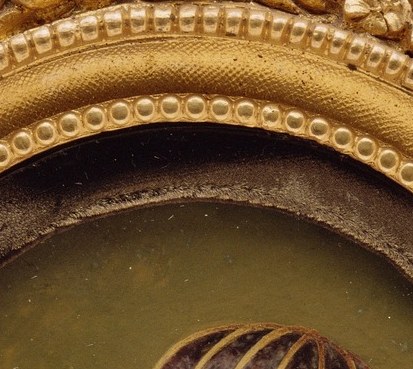
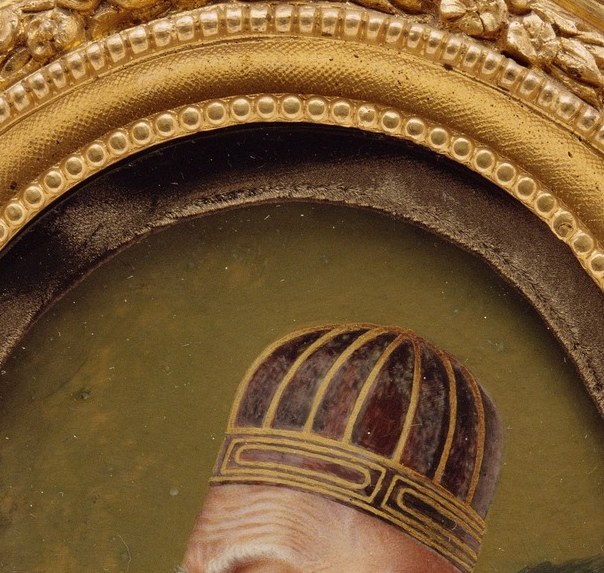
The ornate gilded frame and the oval format suggest this was a diplomatic gift or memorial piece. The face it carries is the end of the story: power, age, and a life that would not end quietly.
Details
Transcript
He ruled a corner of the Ottoman Empire with legendary cunning. This is the face of Ali Pasha, the Lion of Ioannina. The portrait was painted in 1822. He was 81 years old. That same year, Ottoman forces finally cornered him. He was shot through the floorboards of his room. His head was sent to the Sultan in Constantinople. This painted face is what remains of a legend.