The Agony in the Garden by Eugène Delacroix
Eugène Delacroix painted The Agony in the Garden in 1851, not a serene saint but a body collapsed on the ground in a red shirt. It hangs in the Rijksmuseum.
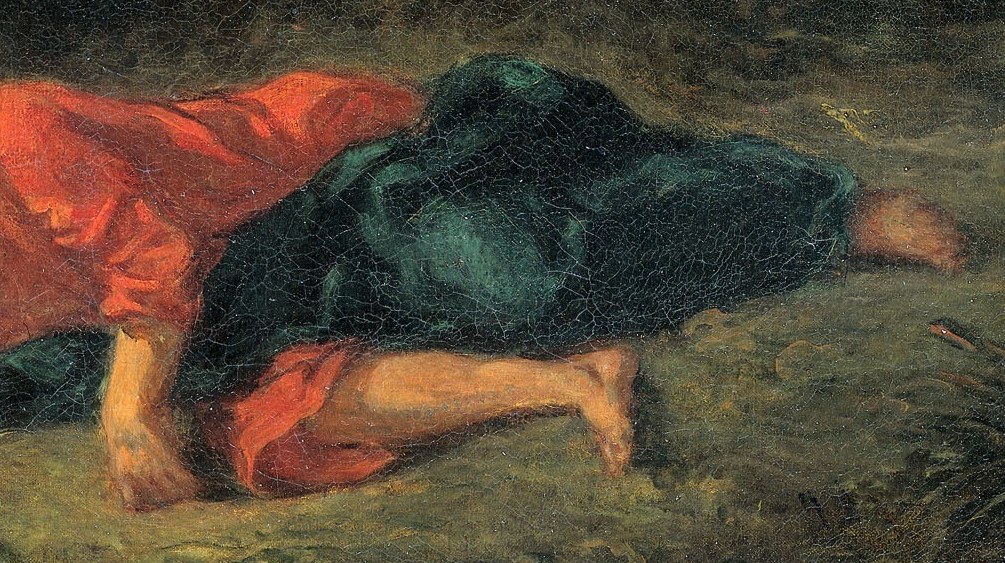
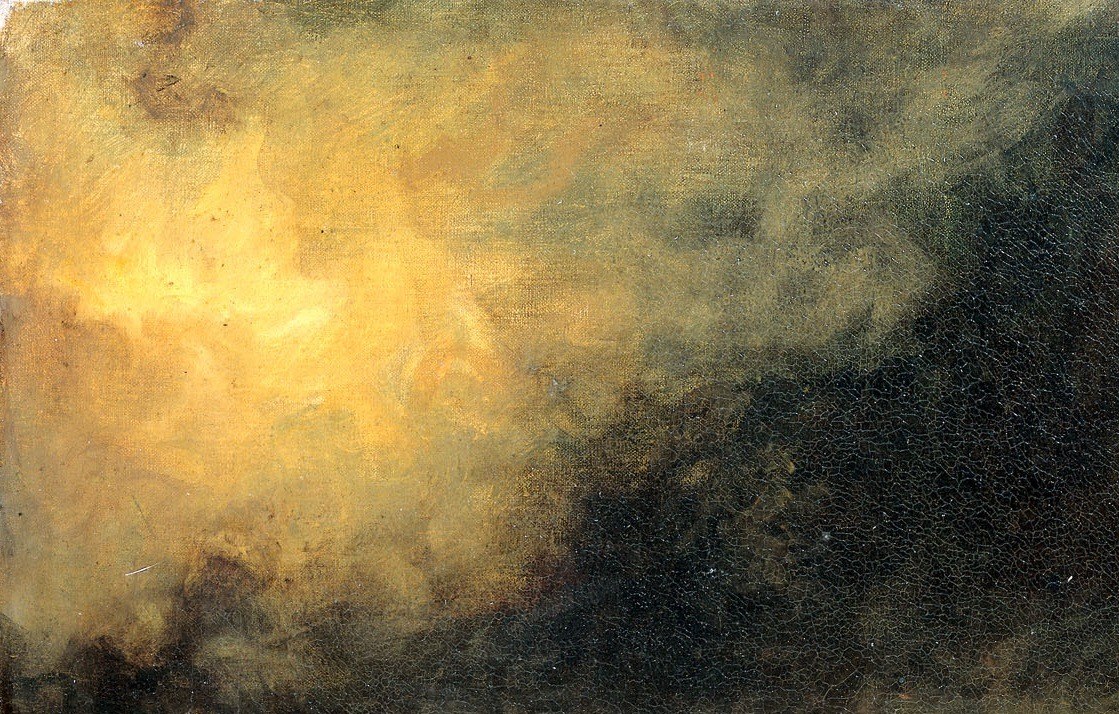
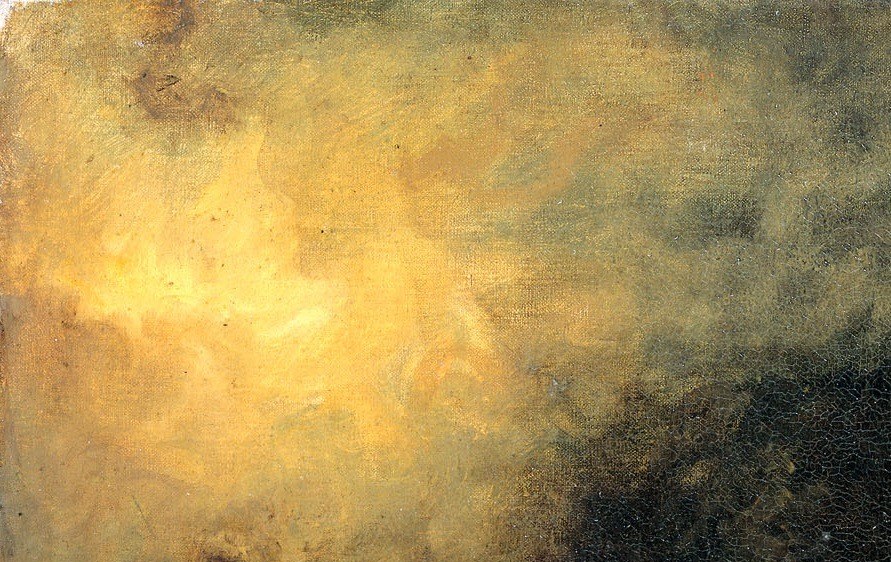
Start with the face: downturned, strained, refusing the beatific glow of earlier Christs. Then the left hand, fingers gripping earth, anchoring a body in freefall. Above, the sky churns; nature carries the emotion.
Delacroix was fifty-three, the leader of French Romanticism. He prized colour and movement over classical line, inspired by Rubens. Where his rival Ingres sought perfection, Delacroix sought feeling, and this canvas is feeling made visible.
He lived twelve more years. The Romantics gave way to the Realists, then the Impressionists. But in 1851, a painter asked: what does a man look like when he asks to be spared? This is what he saw.
Details
Transcript
1851. Delacroix painted the loneliest moment in the Gospels. One figure. Red shirt. No throne. No angels. Just earth. Downturned gaze. A face that asks, not answers. Fingers into dirt. Delacroix prized movement over precision. Romantic painters used nature to carry human emotion. This sky. A light the face cannot meet. He was fifty-three. French Romanticism at its peak. Twelve more years.