Artillery by Roger de La Fresnaye
Roger de La Fresnaye’s “Artillery” (1911) is a patriotic fireworks display painted just three years before the First World War turned those same cannons on a generation. Today it hangs in the Metropolitan Museum of Art as a complex artifact of French modernism and the nationalist tensions that surrounded it.
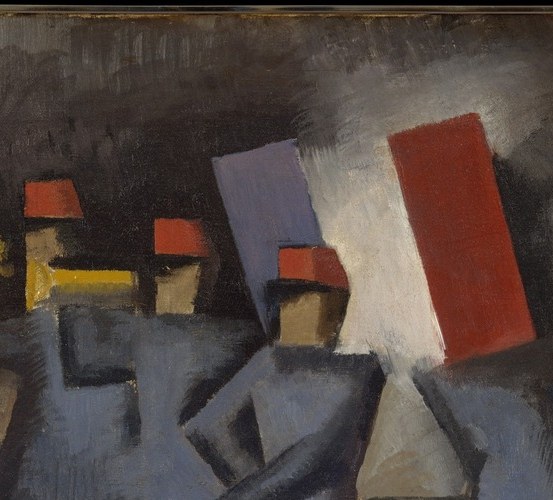
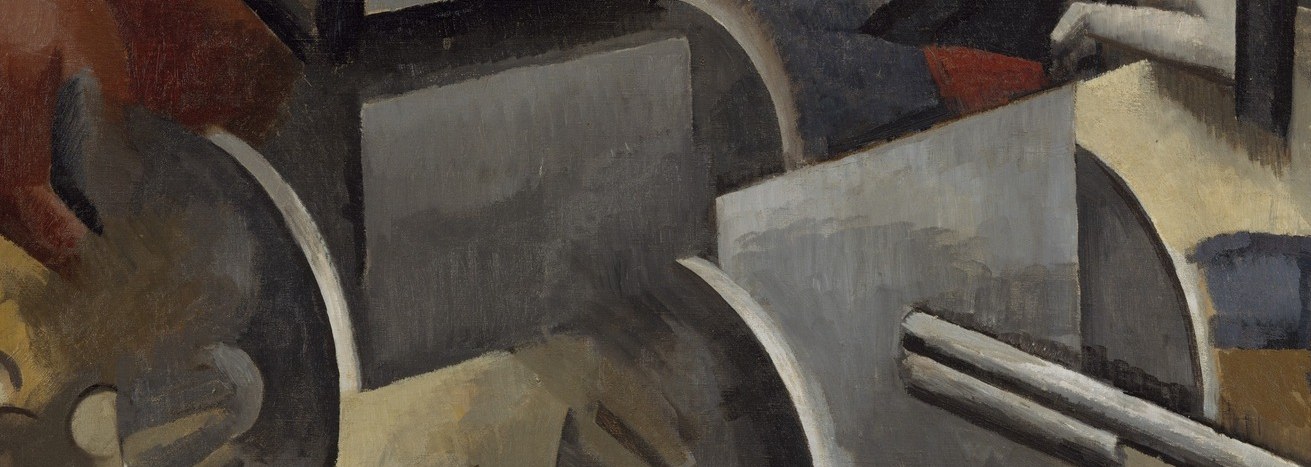
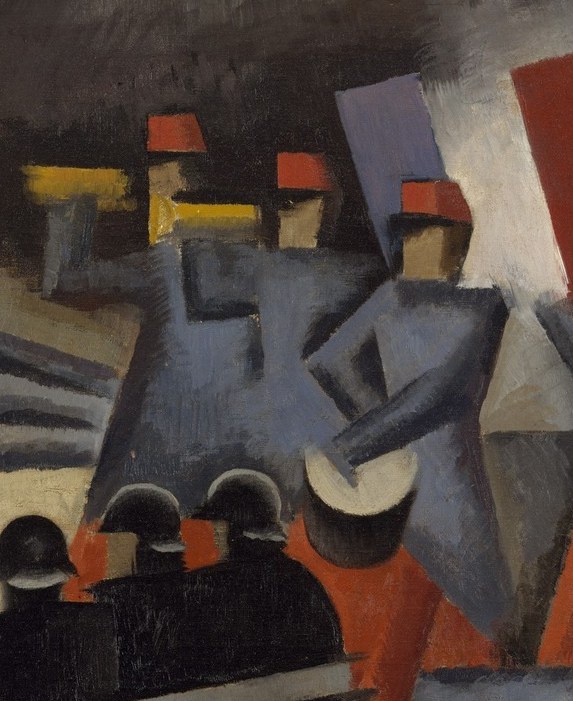
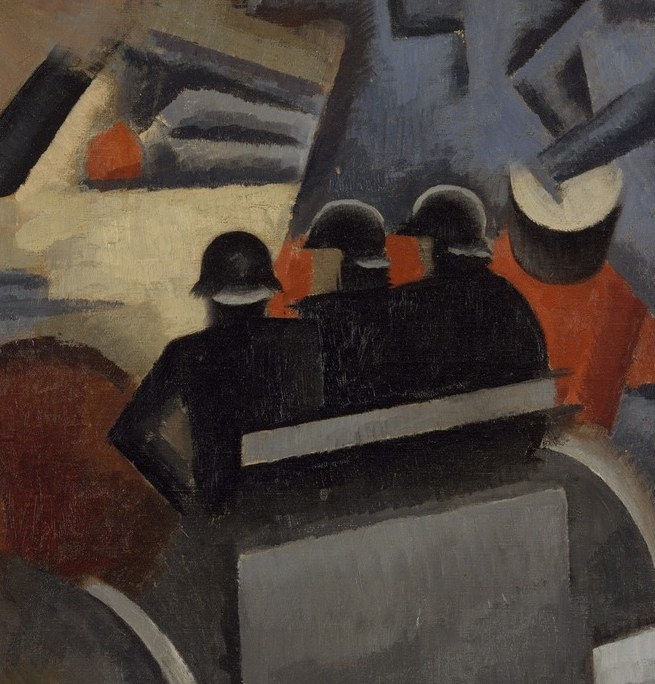
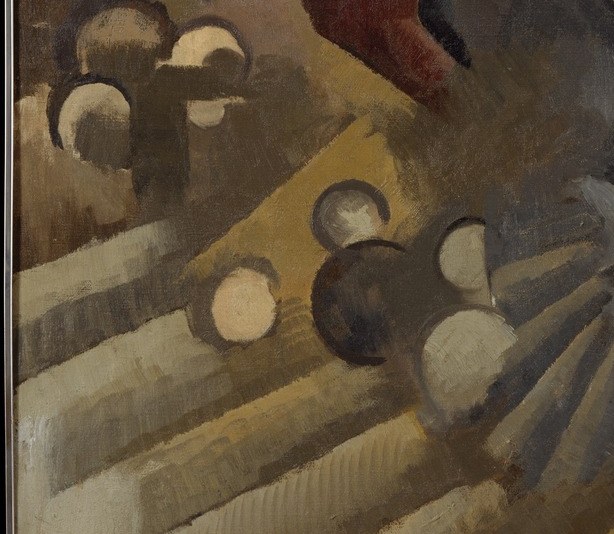
Look first at the diagonal field-gun barrel slashing across the center. The tricolor flag rises above a Cubist mass of soldiers, their bodies fractured into facets. The white horse on the right is the painting’s largest single form, a reminder that artillery was still a living, breathing operation of men and animals before full mechanization.
In 1912 the Parisian press attacked Cubism as an un-French movement, its geometric abstraction branded a German import. De La Fresnaye was caught in the political crossfire. When war broke out he enlisted, serving in the infantry and later the engineering corps. Mustard gas ended his career and eventually his life at age forty.
A canvas like “Artillery” became impossible to see the same way after 1918. The Cubist energy meant to signal French strength now read as a premonition the artist himself had survived but could not escape.
Details
Transcript
1911. Europe is arming, and French pride is soaring. This painting celebrated it. Cannons, horses, the tricolor. A Cubist chaos of steel and muscle, painted before the guns turned real. The painter was Roger de La Fresnaye. A rising star of the French avant-garde. A year later, Cubism itself was accused of being a foreign, un-French threat. Too German, critics said. Unpatriotic. Then the war came. De La Fresnaye fought for France. He survived the trenches. But the gas destroyed his lungs. After the war, this exaltation of artillery was impossible to look at.