The Apotheosis of the Spanish Monarchy by Giovanni Battista Tiepolo
Giovanni Battista Tiepolo’s “The Apotheosis of the Spanish Monarchy,” painted in 1764, is a grand declaration of political power. Now at The Metropolitan Museum of Art, it uses lavish Rococo style to make an unmistakable statement.
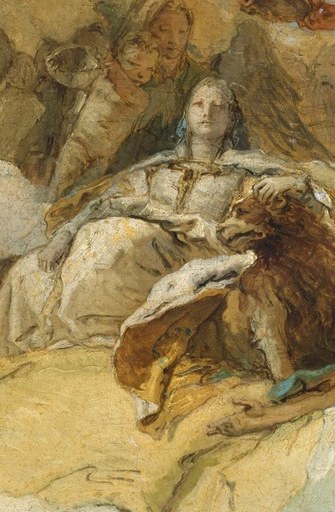
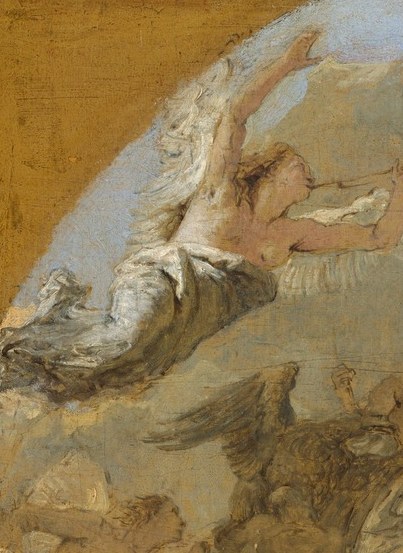
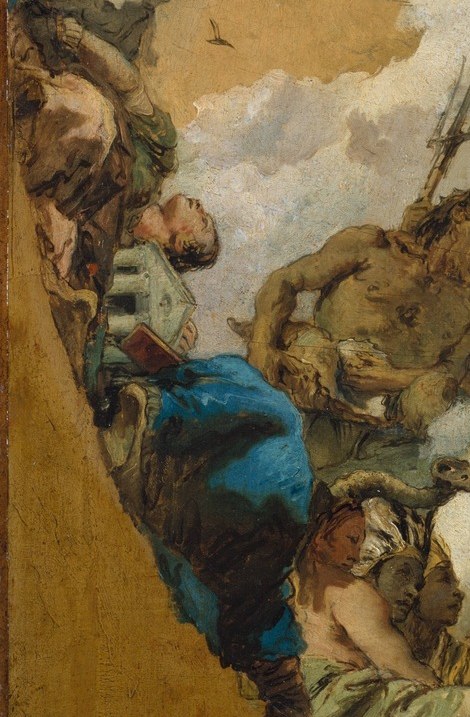
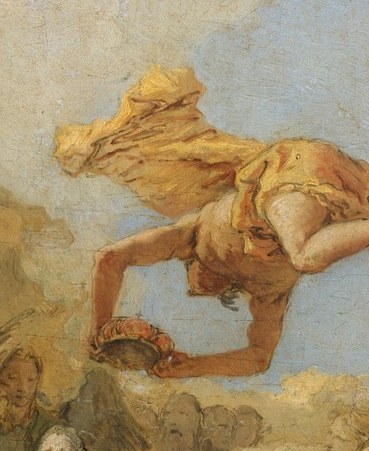
Look at the central woman in white robes, representing the monarchy itself, being divinely elevated. An angel heralds her ascent, while figures below react with a mix of awe and resignation, reinforcing the idea of supreme authority.
This oil canvas was created in 1764 during Tiepolo’s mature phase, specifically for the Spanish court. It was part of a larger trend of elaborate allegorical works commissioned to legitimize and glorify aristocratic patrons through art.
The painting's theatricality and dynamic composition served a clear purpose: to make the Spanish crown's power not just understood, but seen as a divine and undeniable force. What does this tell us about the relationship between art and power?
Details
Transcript
This painting declares the glory of the Spanish Monarchy. The central woman, in white, embodies the monarchy. She is being elevated, her divine right proclaimed. An angel with a trumpet announces her rise. Other figures celebrate, while some seem to fall away. This work was created in 1764 for the Spanish court. It ensured the crown's power was visually undeniable.