A Danish Coast. View from Kitnæs on Roskilde Fjord. Zealand by Johan Lundbye
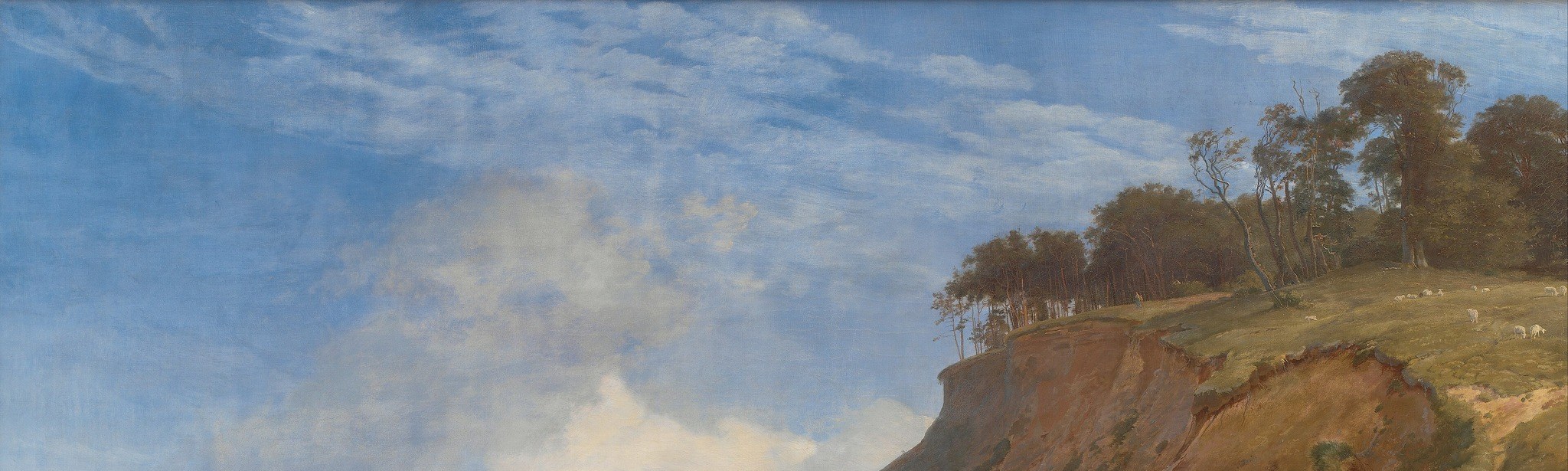
Johan Lundbye painted a geological argument into a landscape. A Danish Coast. View from Kitnæs on Roskilde Fjord. Zealand, finished in 1843, is a national romantic work held by the Statens Museum for Kunst in Copenhagen. But its patriotism is built from dirt: the painting makes the case that the Danish homeland is literally the ground underfoot.
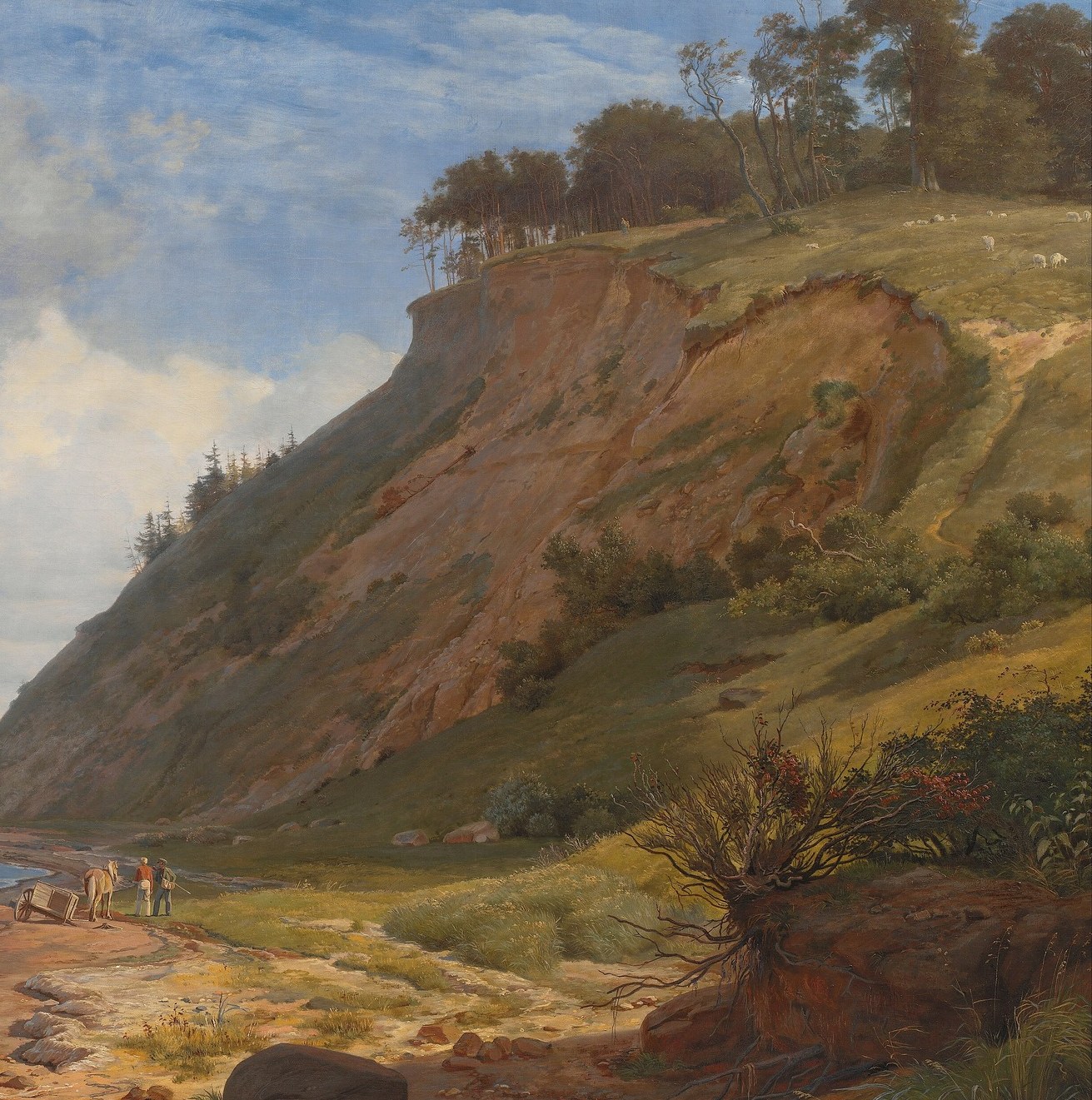
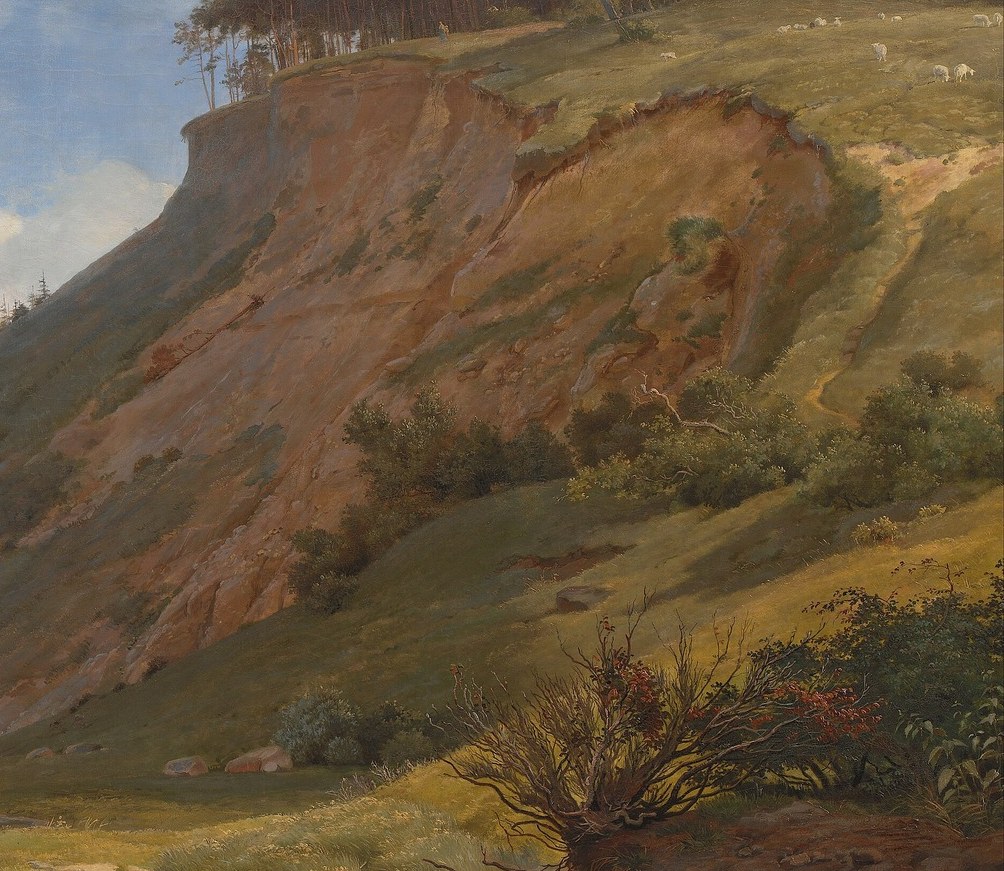
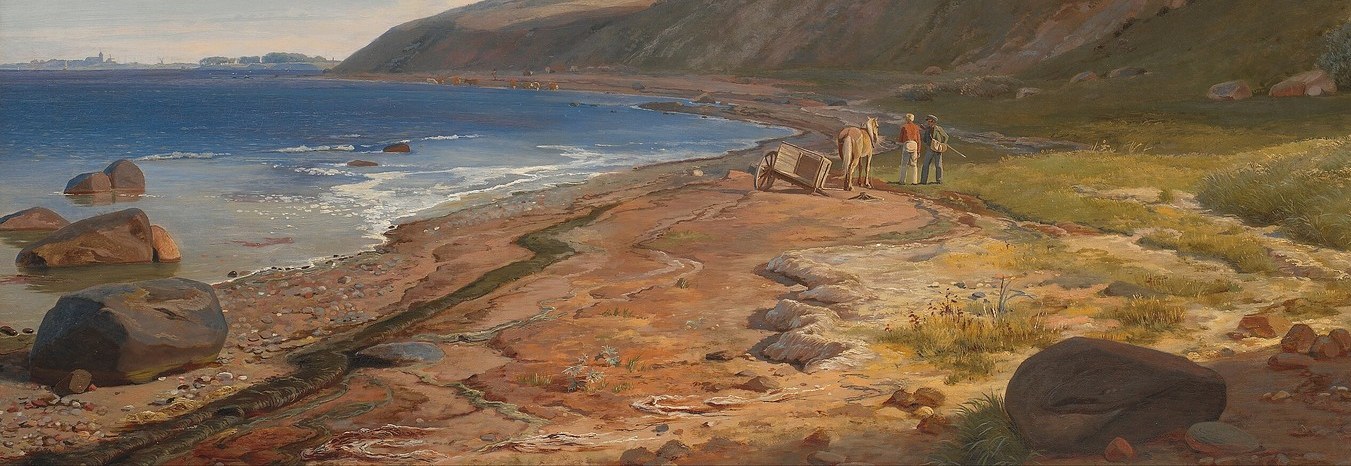
Look at the great clay headland. The striated sediment bands are not a general impression of a cliff. Lundbye recorded them with the care of a naturalist, compressed glacial moraine laid down in visible strata. He then pulled the same red-clay tone down through the beach sand and into the foreground rocks. The cliff and the shore are one continuous eroding body.
The technical ambition is clearest there. The cliff is painted with a dry, scraped texture that reads as mineral. The fjord, by contrast, is glassy and still, broken only by a soft patch of reflected light that links sky to water. Lundbye was twenty-four years old when he made this; he would die in the First Schleswig War five years later, at twenty-nine. His short career was devoted to showing Danes that their own landscape was worth the same seriousness as Italy.
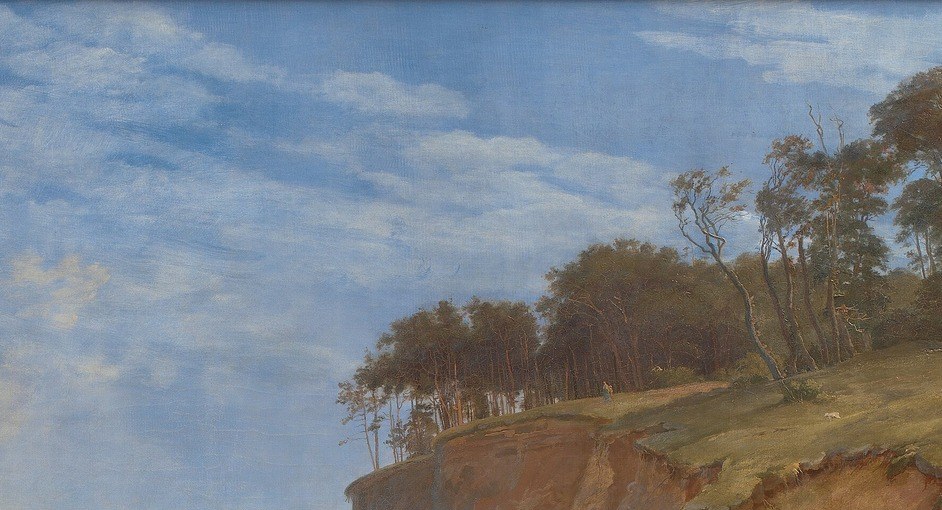
The open sky above the headland is the final move. The cloud break reads almost as a halo, national romanticism in paint: the homeland bathed in its own light.
Details
Transcript
It looks like a quiet Danish coast, 1843. But the painter was not just after a view. He studied this cliff like a geologist. Those bands are compressed glacial clay, thousands of years deep. He dragged the same red clay down through the sand. So the whole coast reads as one eroding body. And then he opened the sky above the headland.