The Rape of Helen by Juan de la Corte by Juan de la Corte
Juan de la Corte's "The Rape of Helen" (1601), housed at Madrid's Museo del Prado, is a masterclass in depicting maritime chaos and drama. The painter, who served as court painter to King Philip III and Philip IV, specialized in creating dynamic battle and historical scenes.
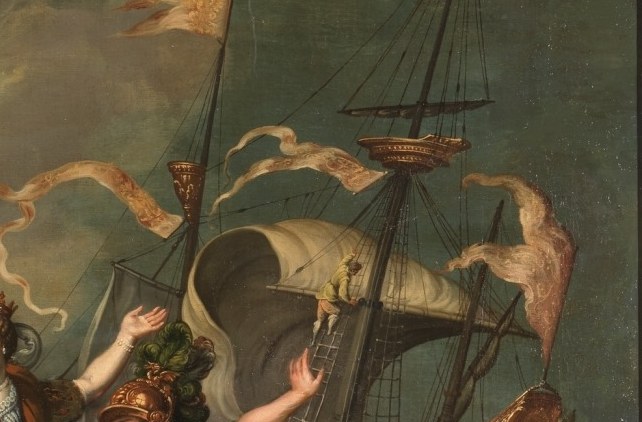
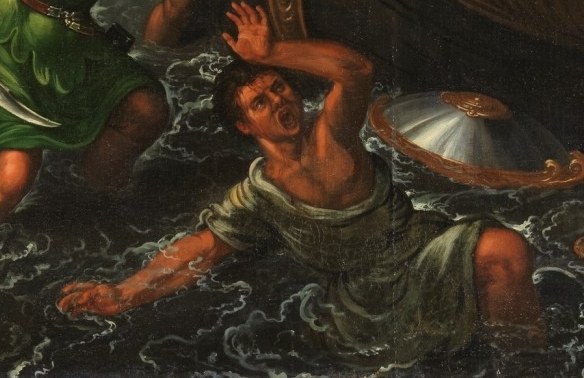
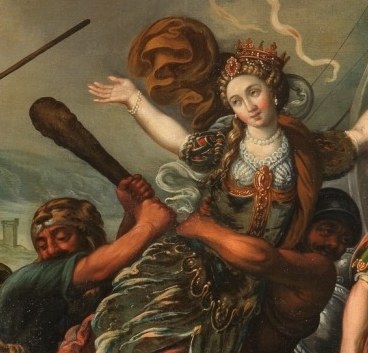
Notice how de la Corte builds the turbulent sea. The impression of churning water is created through vigorous brushwork and a stark contrast of light and dark colors. He uses meticulous detail to render elements like the ship's gilded hull and the figures struggling amidst the waves.
The frothing foam is not an illusion, but precisely placed dabs of pure white oil paint. This technique, characteristic of the early Baroque style, gives the water its palpable, wild texture, making the scene come alive with movement and peril.
De la Corte, of Flemish descent but working in Spain, was trained by Diego Velázquez. His ability to convey such intense movement and emotion through paint remains astounding.
Details


Transcript
This painter was a master of chaos and drama. He was court painter to two Spanish kings, specializing in battle scenes. Look how he makes the ship heave and surge on the canvas. The churning water is a careful buildup of light and dark paint. Each splash of foam is a dab of pure white oil paint. This technique gives the water its wild, frothing texture.