Notre-Dame-de-la-Garde (La Bonne-Mère), Marseilles by Paul Signac
View the artwork: Notre-Dame-de-la-Garde (La Bonne-Mère), Marseilles →
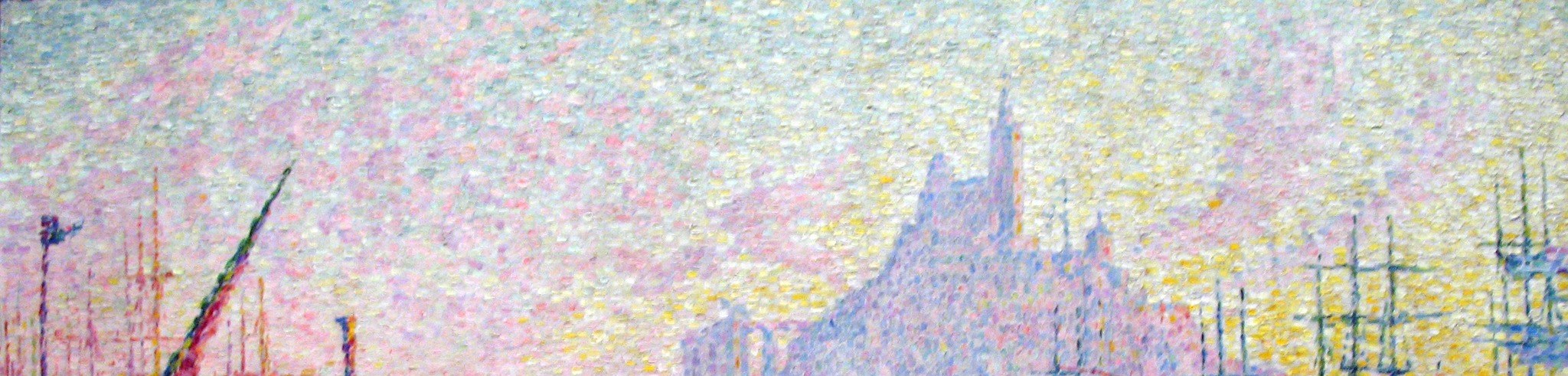
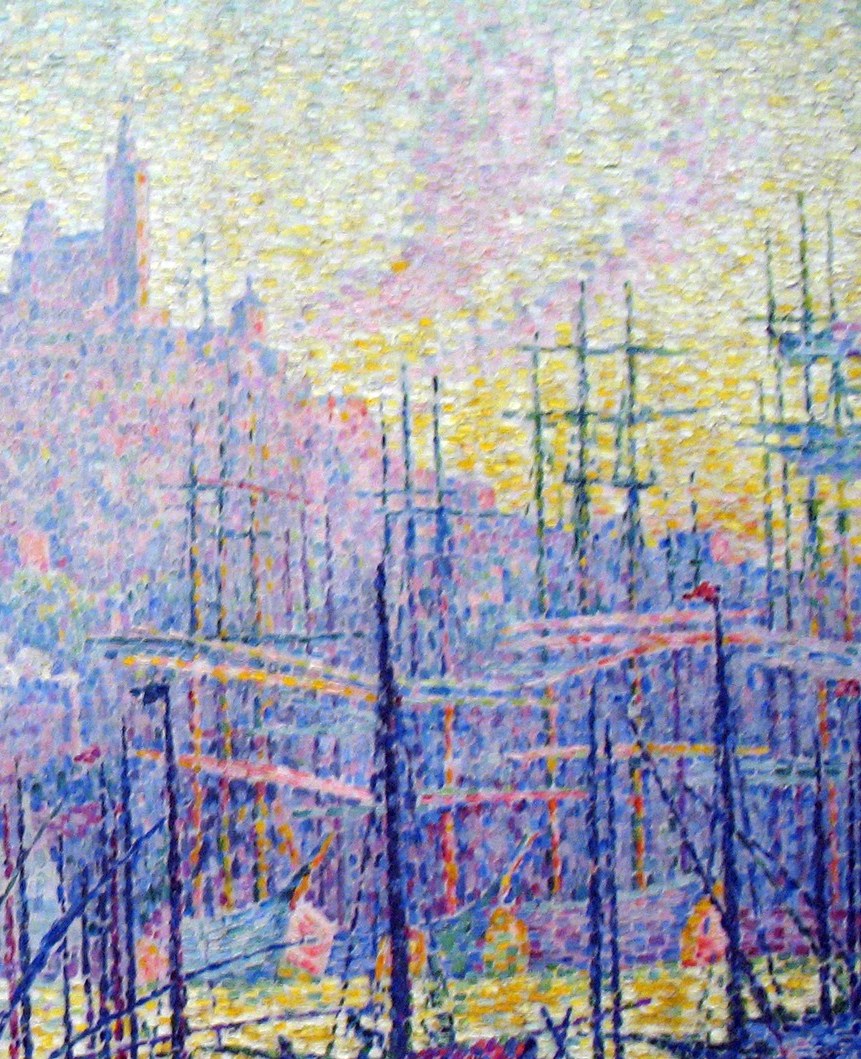
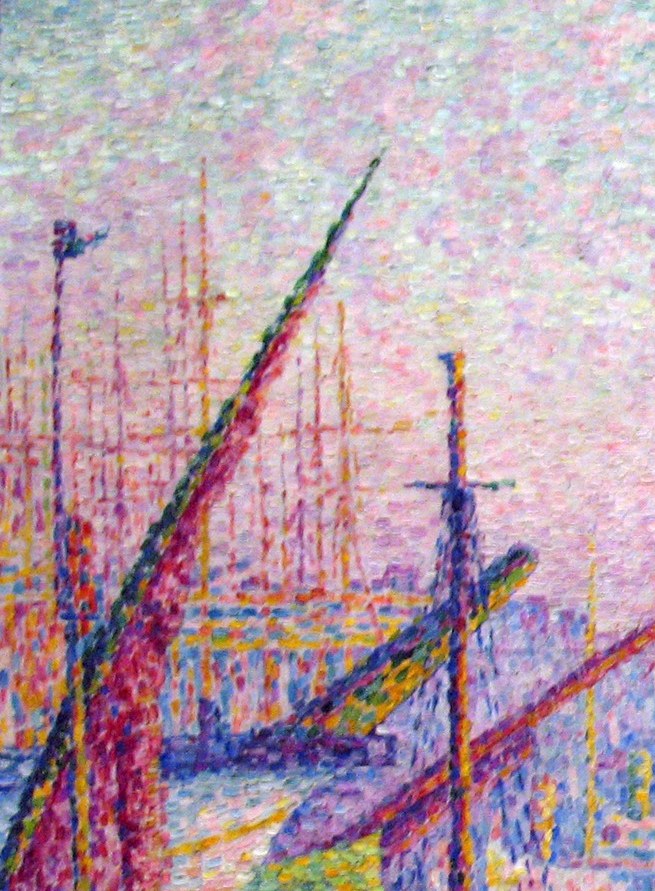
Paul Signac's 'Notre-Dame-de-la-Garde (La Bonne-Mère), Marseilles' (1905) is a masterclass in letting your eyes do the mixing. Housed at The Metropolitan Museum of Art, this luminous harbor scene captures the ancient basilica that sailors called the 'Good Mother,' perched above a bustling port in the last days of the sailing era.
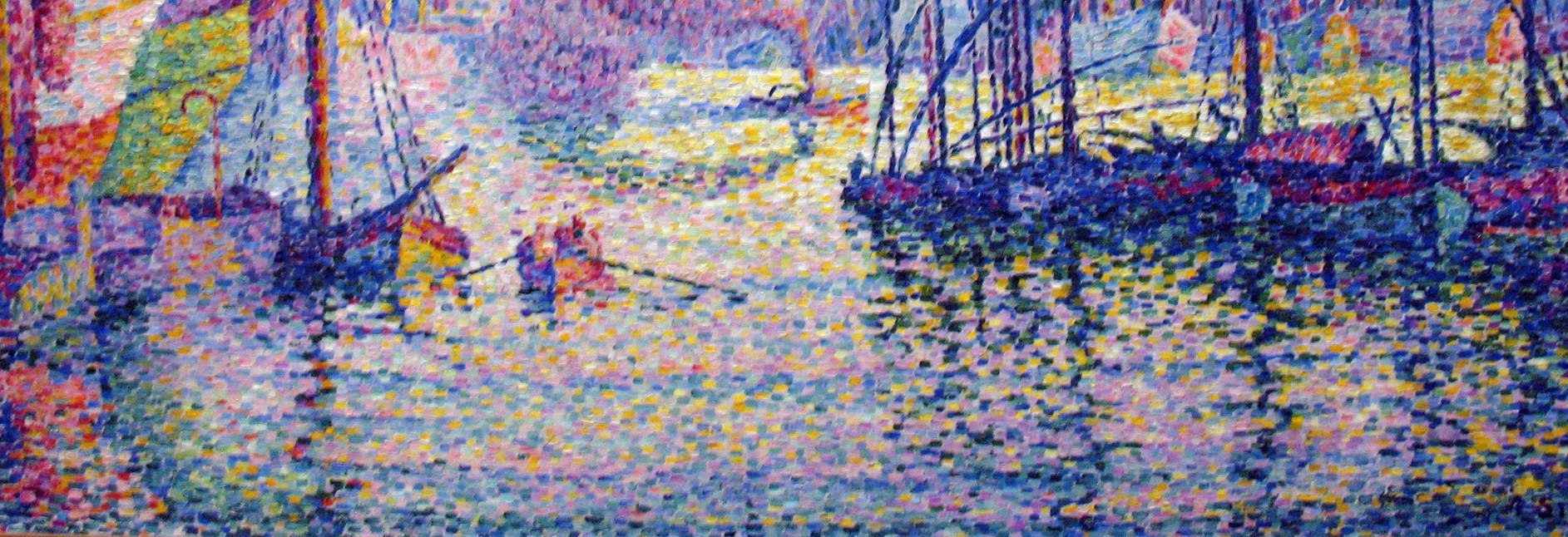
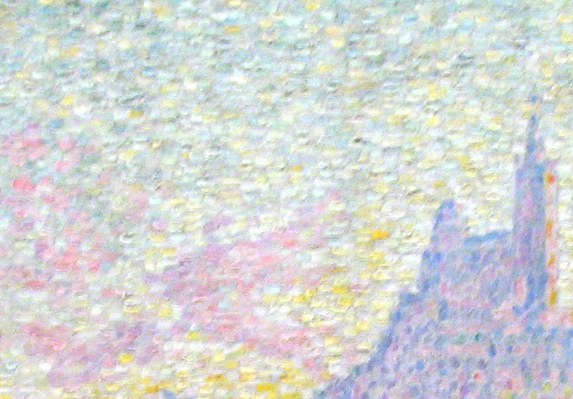
Look closely at any square inch of canvas and you will see Signac's mature technique laid bare: not dots, but small, distinct rectangular strokes of unmixed pigment, like mosaic tiles. He placed pure pink beside gold, mauve beside turquoise, trusting that your eye would blend them into shimmering Mediterranean haze from a distance. The harbor water mirrors the sky exactly, color for color, dissolving everything into reflected light.
Signac painted this after a trip to Marseille in late 1905, working from memory and watercolor studies in his studio. He had been evolving away from the strict, mechanical pointillism of Georges Seurat, influenced by summers spent at Saint-Tropez with Henri-Edmond Cross and the young Henri Matisse. The result is a work that bridges Neo-Impressionism and the coming Fauvist explosion: scientific color theory delivered with increasingly bold, expressive brushwork.
Next time a video compresses a painting into a blur, remember what Signac knew: some images are built to resolve only inside your own eye.
#arthistory #neoimpressionism #paulsignac
Details
Transcript
Notre-Dame-de-la-Garde. Marseilles. 1905. They called her the Good Mother. The church that watched over sailors. Paul Signac built this entire harbor from tiny rectangles of pure, unmixed paint. He abandoned Seurat's dots. These are mosaic tesserae, laid side by side. Pink, gold, mauve, turquoise. The sky's palette, dissolved into the water below. The color never mixed on his palette. It mixed in your eye.