Artwork
Notre-Dame-de-la-Garde (La Bonne-Mère), Marseilles
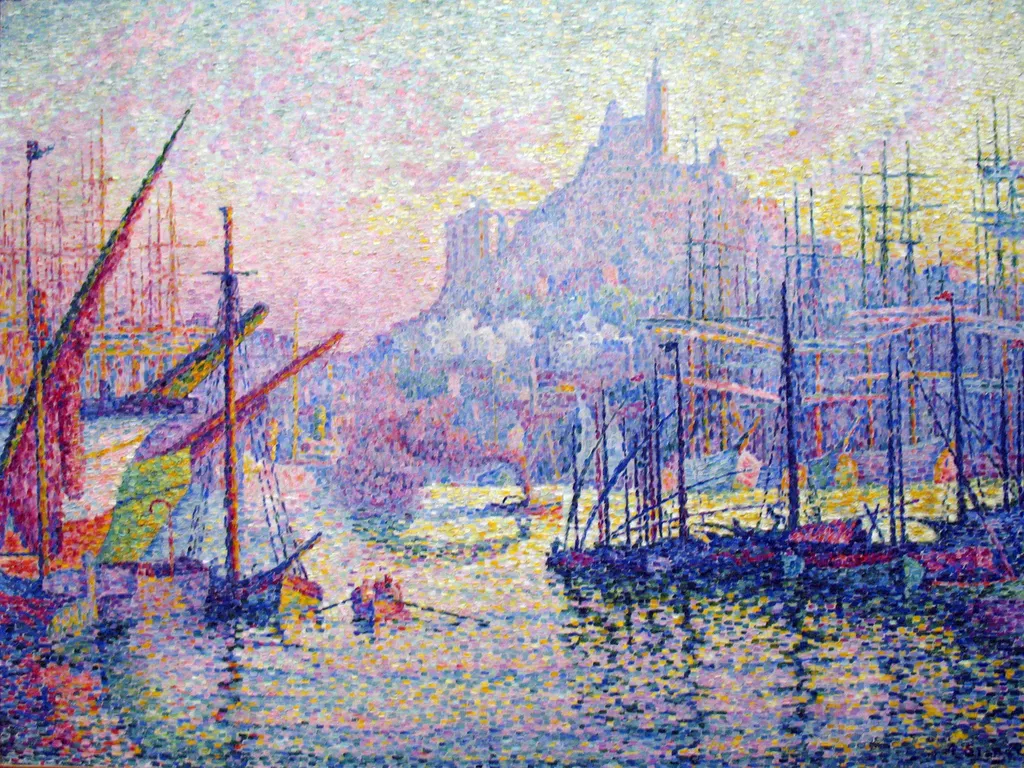
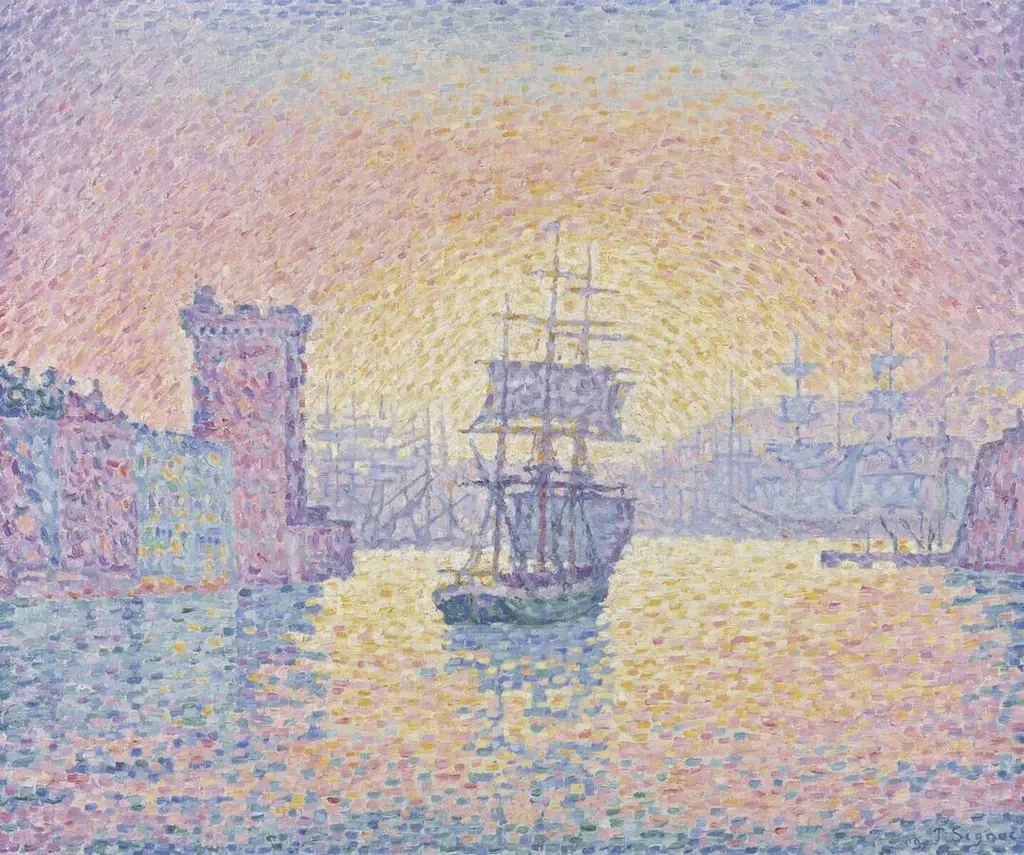
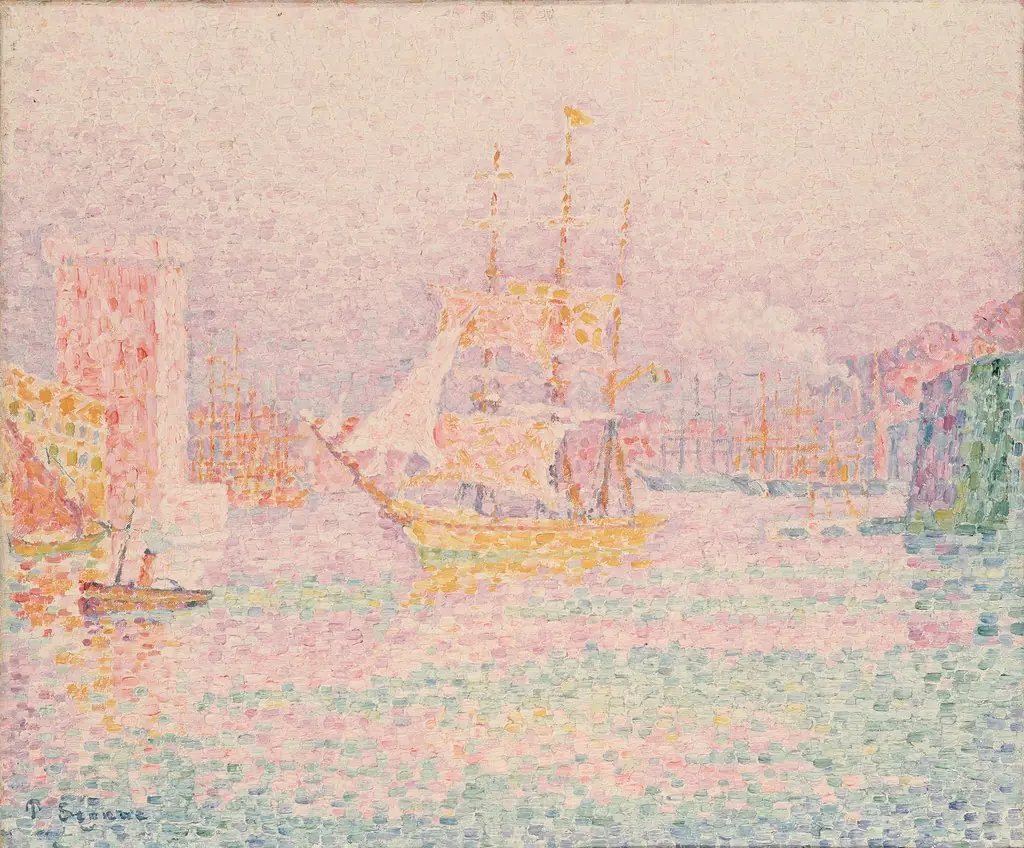
Notre-Dame-de-la-Garde (La Bonne-Mère), Marseilles is an oil painting by the Neo-Impressionist artist Paul Signac. It dates from 1905 and is held in the collection of the Metropolitan Museum of Art.
About this work
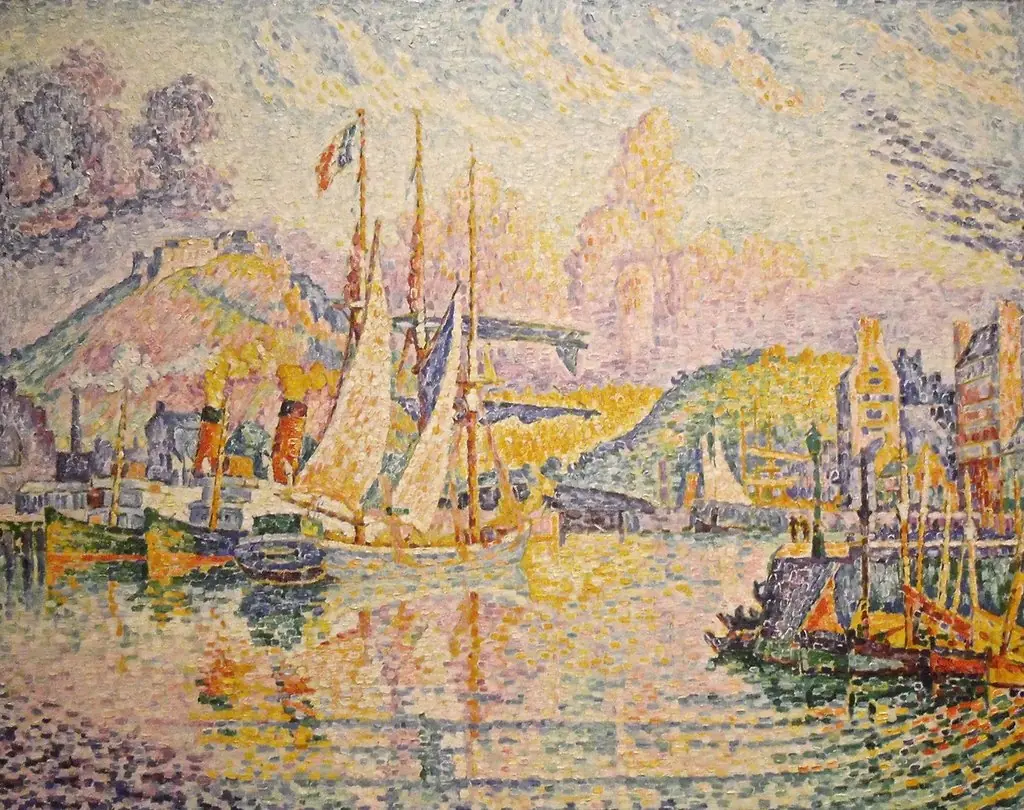
From the north bank of Marseille's old port, Paul Signac looked toward the limestone hill crowned by Notre-Dame-de-la-Garde, the basilica sailors call "La Bonne Mère." He painted it in the studio in 1905-06 after a visit late in 1905, filling the canvas with dawn light, small boats, and a steamboat's pink smoke. Rectangular strokes of unmixed color shimmer like mosaic tiles.
Overview
The artwork exemplifies Signac's mature Neo-Impressionist style, employing distinct rectangular brushstrokes to render a luminous atmosphere and intense color.
Paul Signac's oil painting, Notre-Dame-de-la-Garde (La Bonne-Mère), Marseilles, captures a vibrant view of the bustling French port city. Created in his studio between 1905 and 1906, the canvas depicts the iconic basilica, affectionately known as "The Good Mother" by local mariners, perched atop a steep hill. The artwork exemplifies Signac's mature Neo-Impressionist style, employing distinct rectangular brushstrokes to render a luminous atmosphere and intense color.
Subject & Meaning
The composition presents Marseille's old port from its northern bank, gazing south towards the imposing limestone peak crowned by Notre-Dame-de-la-Garde. This basilica, consecrated in 1864, stands on the site of earlier fortifications and is distinguished by its nearly thirty-foot-tall gilded statue of the Virgin Mary. The lower half of the painting features gently rippling water reflecting soft hues, traversed by various sailing vessels and a small steamboat, while the sky transitions from warm pinks to cool turquoise.
Technique & Style
This painting represents a significant evolution in Signac's Neo-Impressionist method. Moving beyond the precise dots characteristic of Georges Seurat, Signac here applied unmixed oil pigments in small, distinct rectangular strokes, akin to mosaic tesserae. This technique allowed for heightened color intensity and a vibrant, shimmering surface, while simultaneously reducing the strict, mechanical appearance often associated with earlier Divisionism. The work's striking palette further indicates Signac's ongoing exploration of color.
History & Provenance
Signac conceived this work following a visit to Marseille in late 1905, completing it in his studio during the subsequent year. It is one of two canvases he produced depicting the port city from this period. The painting is now part of the collection at The Metropolitan Museum of Art, where it was received in 1955 as a generous gift from the collector Robert Lehman. It is identified by the object number 55.220.1.
Own this work as a print
Artist & collection

Artist
Paul Victor Jules Signac ( seen-YAHK, French:; 11 November 1863 – 15 August 1935) was a French Neo-Impressionist painter who, with Georges Seurat, helped develop the artistic technique Pointillism.