Still Life with Flowers in a Glass Vase by Rachel Ruysch
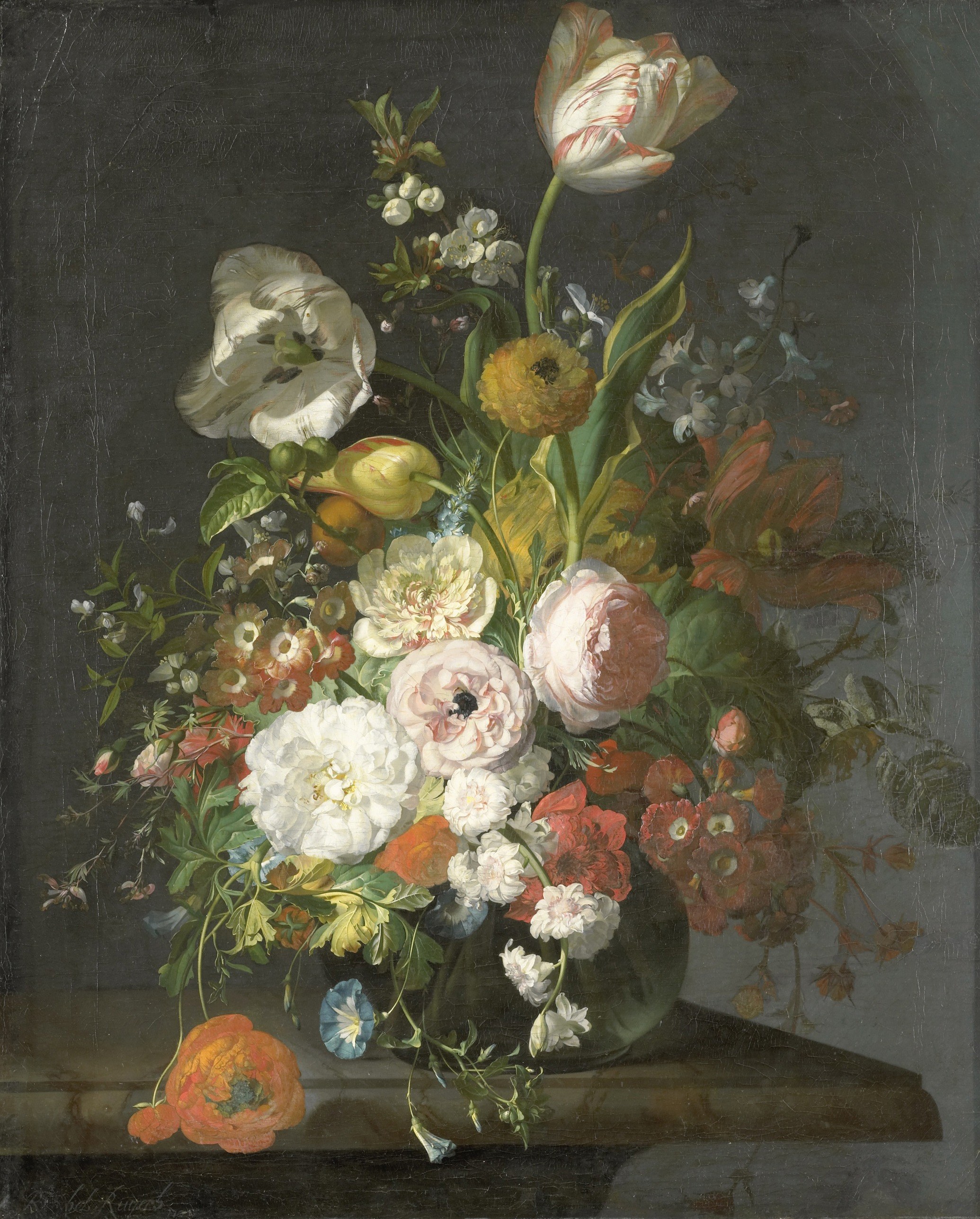
Rachel Ruysch painted Still Life with Flowers in a Glass Vase in 1700. It hangs in the Rijksmuseum. She was the best-documented female painter of the Dutch Golden Age, a woman who achieved international fame in her own lifetime.
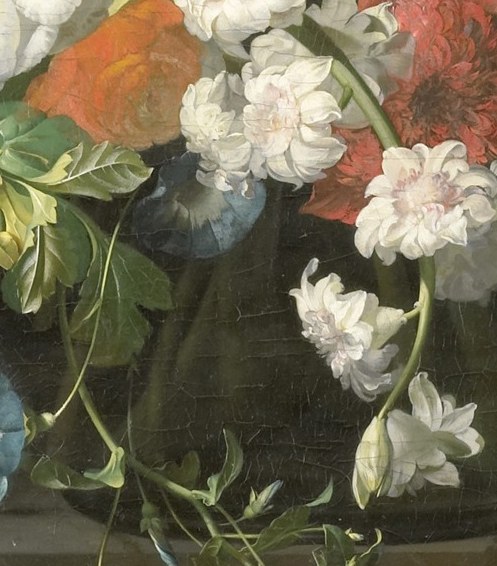
Look at the glass vase. Its transparency is not a single wash of paint but layers of translucent oil glaze, each dried before the next was applied. Through the glass: water, and every individual stem. A technical feat hidden in plain sight.
Ruysch trained under her father, a professor of anatomy and botany, and later under court painter Willem van Aelst. Her career spanned over sixty years. She sold to European courts and painted into her eighties. Her work entered the Rijksmuseum's permanent collection in the early 20th century.
A flower painting is easy to scroll past. Next time, look for the water in the vase.
Details
Transcript
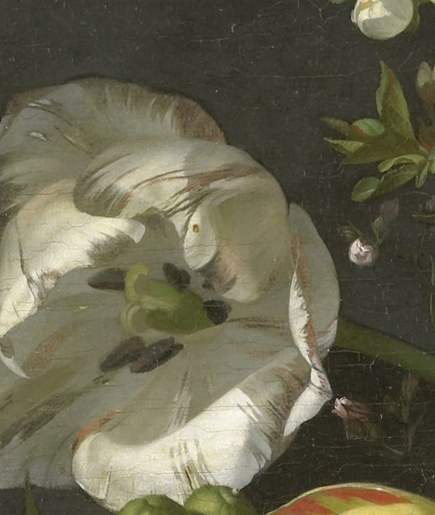
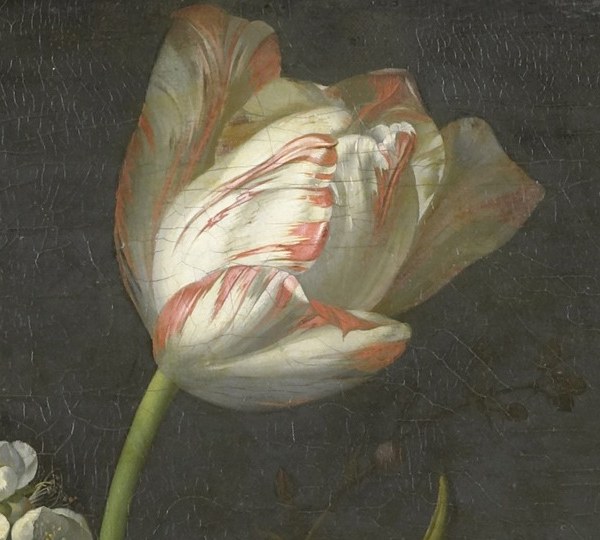
In 1700, a 36-year-old woman painted this. The white rose: every petal catches its own light. The orange poppy has already begun to wilt. She built the glass with layer after layer of translucent paint. Through it: water. Every stem, visible.