A Woman Ironing by Edgar Degas
Edgar Degas painted A Woman Ironing in 1873, and it now hangs in The Metropolitan Museum of Art. It is one of his most unflinching images of working-class Paris, a subject he returned to throughout the 1870s as he turned away from history painting toward the unvarnished realities of modern life.
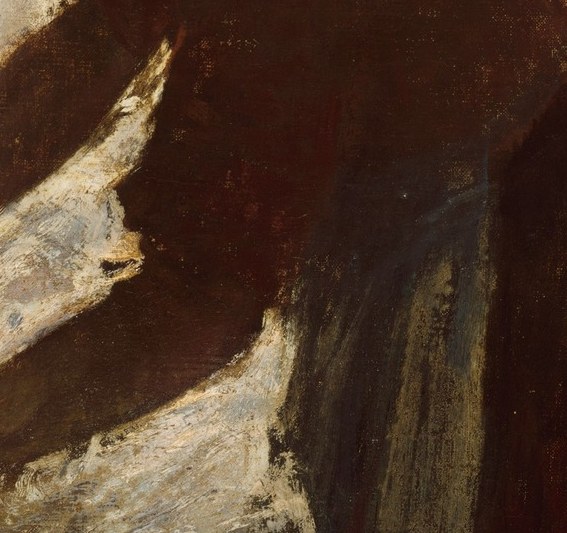
What the painting refuses to show you is its whole point. The laundress's face is completely hidden. Degas places the light source directly behind her, reducing her to a silhouette, so that the bent spine and the downward thrust of her hands become the only story. Up close, the dark dress is rapid, dry brushwork, the strokes almost as harsh as the labor itself.
The Parisian laundress worked punishing hours in stifling heat, yet Degas found in her a strange dignity and a structural challenge that rivaled any classical subject. This painting scandalized the official Salon, which still favored idealized scenes. Degas submitted it anyway, as an act of quiet defiance.
It is not a portrait of a person. It is a portrait of what work takes from a person.
Details
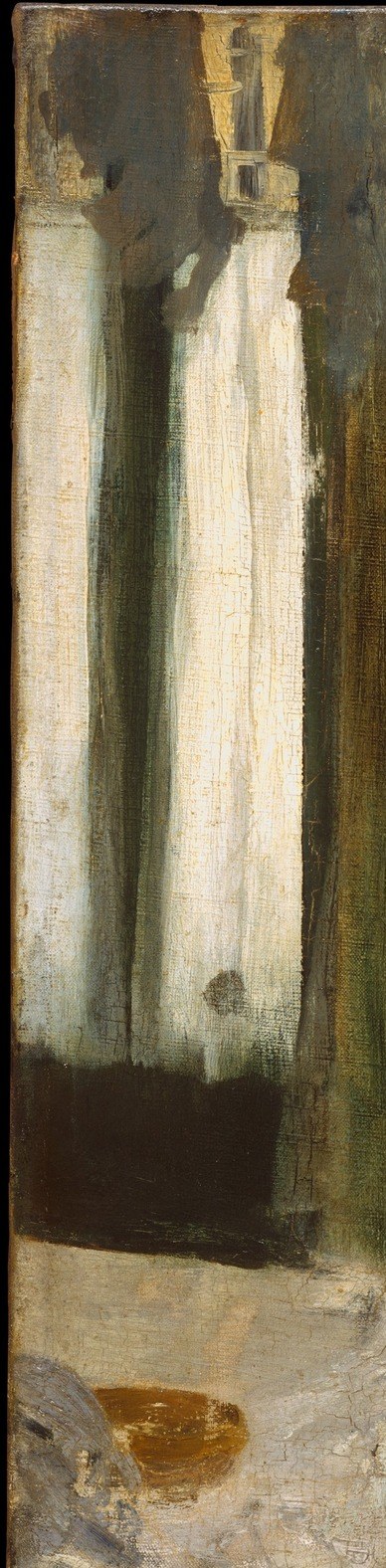
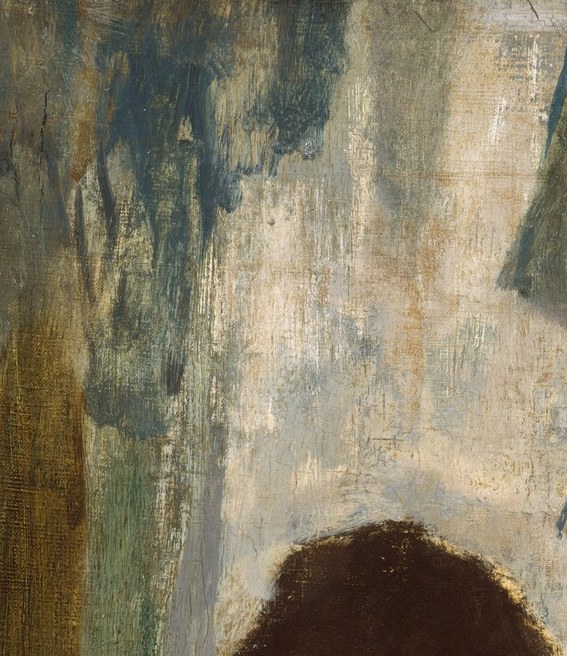
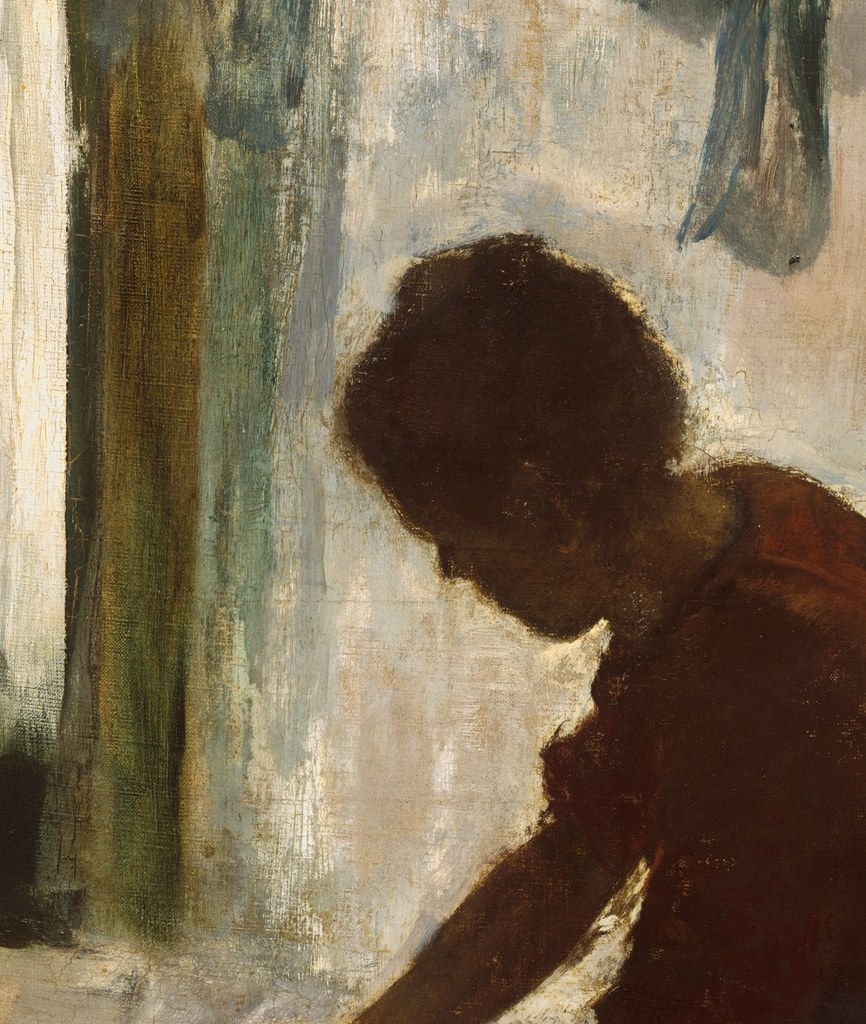
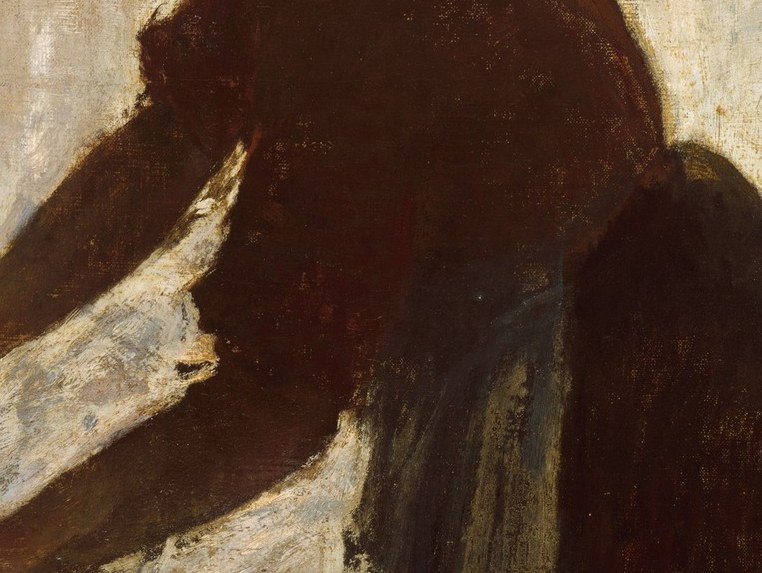
Transcript
Paris, 1873. Behind the glamour of the new boulevards. A woman who spends fourteen hours a day bent over a hot iron. Look at her face. You cannot. Degas withholds it, showing you only exhaustion through her spine. This is not a portrait. It is a record of repetitive physical strain. The Salon found her too real, her labor too ugly for their walls. So he showed her anyway, anonymous and monumental.