The Last Supper by Blake, William
William Blake’s "The Last Supper," painted in 1799, captures a moment of intense spiritual and emotional weight. This tempera on canvas work, now held in a private collection, depicts Jesus's final meal with his apostles.
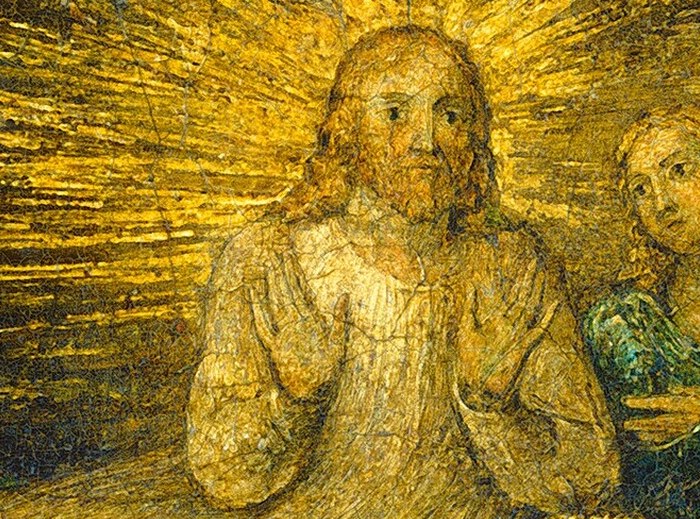
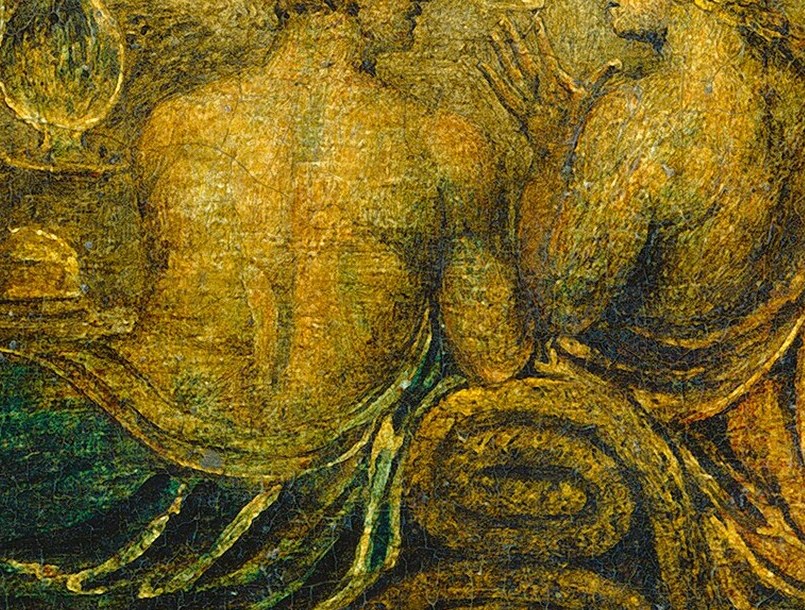
Notice how Jesus's radiant halo dominates the scene, a powerful burst of light against the muted background. Around him, the apostles show a range of reactions, from awe and questioning to solemn devotion, each posture conveying deep emotion.
Blake, an English poet and painter of the Romantic era, used a deliberately rough, expressive style. Though largely unrecognized in his lifetime, his unique vision and symbolic richness are now highly regarded, making his interpretations of traditional subjects truly distinctive.
This painting invites us to contemplate not just a historical event, but the profound human and spiritual drama unfolding within it.
Details
Transcript
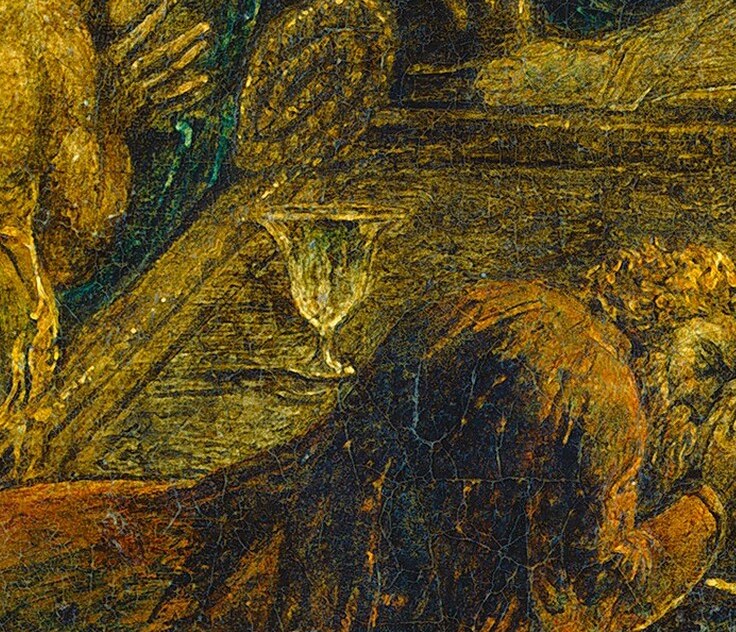
This painter shows the Last Supper, a moment of profound revelation. Jesus's halo burns with a spiritual, almost explosive light. Around the table, his disciples react with shock and devotion. One apostle raises his hand, perhaps questioning or in awe. Another figure, barely visible, seems to listen intensely. The muted colors and rough texture add to its emotional intensity. This tempera painting captures a pivotal biblical moment.