Virgin and Child by http://www.wikidata.org/.well-known/genid/b083baaff325941fdc0f4e432ea35004
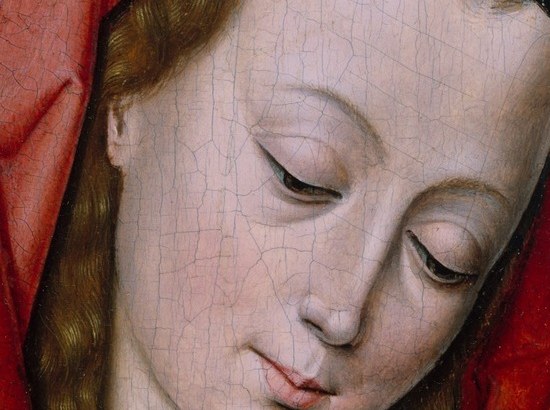
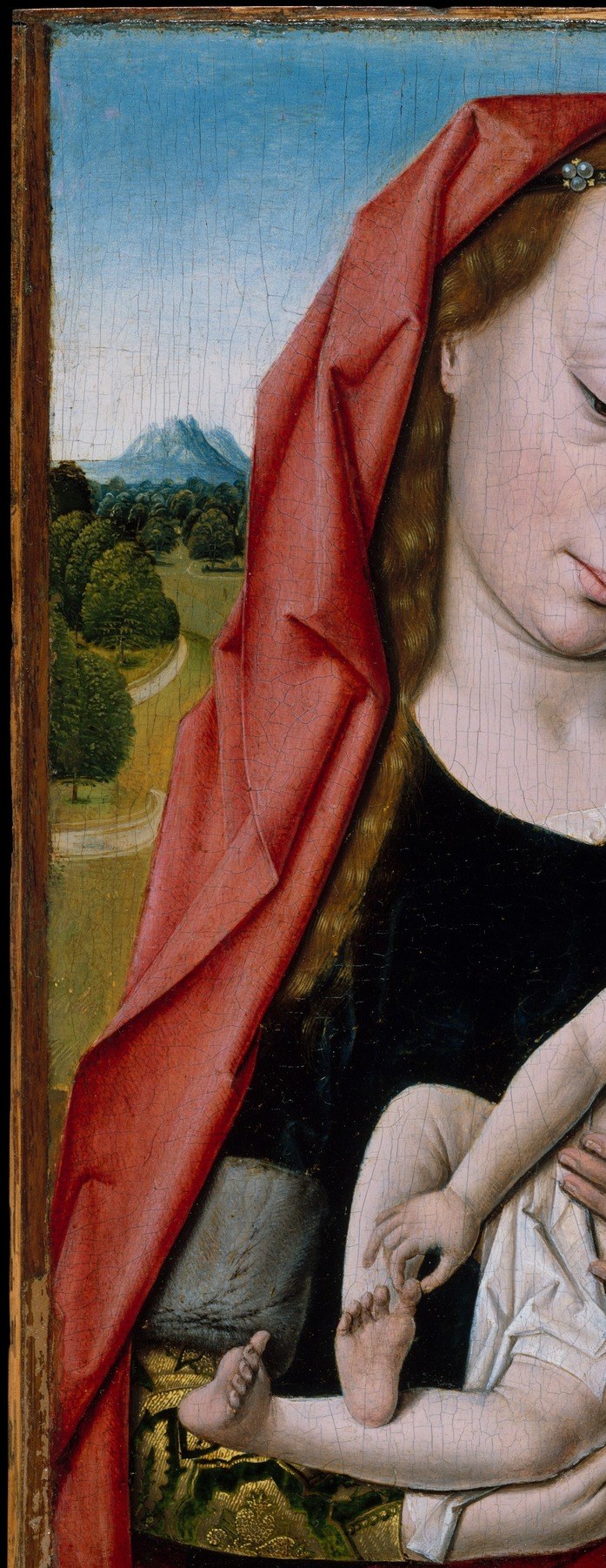
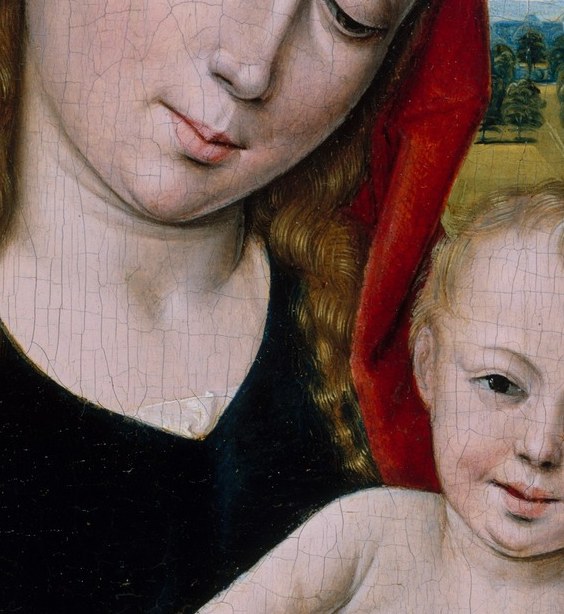
This is "Virgin and Child," painted around 1475 in the workshop of the Early Netherlandish master Dieric Bouts. At first glance it looks like a tender, straightforward Madonna, Mary gazing down, the baby looking out. But the entire Christian story is compressed into one small detail near the center of the panel.
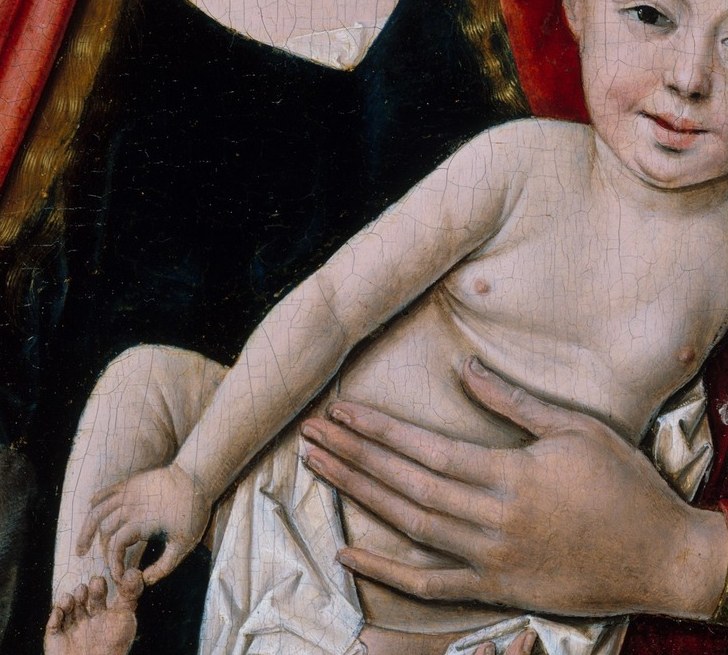
Look at the child's hand. He grips a red apple. In medieval and Renaissance iconography, an apple in Christ's hand is never just a piece of fruit, it is the forbidden fruit from Eden, the symbol of humanity's fall. By holding it, this infant declares that he has come to undo what Adam and Eve did.
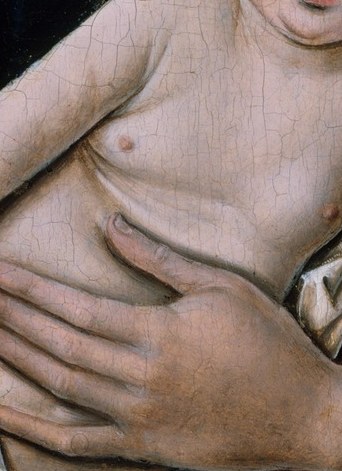
The painting is also a showcase for a new technology: oil paint. In the 1470s, Flemish artists were perfecting layered oil glazes that tempera could not achieve. You can see the result in Mary's crimson mantle, which glows with a depth that still feels rich five centuries later. The same technique softens the child's chubby torso and casts the distant Flemish landscape in a cool blue haze.
The work belongs to a long tradition of private devotional images made for homes rather than churches. A family would have sat before it in prayer, finding comfort in Mary's downcast eyes and the quiet promise held in a child's small hand.
Details
Transcript
She looks lost in a quiet, private thought. The 1470s in Flanders: oil paint was brand new. This red could not exist without it. Now look at what the child holds. A single apple, small enough to scroll past. It stands for the fruit Eve ate. Original sin. The child holds it calmly. He is the answer.