Victorian Interior I by Horace Pippin
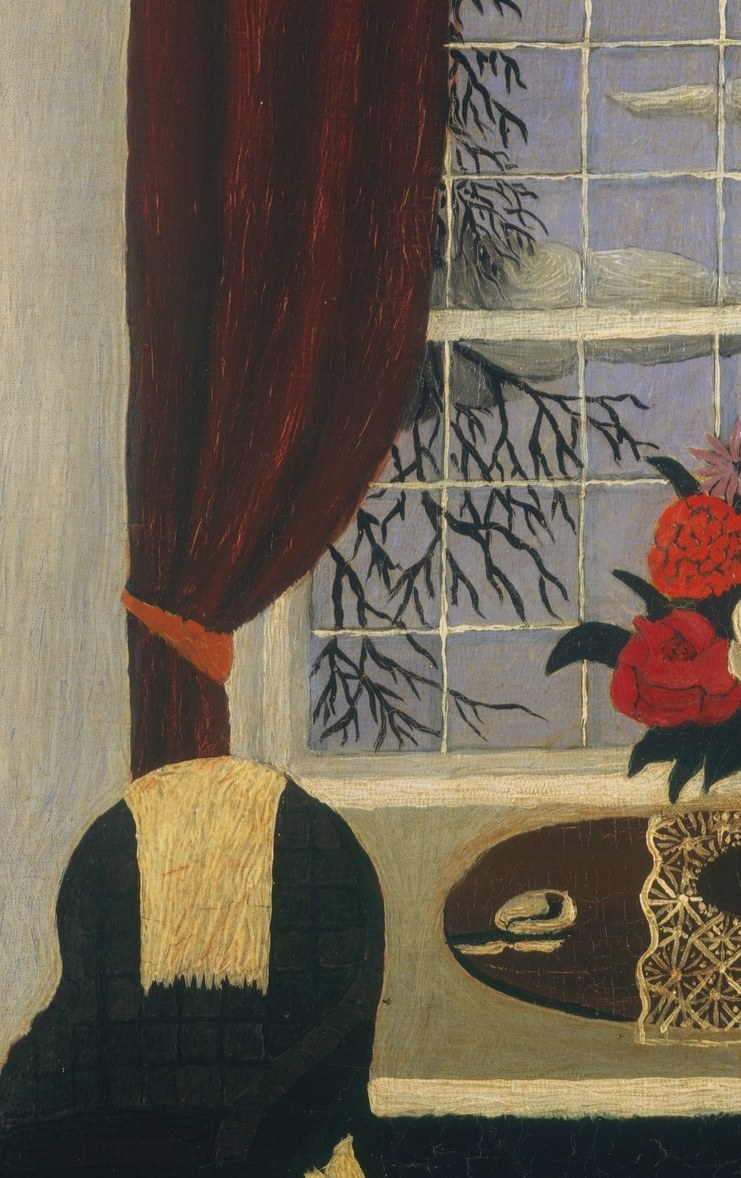
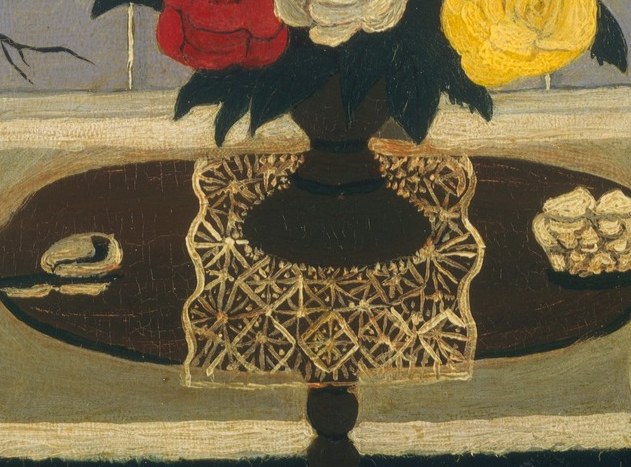
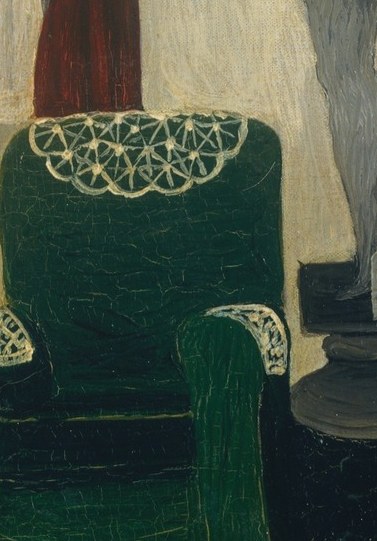
Horace Pippin's "Victorian Interior I," painted in 1945 and held at The Metropolitan Museum of Art, is a quiet testament to a self-taught artist's vision. Completed just a year before his death, it exemplifies his mature style with its flattened perspective and bold outlines.
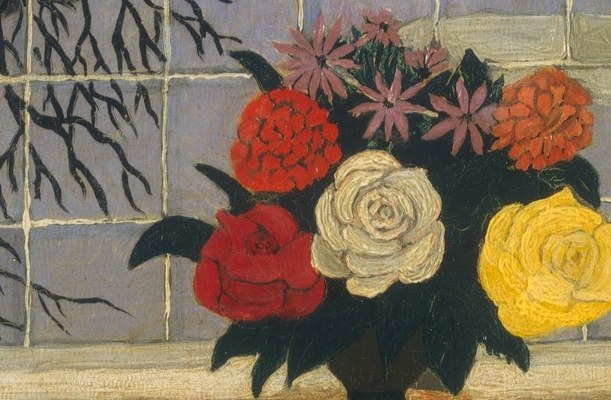
Notice the vibrant bouquet of roses on the windowsill, a focal point against the muted tones of the room. Pippin had a unique ability to imbue ordinary objects and domestic scenes with profound emotional resonance, bridging folk art traditions with modernist abstraction.
Pippin was an American painter who served in World War I. He went on to become widely celebrated, even becoming the first Black artist to be the subject of a monograph in 1947. The New York Times eulogized him as "the most important Negro painter" in American history.
His works, from war scenes to biblical subjects, continue to captivate. What details in this interior catch your eye first?
Details
Transcript
Horace Pippin, a self-taught artist, painted this just before he died. He served in World War I, and later became celebrated for his art. Pippin often painted scenes of everyday life, like these flowers. His distinctive style used flattened perspectives and bold outlines. He was the first Black artist to have a book written about him. Pippin transformed simple details into works of emotional power.