Grainfields by Jacob van Ruisdael
Jacob van Ruisdael's 'Grainfields' (1668) is a Dutch Golden Age landscape that doubled as a debt settlement. The story behind it is one of the most human documents in 17th-century art history.
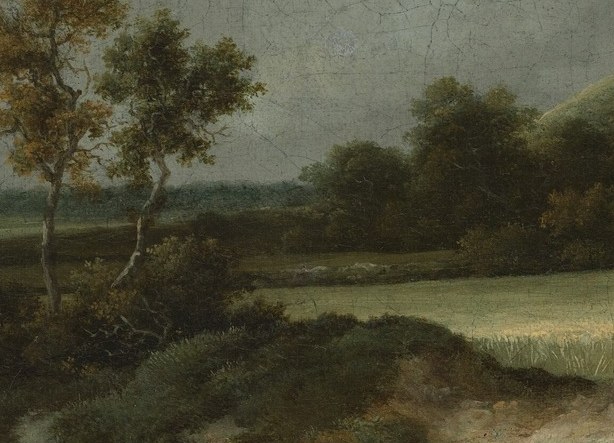
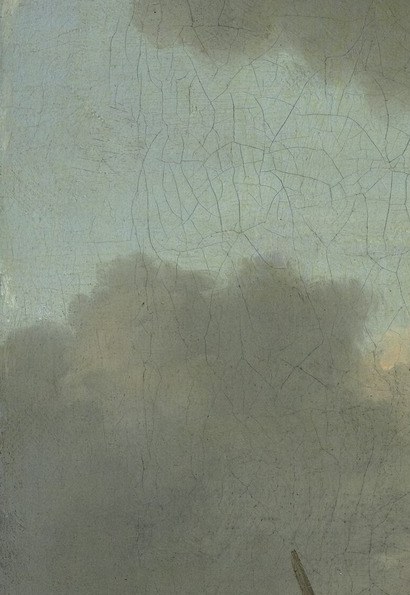
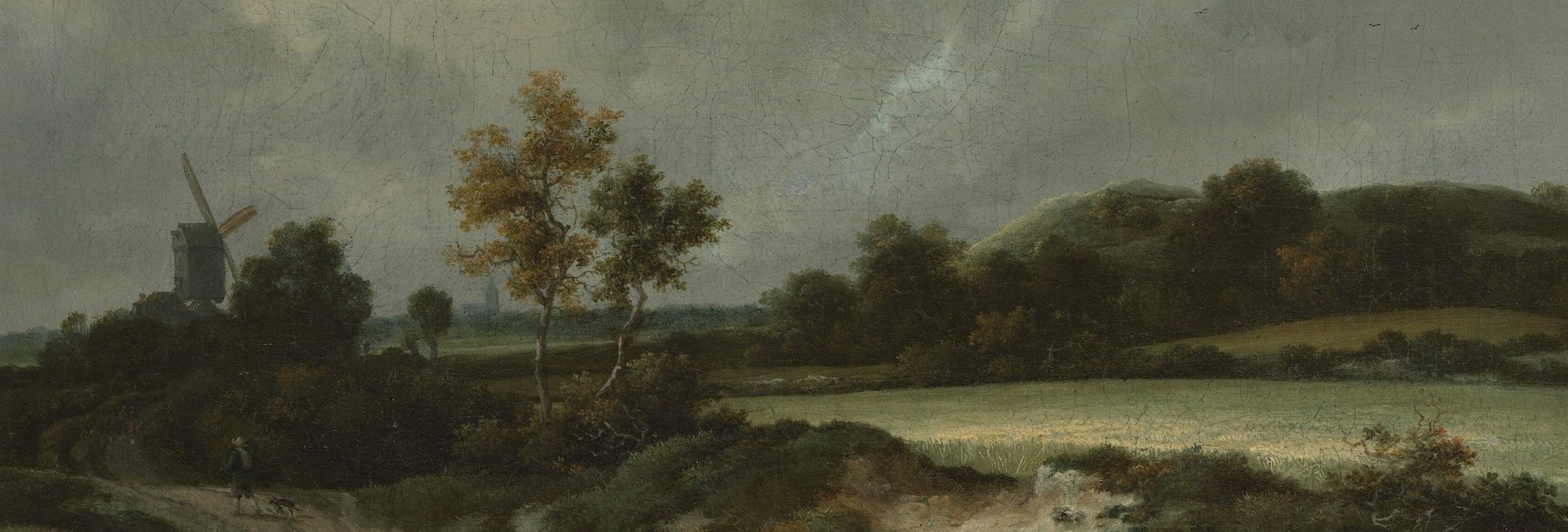
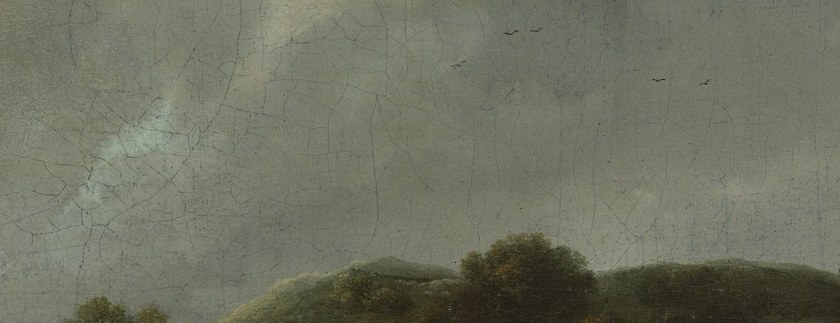
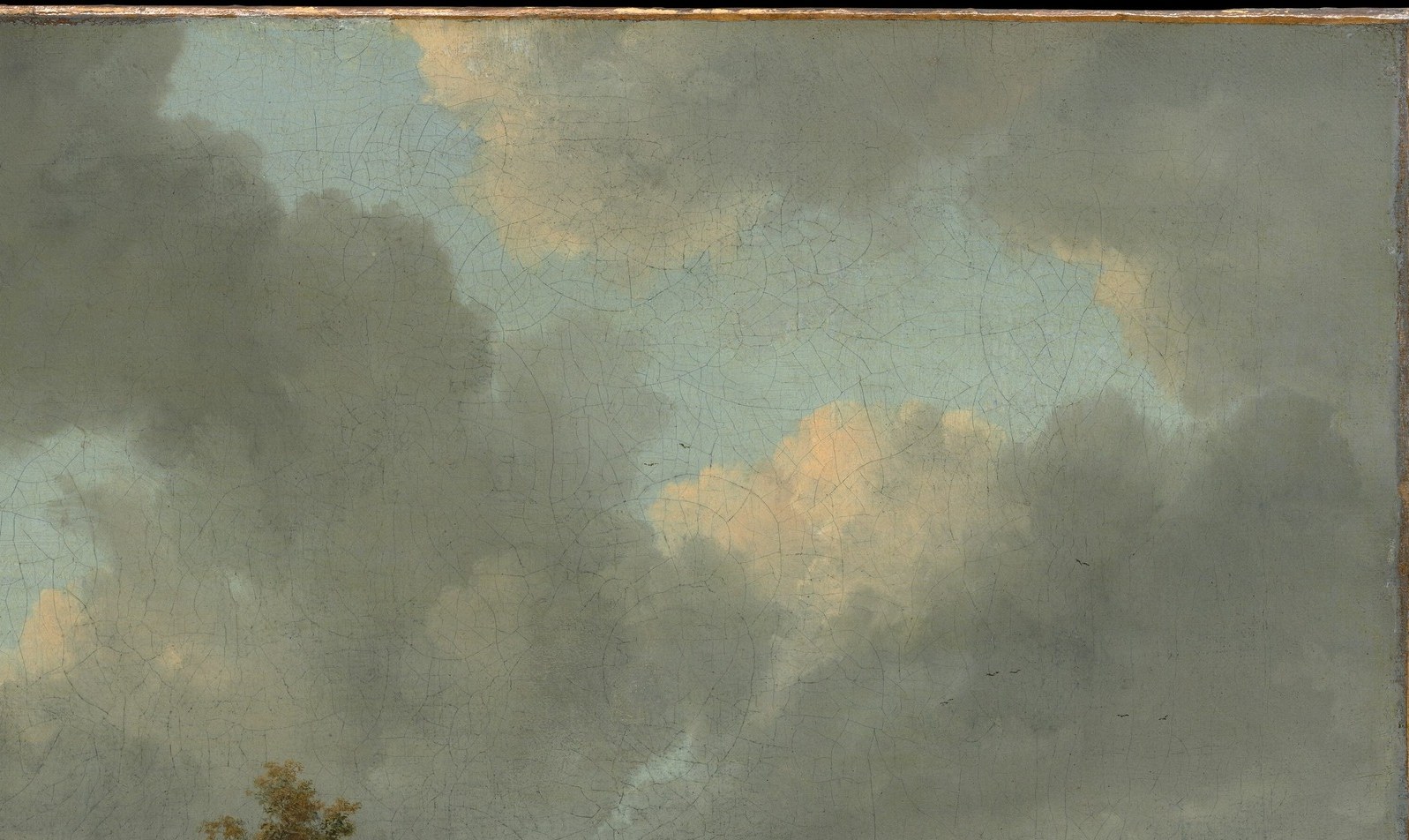
Look at the sky first. Ruisdael gave it nearly two-thirds of the canvas, modelling cumulus clouds with a meteorologist's precision. Sunlight breaks through on the right horizon while a dark front threatens rain on the left, a weather transition caught in real time. Down on the land, a single horse-drawn cart follows a rutted track through harvested grain fields. The windmill's sails are motionless; the wind has dropped.
Ruisdael painted this in 1668, the year his elderly landlady, a widow named Alijdt, filed a legal petition. The artist and his father, a frame-maker who had fallen into debt, owed her years of back rent on their Amsterdam lodging. Rather than see her destitute, Ruisdael gave her this substantial canvas. She could sell it and live on the proceeds. The painting was, quite literally, her safety net.
The artist who captured the most sublime skies in Dutch painting used one to keep a roof over a widow's head. What does that do to how you see the light breaking through?
Details
Transcript
A landscape so valuable it became someone's lifeline. Dutch clouds dwarf the land beneath them. A single cart pauses on the dirt track. The windmill stands still. The wind has dropped. Ruisdael gave this painting to a widowed landlady. He and his father had owed her years of unpaid rent. This canvas settled a debt and secured her future.