The Resurrection by Pietro Perugino
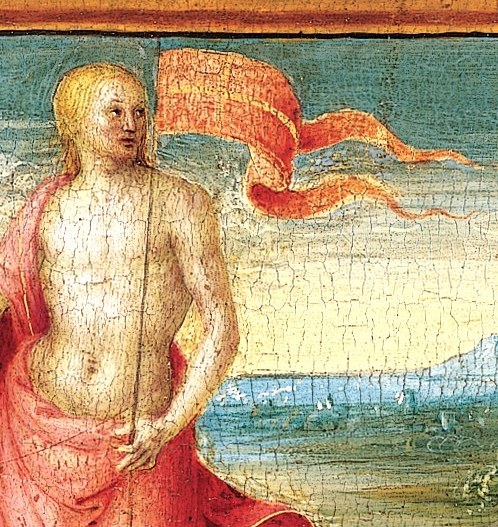
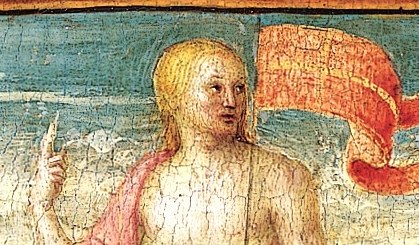
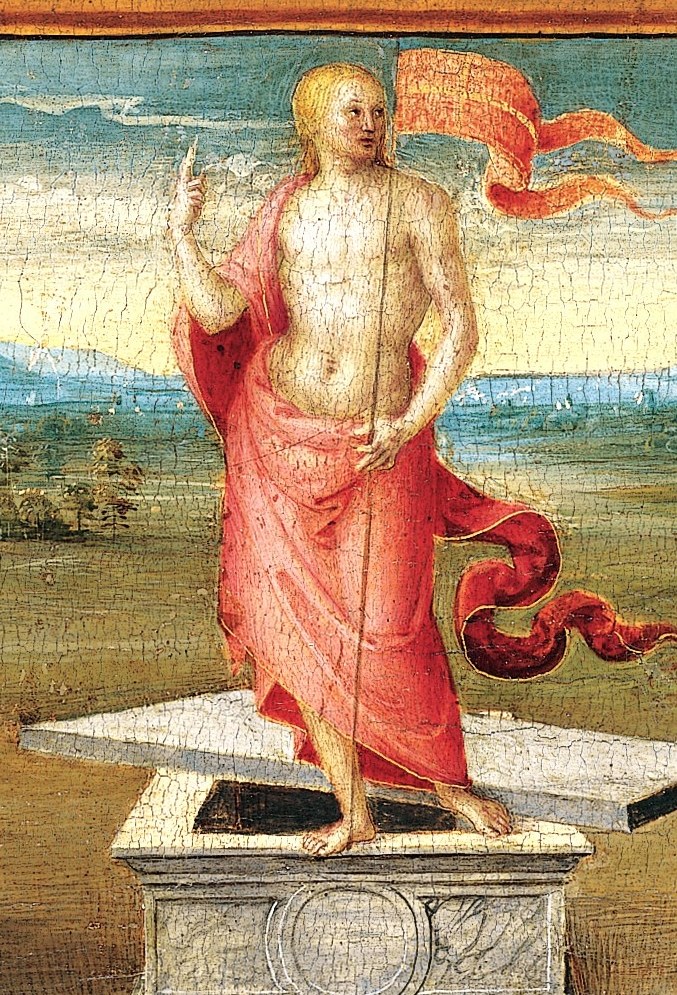
Pietro Perugino painted The Resurrection around 1502, and it now hangs in The Metropolitan Museum of Art. The most striking detail is what Christ holds: a red banner marked with a cross. It is not a generic church flag. It is the Labarum, the imperial battle standard that Roman emperors carried into war.
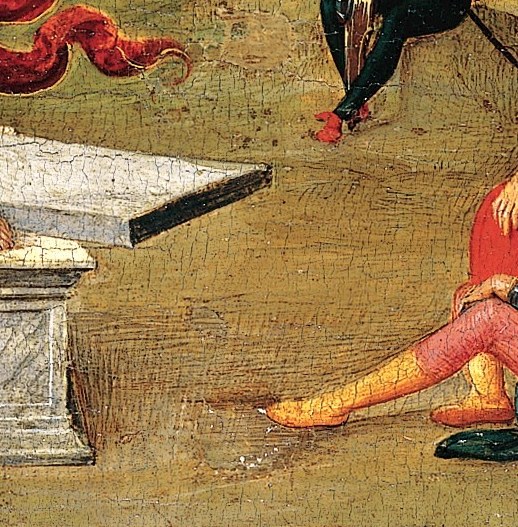
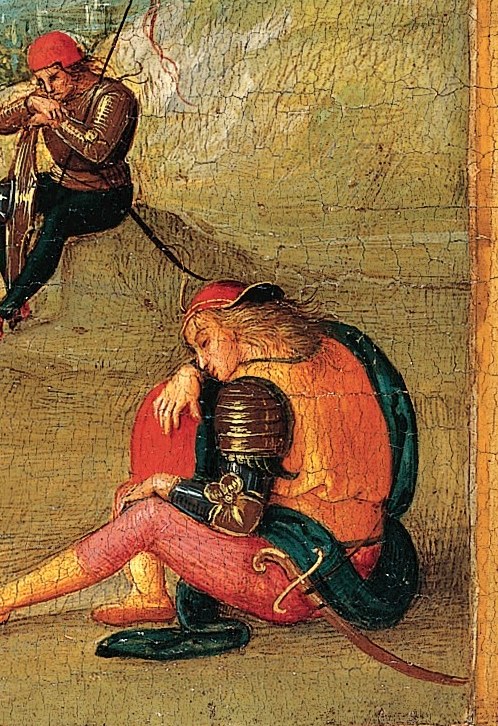
Look at the soldiers around the marble tomb. One slumps unconscious on the left; one crouches in armored fear on the right. Another stands alert, a spear at his side. They are not merely witnesses. They read as a routed army. The man on the tomb has won. The white robes and serene face that Perugino gives Christ are the calm of a conqueror after the battle, not a ghost slipping away.
The Labarum entered Christian imagery through Constantine, who reportedly marched under it after a vision promising victory. When Perugino painted this panel, Pope Alexander VI and his son Cesare Borgia were using military force to bring the Papal States back under direct papal control. The resurrection as military triumph was not an abstract metaphor. It was a political idea painted in tempera.
Perugino taught Raphael. You can see the same soft Umbrian hills and hazy blue mountains in the background that Raphael would make famous. But here the skyline serves a harder message: the world below is subdued, and the ruler stands above it.
Details
Transcript
A man stands on a marble tomb. Around him, four soldiers collapse, crouch, or stare. He holds a red banner marked with a cross. That is the Labarum, the battle standard of Roman emperors. Constantine marched under it to conquer in Christ's name. Perugino painted this in 1502, when papal armies were reclaiming the Papal States. The resurrection here is not quiet. It is a military victory.