The Burial of the Count of Orgaz by http://www.wikidata.org/.well-known/genid/f0ec7d22aa1be173978427d756c869a5
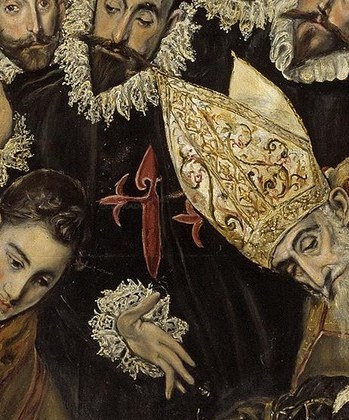
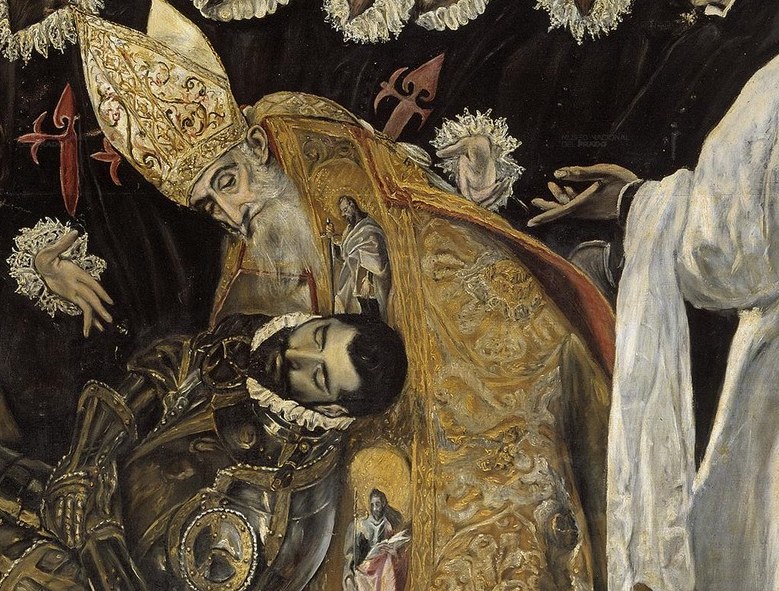
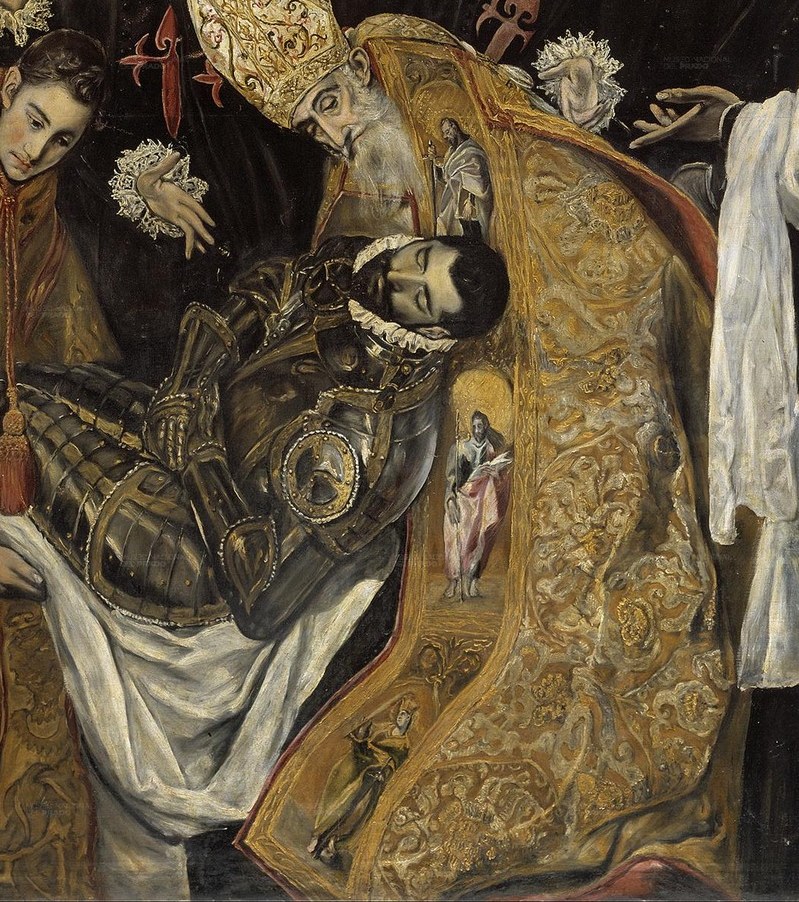
El Greco's 'The Burial of the Count of Orgaz' (1586-1588), housed in the Toledo Cathedral, is a rich tapestry of symbolism and miraculous narrative. It vividly portrays the legend of Saint Stephen and Saint Augustine descending from heaven to personally assist in the burial of Don Gonzalo Ruiz de Toledo, the Count of Orgaz.
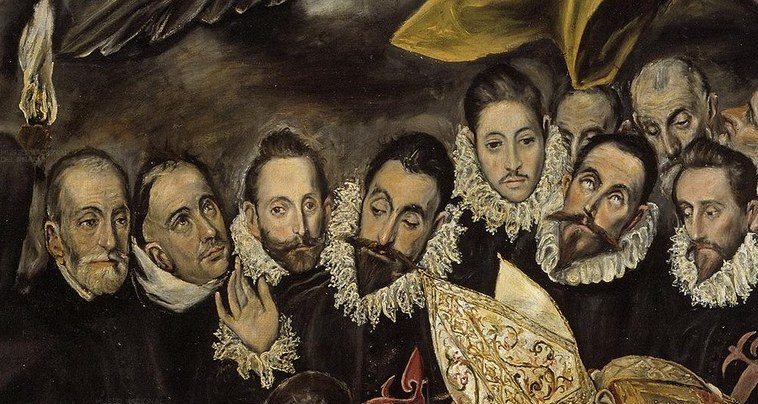
Observe the details: Saint Stephen, identifiable by the stone he holds, a poignant symbol of his martyrdom. The stark contrast between the earthly mourners' somber black attire and the radiant, gold-embroidered robes of the assisting saints emphasizes the divine intervention.
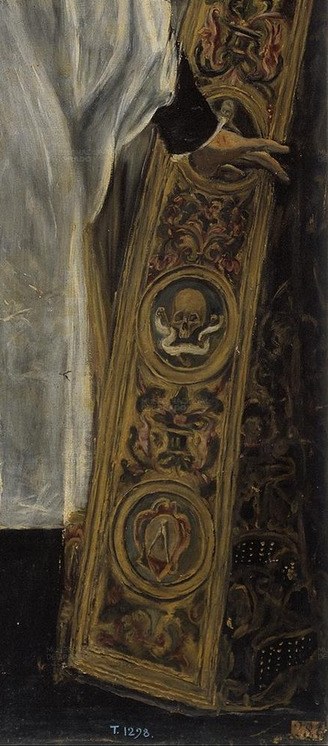
The painting's intricate details, like the skulls woven into the tapestry on the right, serve as memento mori, reminding viewers of mortality. El Greco's masterful use of light and elongated figures bridges the earthly and celestial realms, creating a profound spiritual experience.
This artwork has remained in its original location since its completion, a testament to its enduring power and significance. What elements in the painting draw your eye the most?
Details
Transcript
This painting tells a story of miracles and death. Two saints descend to help bury a nobleman. Saint Stephen holds the stone that killed him. The mourners’ black robes signify grief and earthly status. While golden robes connect to heavenly glory. Even the tapestry on the wall holds a secret. It depicts skulls, a reminder of death's presence. A dramatic moment, painted in Toledo Cathedral for centuries.