River landscape with cows by Aelbert Cuyp
Aelbert Cuyp's "River Landscape with Cows" (c. 1650) is in the Rijksmuseum. Cuyp came from a family of painters in Dordrecht, a city he never left. His golden riverside scenes defined the Dutch Golden Age landscape.
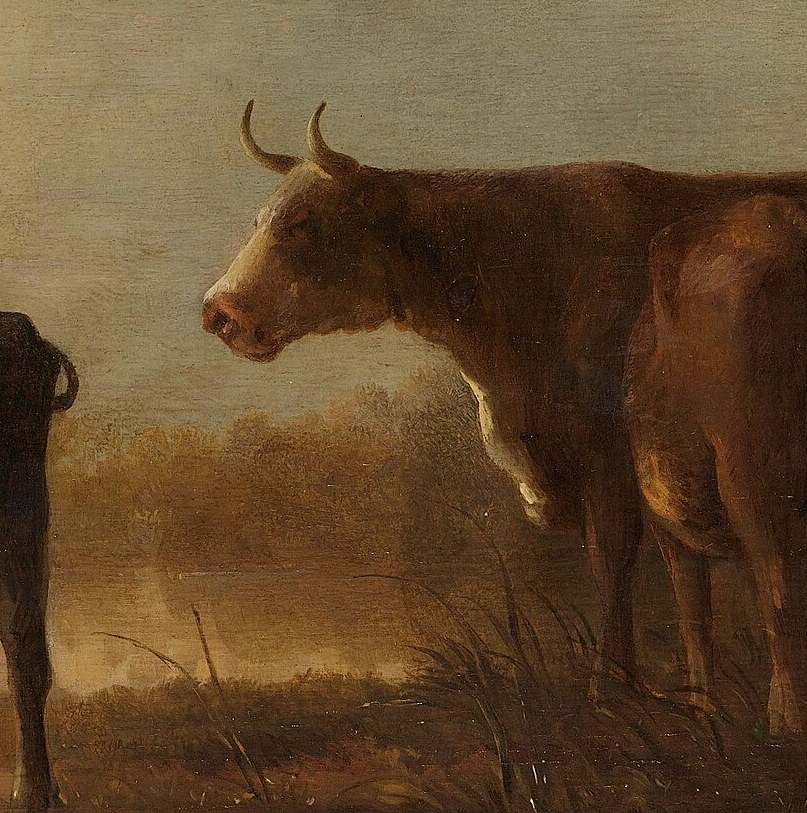
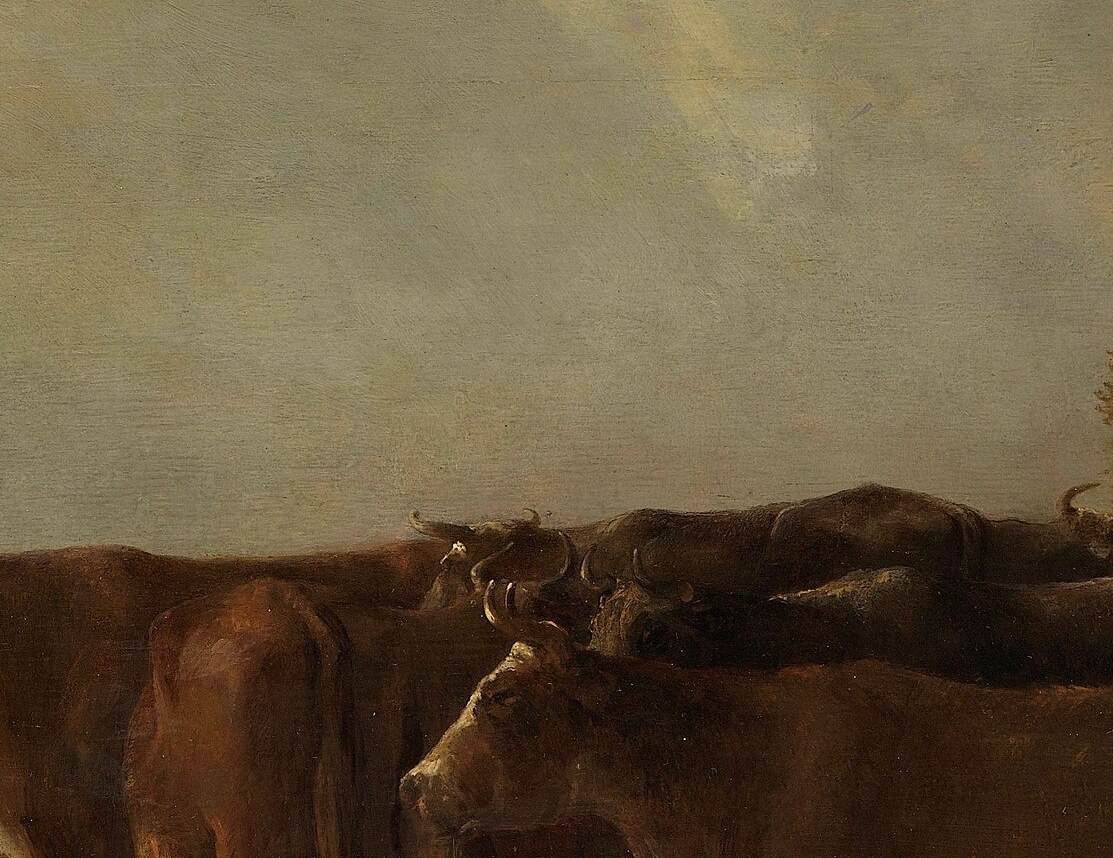
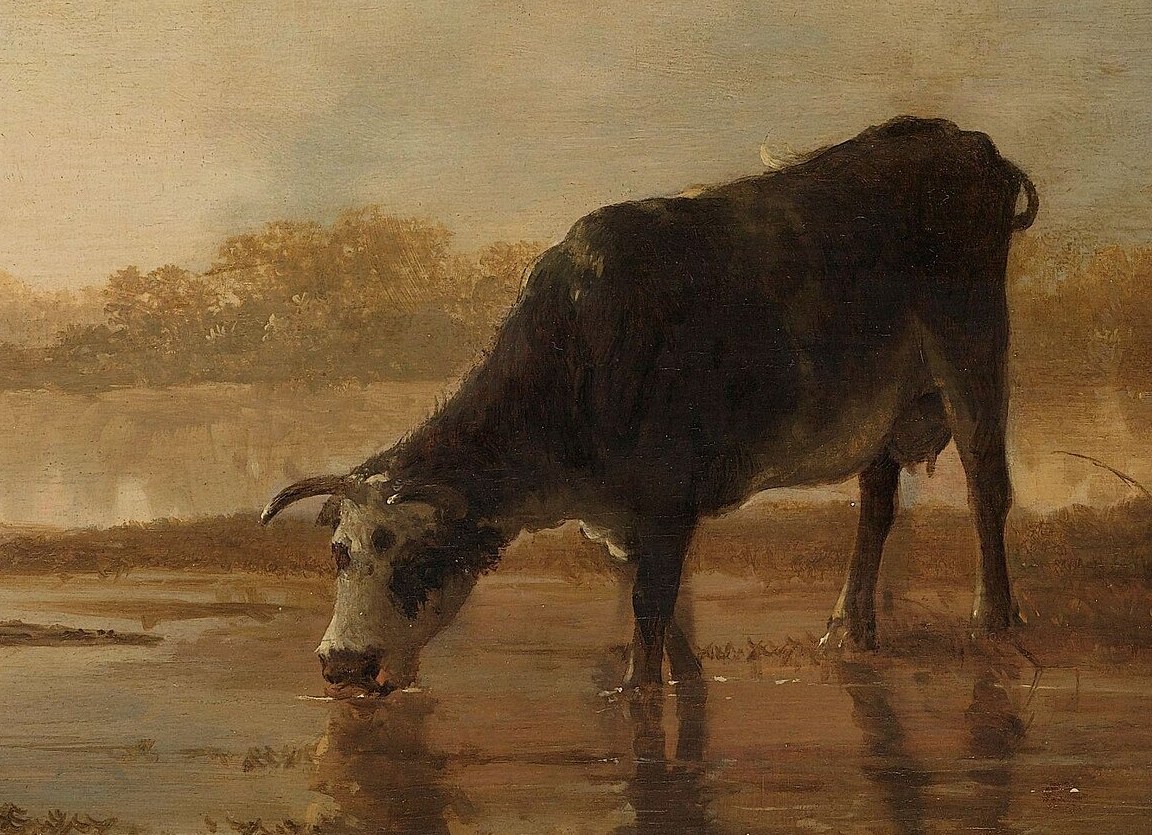
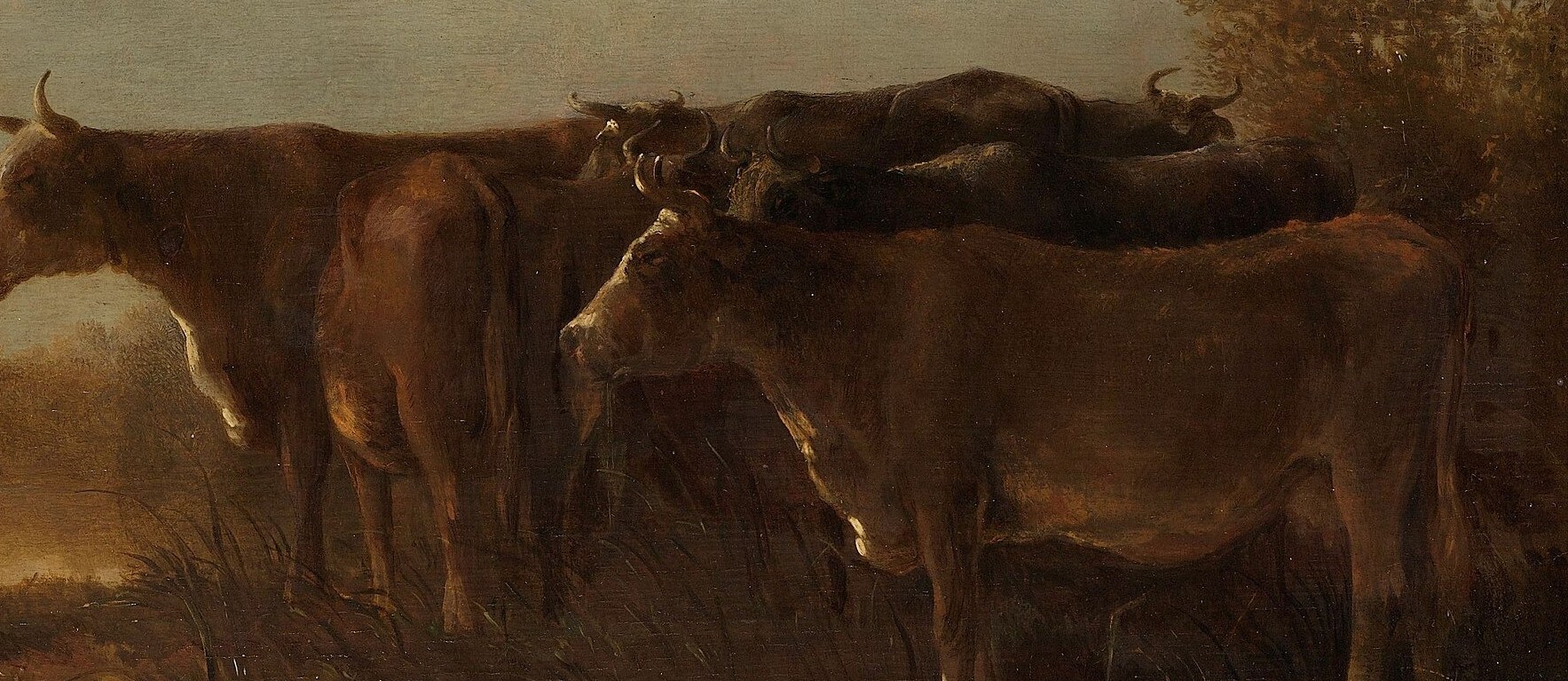
Find the brown cow on the left: it meets your eye, alone in a herd that looks away. Cuyp's signature is the shaft of light breaking through the clouds. And under the dark drinking cow, the river holds its reflection, painted upside down.
In the 1650s, cattle paintings were status symbols, commissioned by landowners to celebrate Dutch prosperity. Cuyp trained under his father and became Dordrecht's leading painter. His work fell into obscurity after his death and was rediscovered in the 18th century.
Before photography, a painted animal looking back at you was a quiet trick, a reminder that someone always stands where you stand.
Details

Transcript
In the 1650s, a cattle painting was a status symbol. Scan the herd. Find the one watching back. It is looking straight at you. His real subject was never the animals. It was light. Below the dark cow, its own reflection drinks upside down. He never left Dordrecht. Now in the Rijksmuseum.