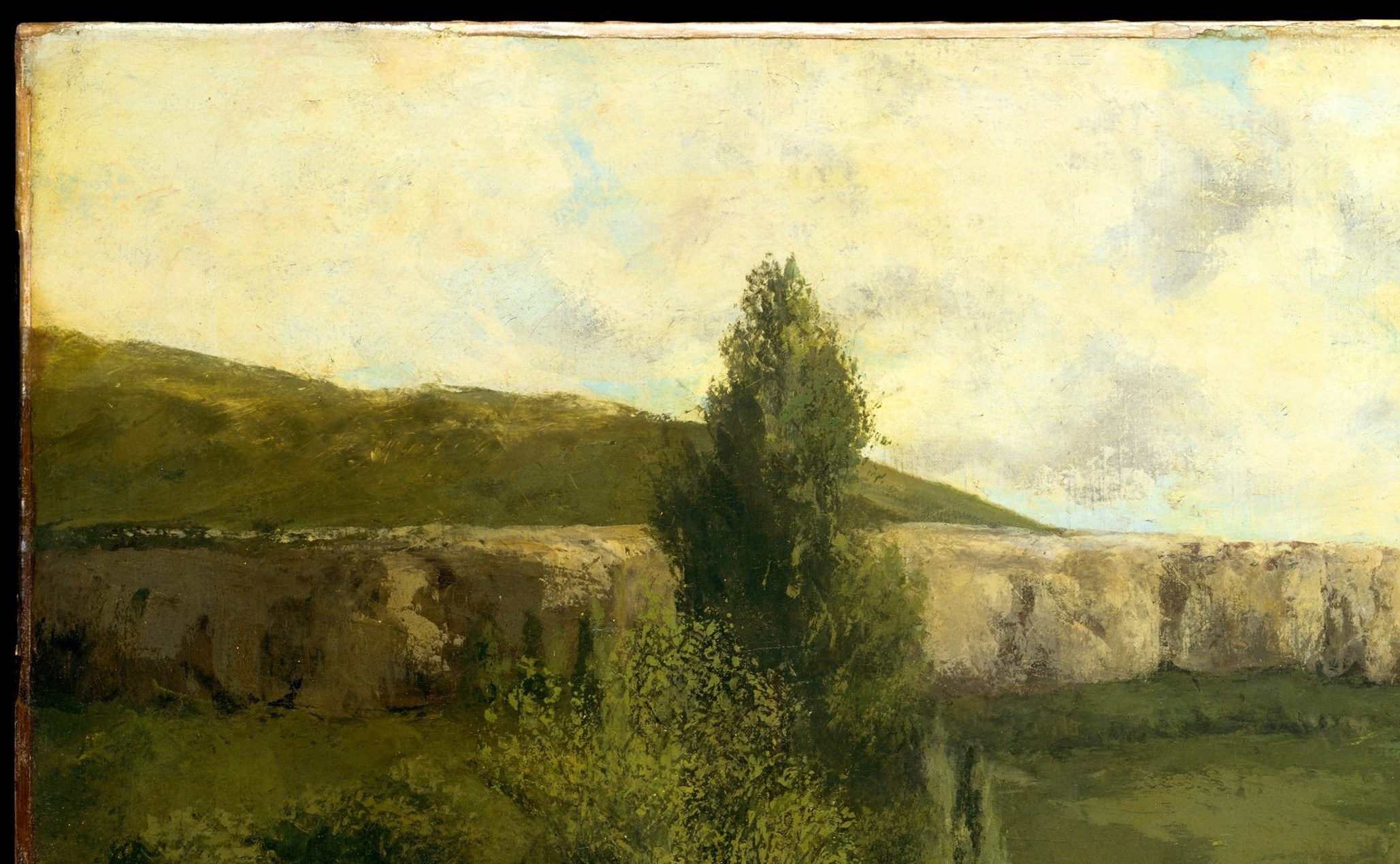
View of Ornans by Gustave Courbet
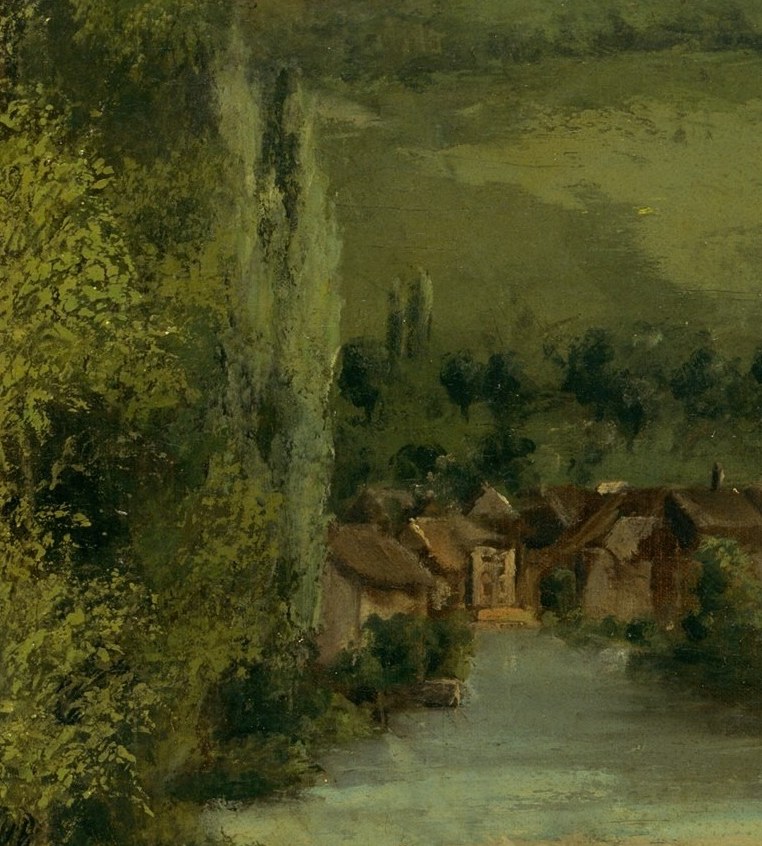
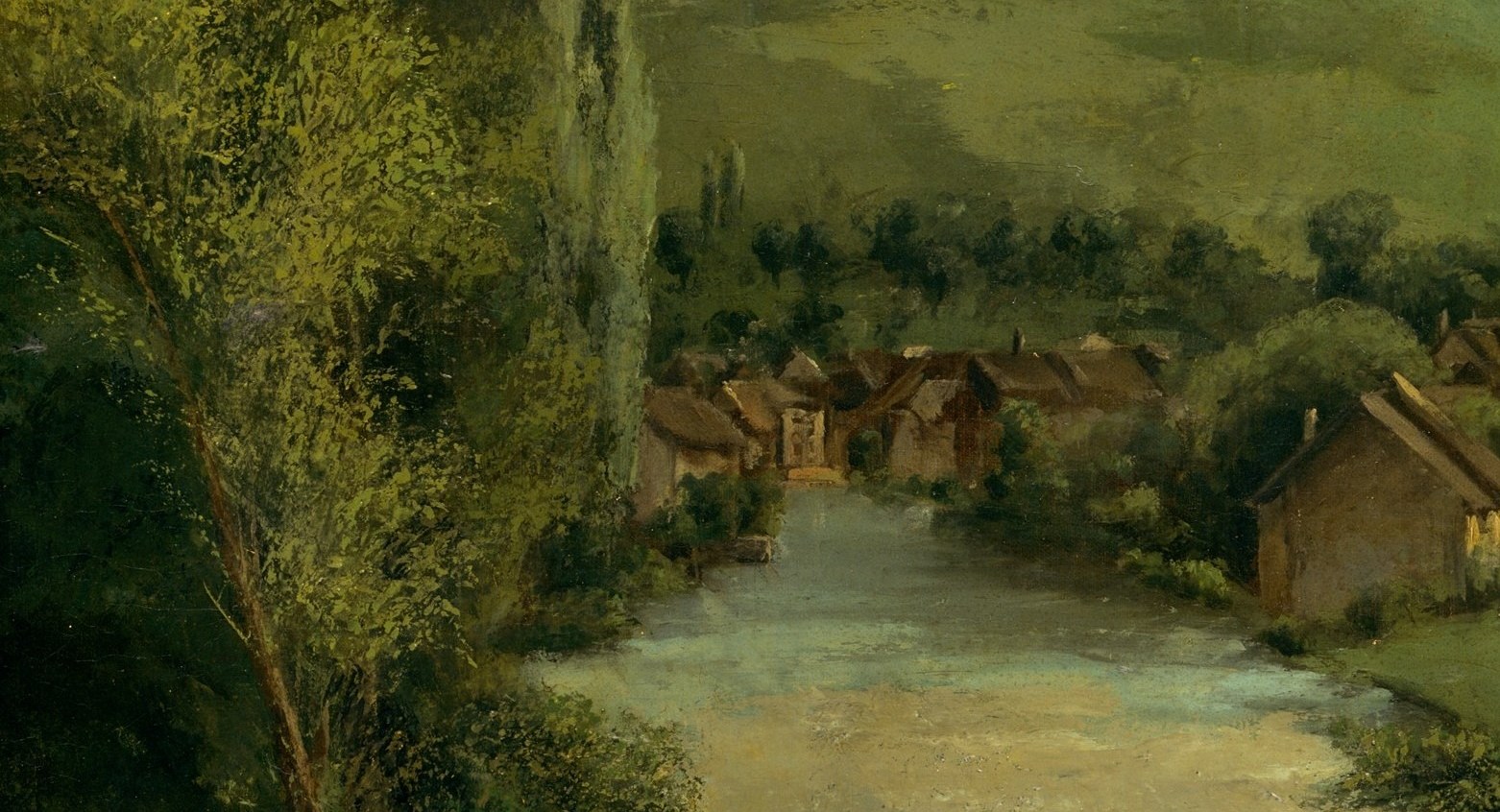
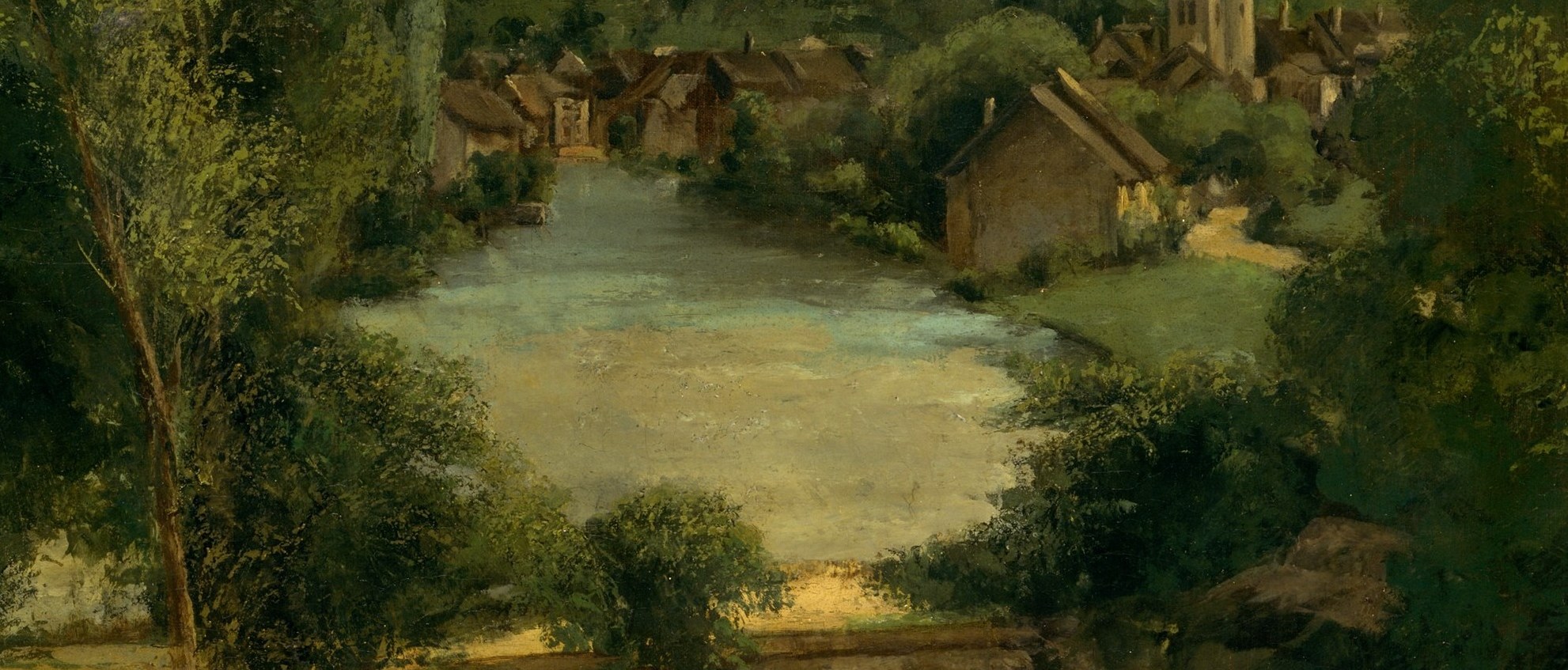
This is *View of Ornans*, painted by Gustave Courbet in 1855, now held at The Metropolitan Museum of Art. It looks like a simple hometown landscape, but it was made during the most turbulent year of the artist's life.
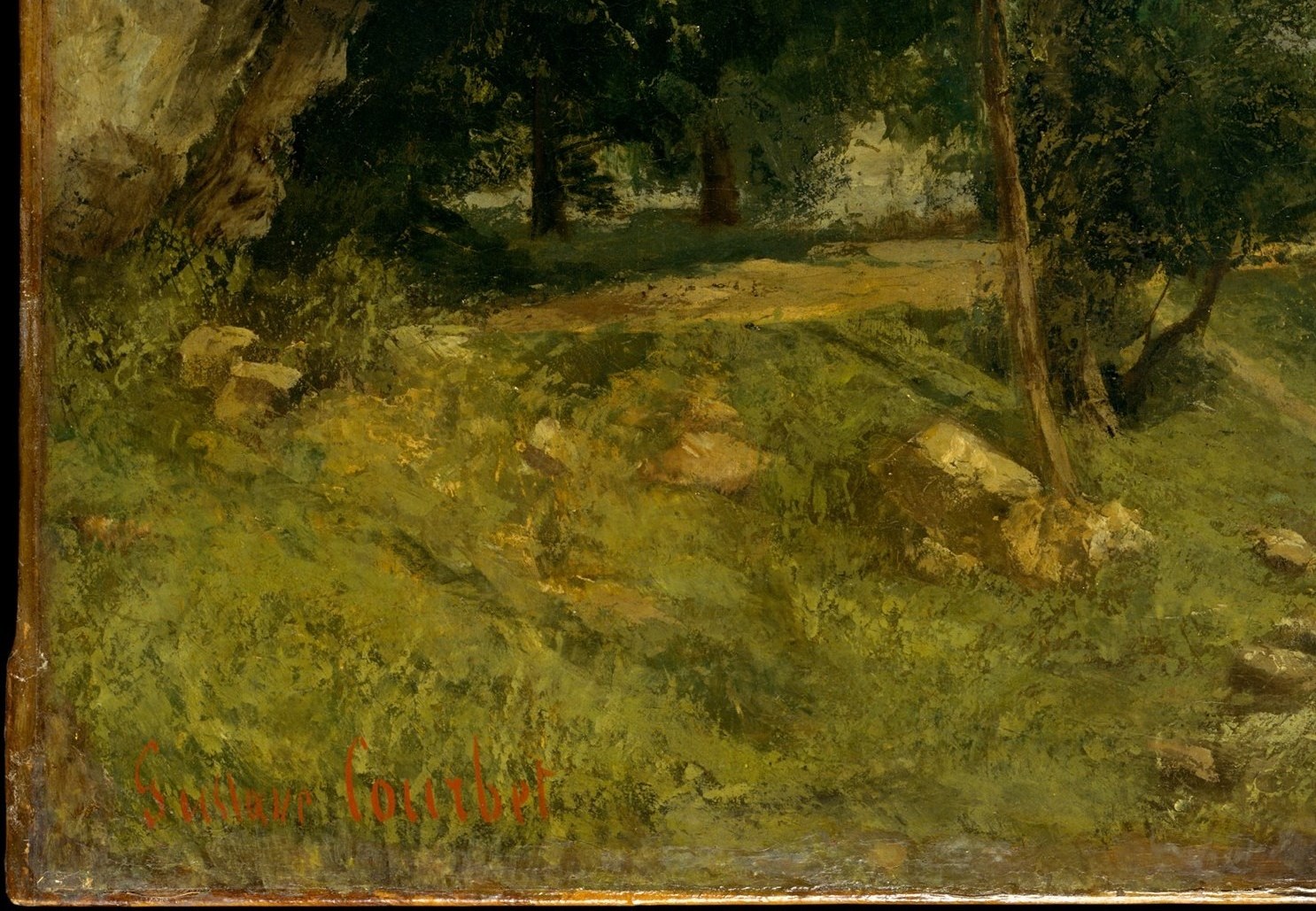
Take a moment with the foreground mud and scrub. Courbet didn't smooth it over. He used a palette knife to trowel paint onto the canvas, building the riverbank like actual earth. The whole painting is an argument: that your own backyard, seen honestly, is worth more than any invented scene from mythology.
Why here, why then? In 1855, Courbet submitted his massive painting *The Artist's Studio* to the Paris World's Fair. The jury rejected it. Furious, he pulled his other accepted works, set up a private pavilion outside the official exhibition, and declared artistic independence. Then he went home to Ornans and painted this valley, not as a romantic escape, but as a statement of what he stood for: real places, real light, real life.
An artist blacklisted by the establishment returns to the town that shaped him and paints its bridge, its church, its ordinary green hill. The painting outlasted the jury that snubbed him.
Details
Transcript
This quiet valley held a secret. In 1855, a French painter was in crisis. His giant masterpiece was banned from the World's Fair. So he fled Paris. He came home. Here. Look at the earth in the foreground. Courbet laid paint on with a palette knife like mortar. While the art world rejected him, he rebuilt his world from mud and stone.