Blindman's Buff by Fragonard, Jean Honoré
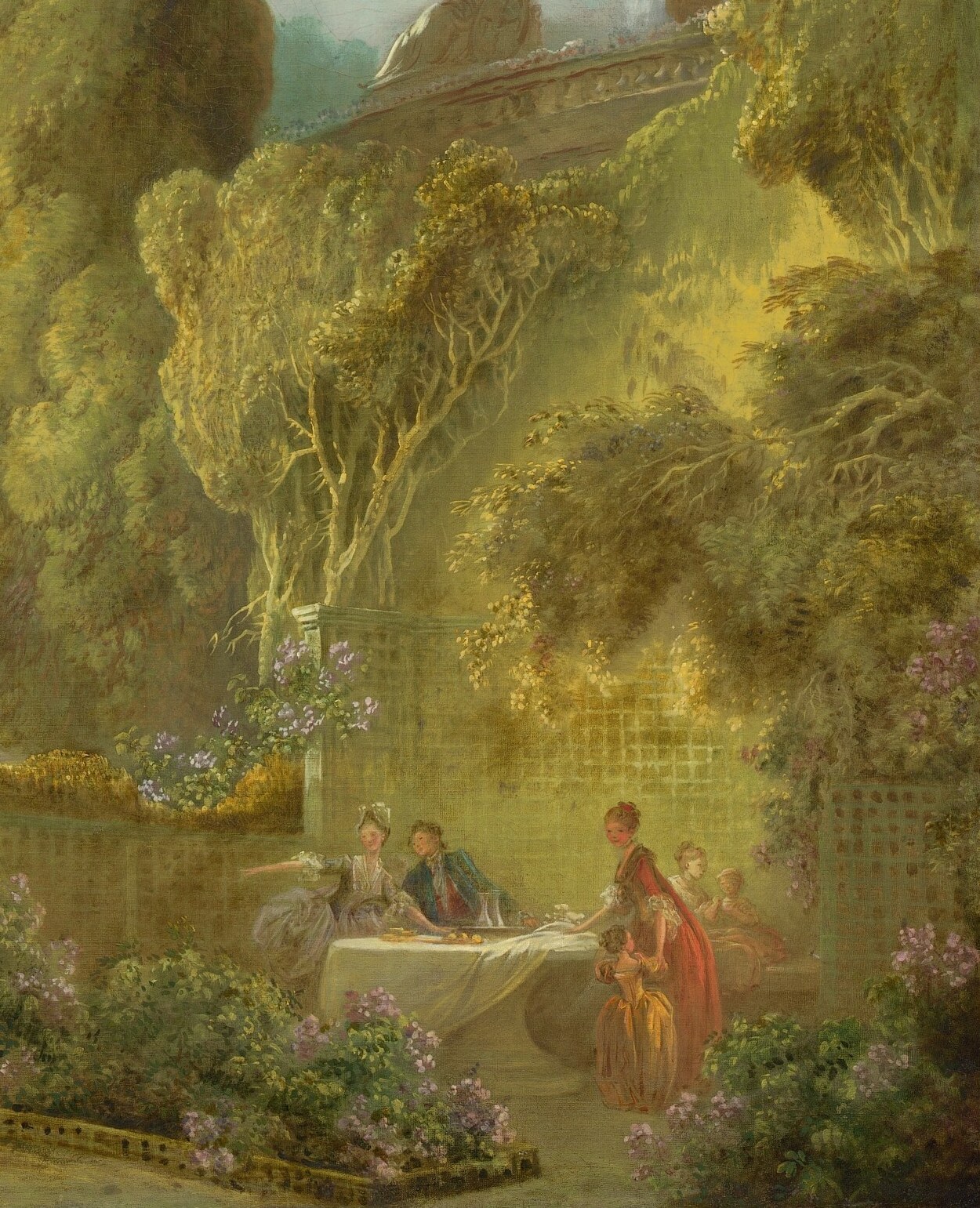
Jean Honoré Fragonard's "Blindman's Buff," painted around 1775-1780, captures a moment of spirited play in a lush garden. Now housed in a museum among other 18th-century French works, it's a testament to Fragonard's mastery of the Rococo style.
Look closely at the figures, their elegant attire, and the dynamic interplay as they engage in the game. Notice the fluid, airy brushwork that brings the foliage and fabrics to life, creating a sense of movement and translucency. The delicate pastel hues contribute to the painting's luminous, cheerful quality.
Fragonard, once destined for grand historical paintings after winning the prestigious Prix de Rome in 1752, famously pivoted to these more intimate, playful scenes. This shift, along with his loose, rapid brushwork, made him a favorite among private collectors of his time, perfectly suited to depicting gallant subjects.
"Blindman's Buff" exemplifies this period, bridging the decorative elegance of early Rococo with emerging naturalistic tendencies. What feelings does this scene evoke for you?
Details
Transcript
This painter was once destined for grand history paintings. He won Rome's top prize, the Prix de Rome, in 1752. But he preferred playful, intimate scenes like this garden game. His brushwork became fluid and airy, full of movement. It was called 'Rococo' and was loved by private collectors. This joyous style perfectly captures a moment of fleeting pleasure.