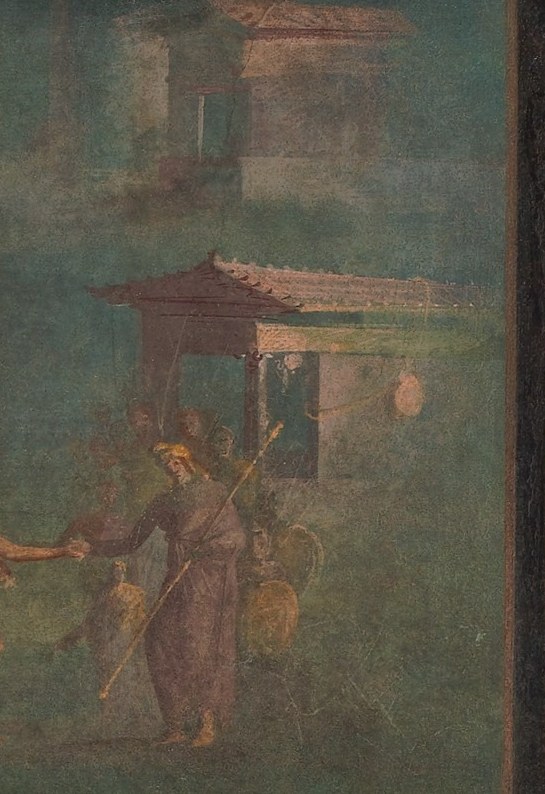
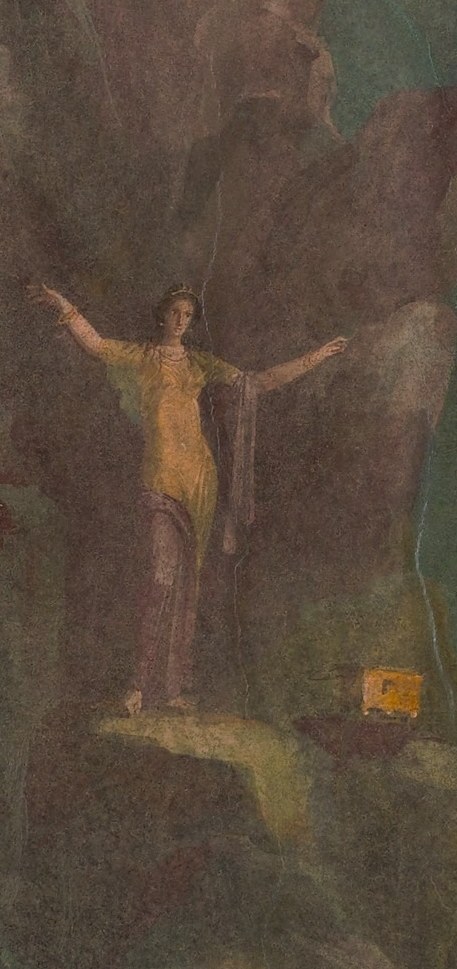
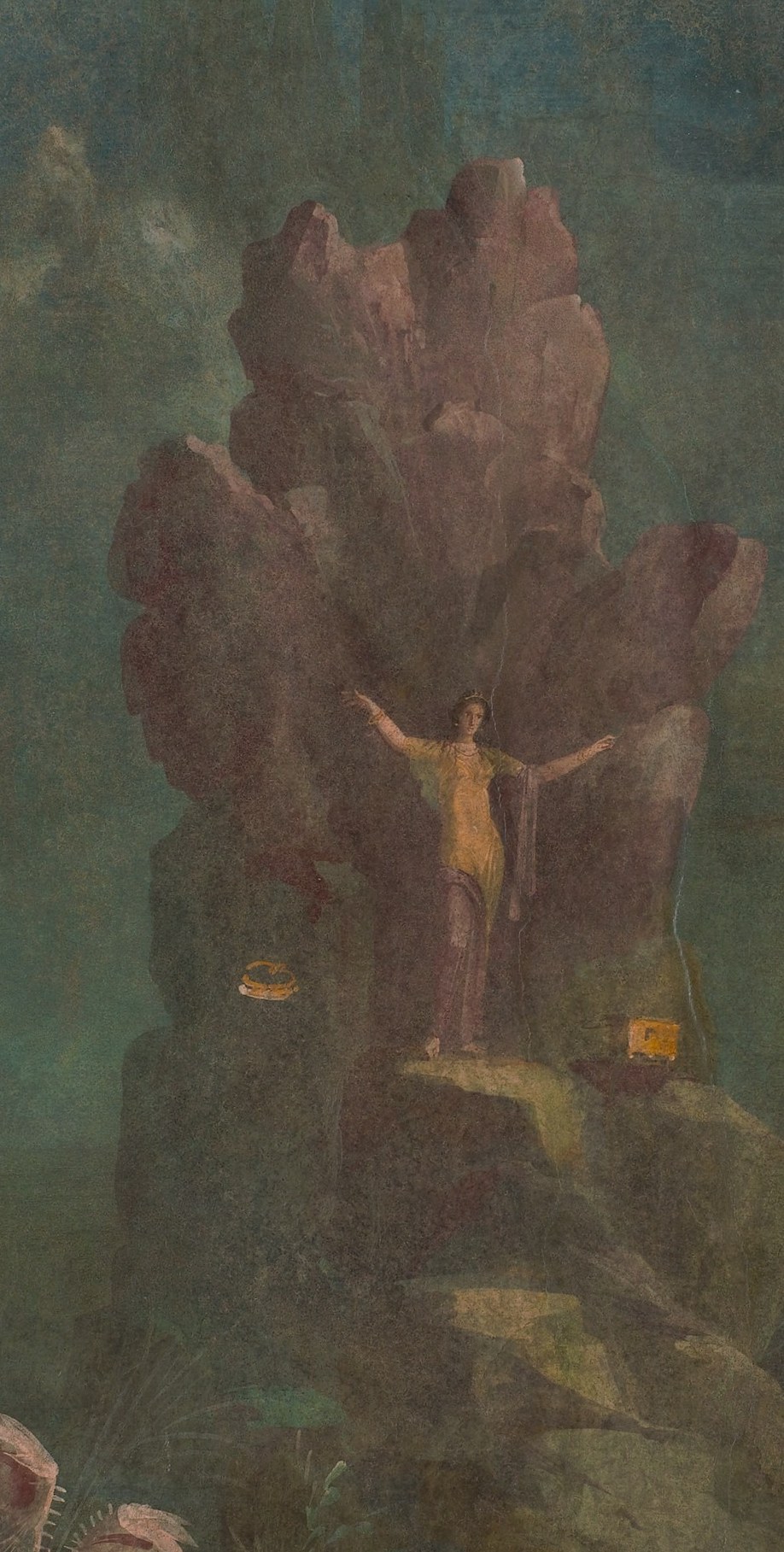
Wall painting: Perseus and Andromeda in landscape, from the imperial villa at Boscotrecase by http://www.wikidata.org/.well-known/genid/ff1e630df1ae98a11fb909608d62b50a
This ancient Roman fresco, "Perseus and Andromeda," dates to around 6 BCE and was discovered in the imperial villa at Boscotrecase, near Pompeii. It once adorned a wall in the private residence of Agrippa, a close confidant of Emperor Augustus.
The painting depicts the dramatic mythological scene of Perseus rescuing Andromeda from a sea monster. Notice the dynamic poses of Perseus, with outstretched arms, and Andromeda, chained to the rock, conveying her despair and vulnerability. The muted blues and greens, along with the central rock formation, create a serene yet dramatic atmosphere.
As a wall painting, it was designed to embellish the private spaces of the villa, reflecting the owner's sophisticated taste for mythological subjects and landscape compositions. Its original context within such a grand residence underscores its cultural importance and offers a glimpse into the decorative preferences of the Roman elite.
Imagine this scene unfolding within an ancient Roman home. What other stories might these walls have told?
Details
Transcript
This painting is over 2,000 years old. It was once a wall in an imperial Roman villa. The villa belonged to Agrippa, Augustus's close friend. This is Perseus rescuing Andromeda from a sea monster. Her pose conveys despair and vulnerability. The muted colors and drama suited private spaces.