The View from the Temple of Athena on the Acropolis by Martinus Rørbye
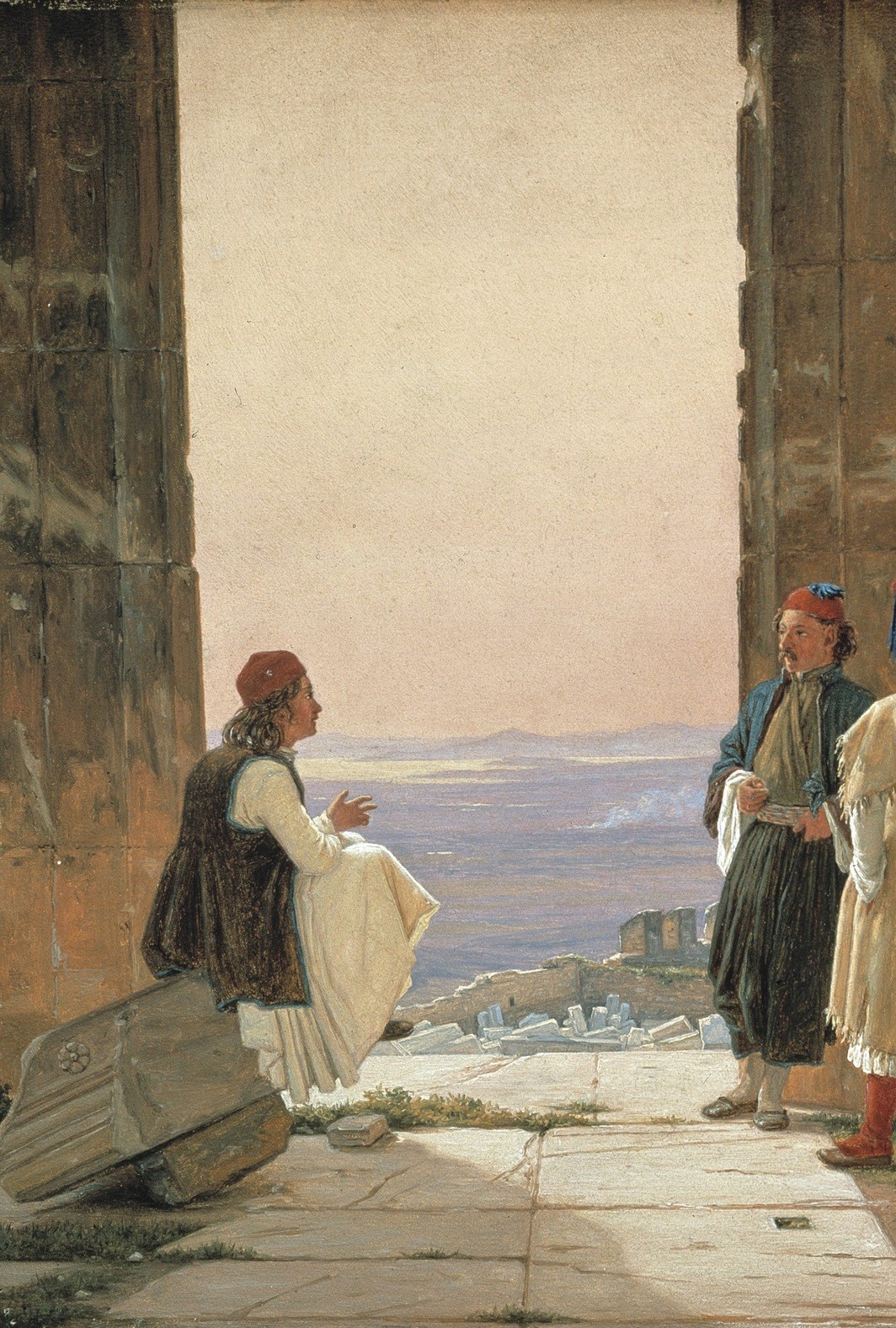
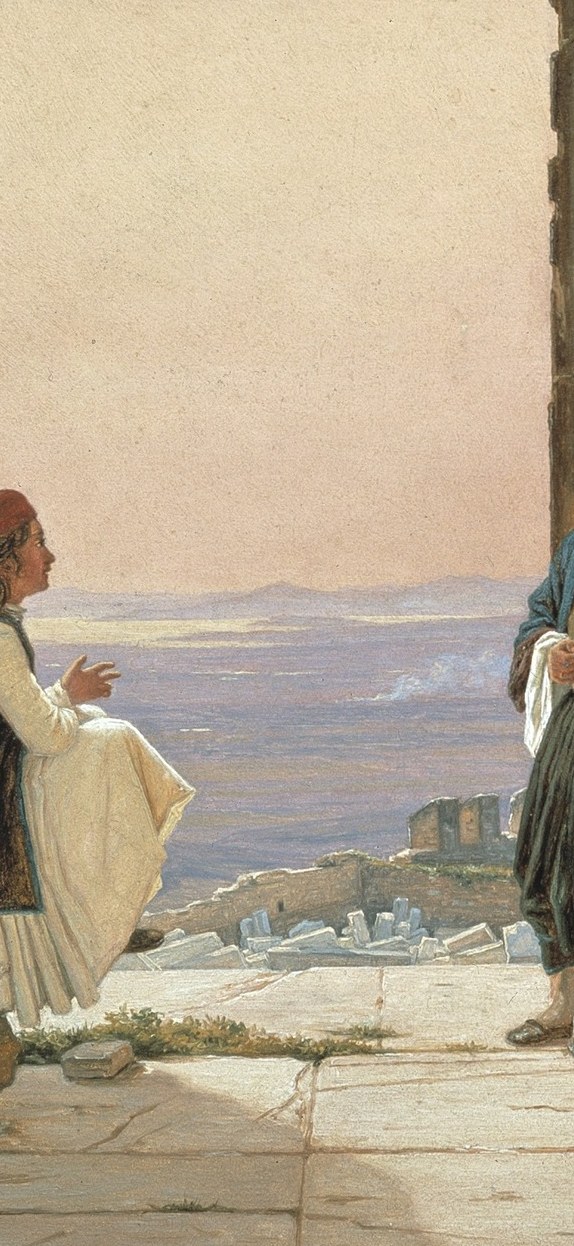
This is Martinus Rørbye's "The View from the Temple of Athena on the Acropolis," painted in 1844 and held today at the Statens Museum for Kunst in Copenhagen. Rørbye was the most widely traveled Danish painter of his era, and this canvas records what the Acropolis actually looked like two decades after Greek independence, not a manicured archaeological site, but a living ruin.
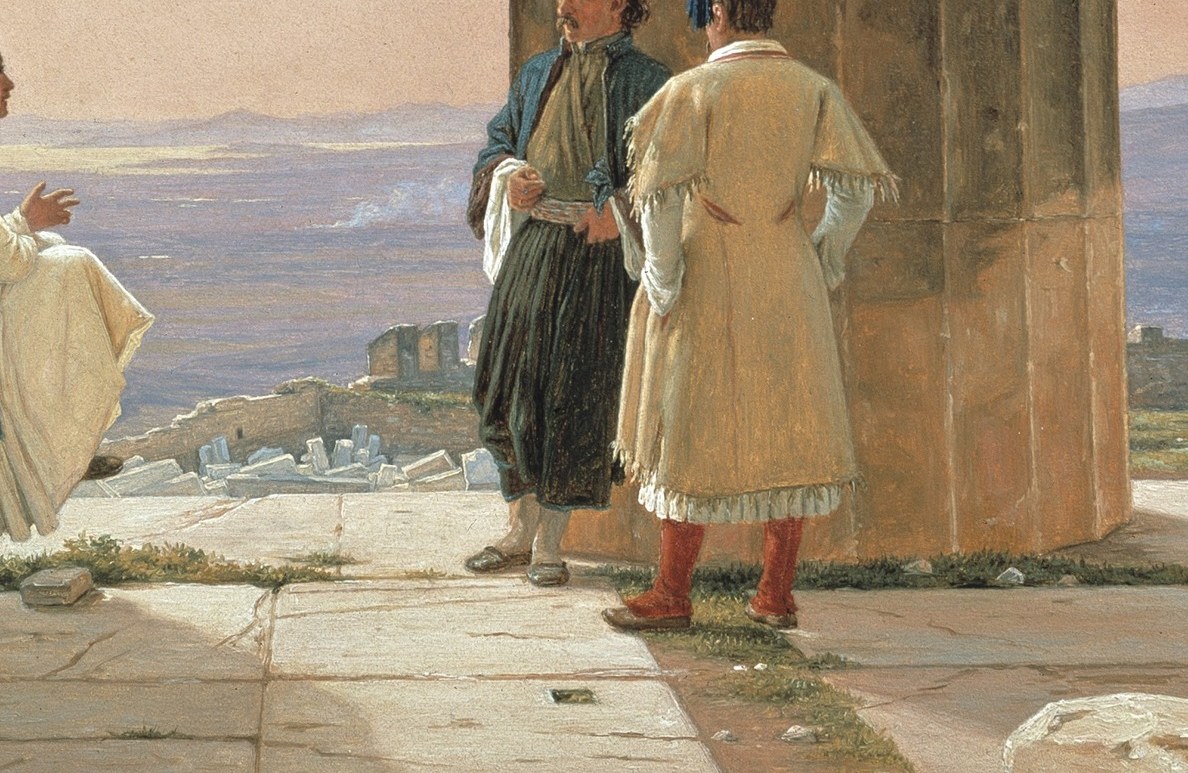
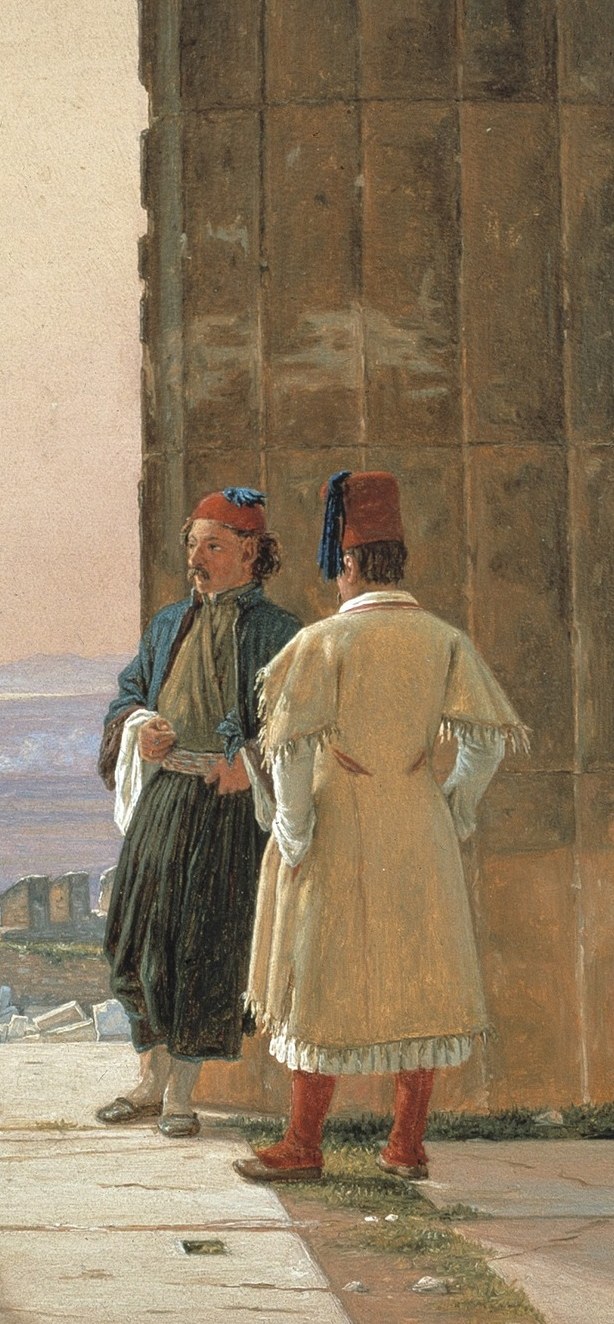
The three figures in the foreground wear the white fustanella, the national dress of newly independent Greece. Rørbye places them in conversation among the Doric columns, insisting the living Greeks are as important as the ancient stones. Their red fezzes mark a cultural hinge point, Ottoman-era dress worn proudly at the symbolic heart of the reclaimed classical past.
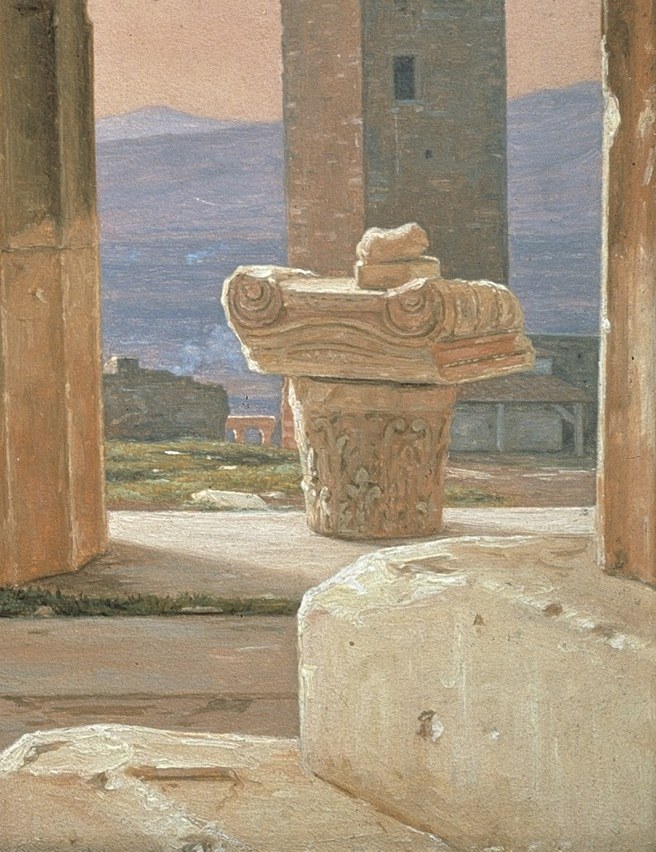
But the detail most people scroll past is in the lower-right corner. Scattered across the foreground are carved column drums and marble blocks, still lying as rubble in 1844. Systematic archaeology on the Acropolis would not begin in earnest for decades. Rørbye, painting from direct observation, left us a document of the site before the stones were moved back, a truthful record of a monument still half-buried in its own collapse.
Next time you see a photograph of the restored Parthenon, think of Rørbye's lower-right corner. What other places do we know only in their tidied, modern form?
Details
Transcript
The Parthenon, as travelers have always dreamed it. Rørbye painted this in 1844, at the peak of Denmark's Golden Age. Three Greek men in the dress of the newly independent nation. They wear the fustanella, a living national symbol placed among the ruins. Now look down, at the lower-right corner of the painting. Carved column drums and marble blocks, still lying where they fell. This was the Acropolis before archaeology tidied its stones.