Four Fuegian Indians by Catlin, George
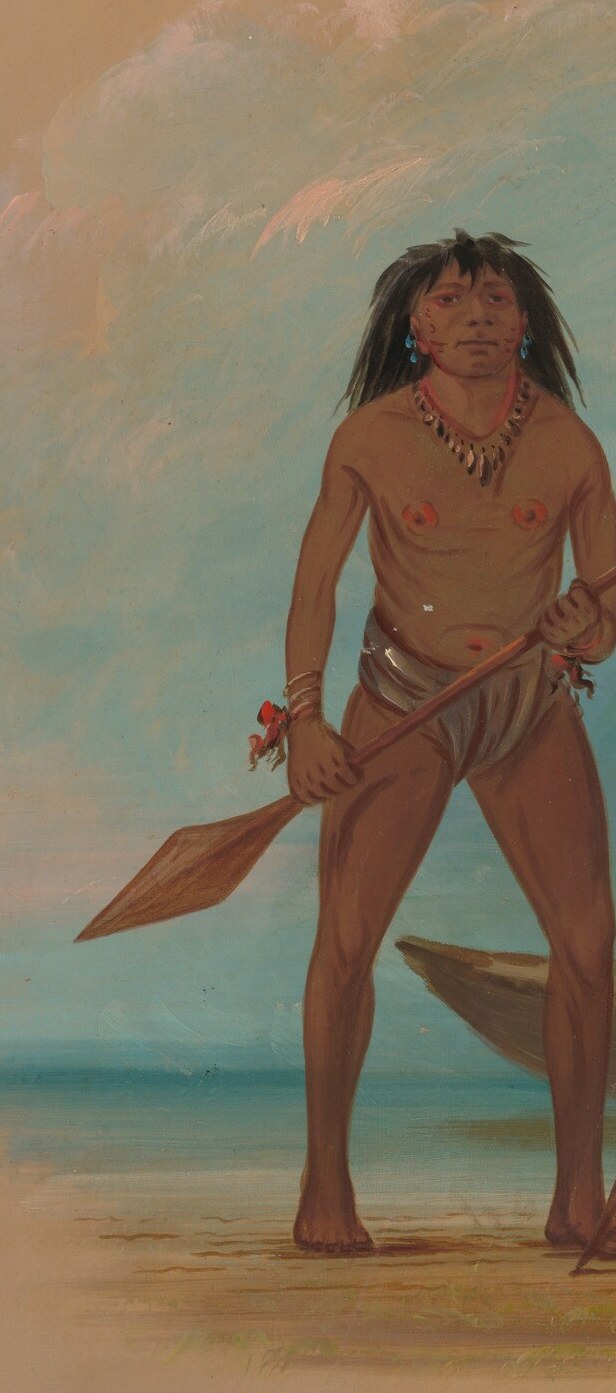
George Catlin's "Four Fuegian Indians," painted in 1862, offers a fascinating glimpse into the artist's dedication to documenting Indigenous cultures. This oil on card, mounted on paperboard, is housed at the Smithsonian American Art Museum.
Catlin, an American lawyer and painter, made extensive journeys across the American frontier in the 1830s, creating portraits and written accounts of Plains Indian life. This later work extends his practice of capturing diverse Indigenous peoples, presenting four individuals from Tierra del Fuego with observational detail.
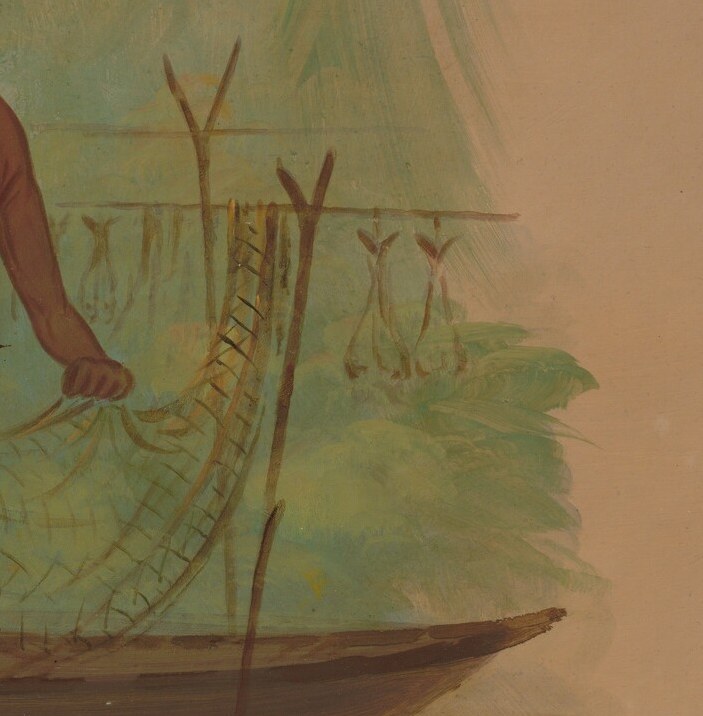
Beyond the striking portraits and cultural artifacts like the fishing net and canoe, a subtle detail reveals more of the painting's own history: the inscription 'A 386' in the lower left corner. This mark is likely an inventory or catalog number, a quiet reminder of the work's journey through various collections and its documentation over time.
It’s a small, almost hidden detail that grounds the artwork in its own provenance. What other hidden stories do you think paintings hold?
Details

Transcript
This painter traveled widely, documenting Indigenous peoples. He captured these four Fuegian Indians in 1862. Each face shows a different aspect of their identity. Notice how their tools, like this net, show their livelihood. But look closely, lower left. Do you see it? An inscription, 'A 386,' tells of its journey through collections.