View of Lake Fure near Rudersdal, North Sealand. by Christoffer Wilhelm Eckersberg
Christoffer Wilhelm Eckersberg painted View of Lake Fure near Rudersdal, North Sealand in 1833. It lives at Statens Museum for Kunst in Copenhagen, and for a painting so outwardly quiet, it hides a deliberate reward for anyone who slows down.
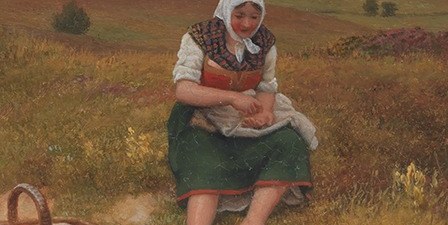
A barefoot woman with a white headscarf sits in the foreground, a wicker basket beside her. The grassy heath and gnarled trees are unmistakably Danish. Your eye wants to stay there, on the human moment. But Eckersberg built a second picture on the far shore.
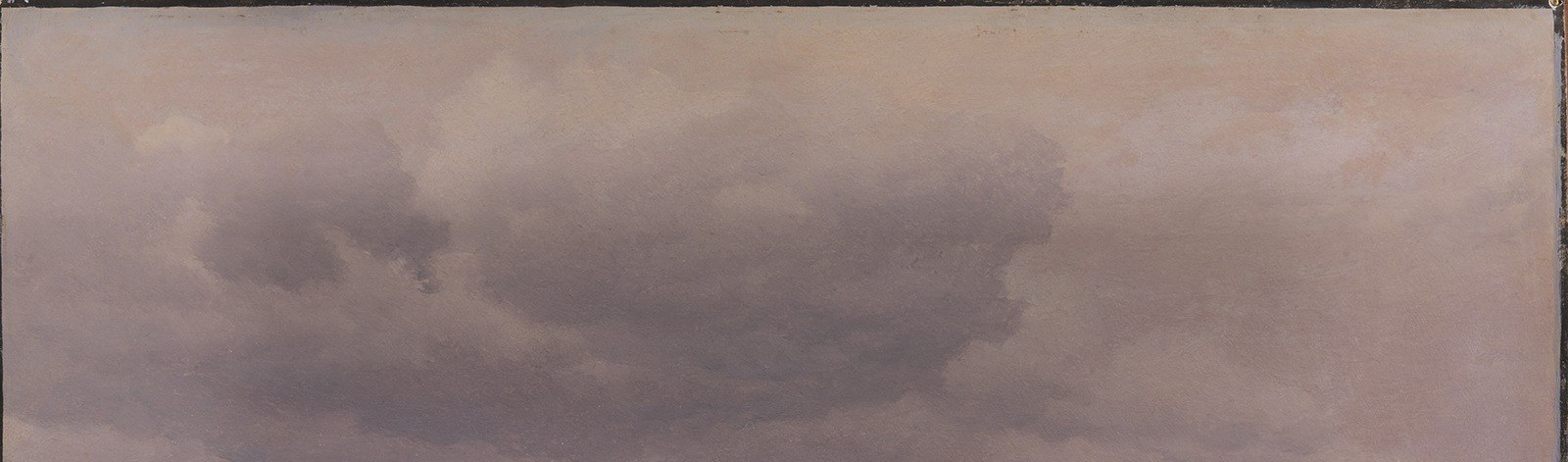
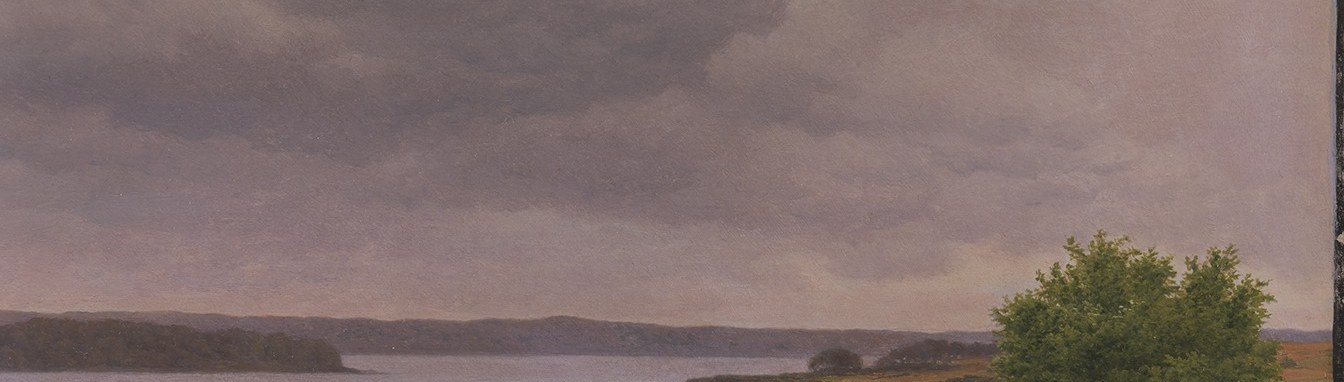
Cross the silver water and you find it: a pale farmstead, tiny against the treeline, and a thin break of light on the horizon. That sliver is the painting's brightest point. Eckersberg was famously precise about weather and atmosphere, and he rendered this passing gleam on a zinc panel, an unusual choice that gives the surface a particular smoothness.
Eckersberg would be remembered as the Father of Danish Painting, the teacher of the Golden Age painters. Here, in a landscape that barely announces itself, you can see what he taught them: look long enough, and the light will break.
Details


Transcript
She looks like any farm worker, resting by the lake. The bare feet, the basket. A day of labor in North Sealand. The sky is a mood. Eckersberg painted this on zinc. But now look to the far shore. Past the water, past the silence. A single pale farmstead holds the whole horizon line. And just above it: a sliver of light where the clouds break. Years later, they called him the Father of Danish Painting. He put the weather on a zinc plate and let the light survive.